
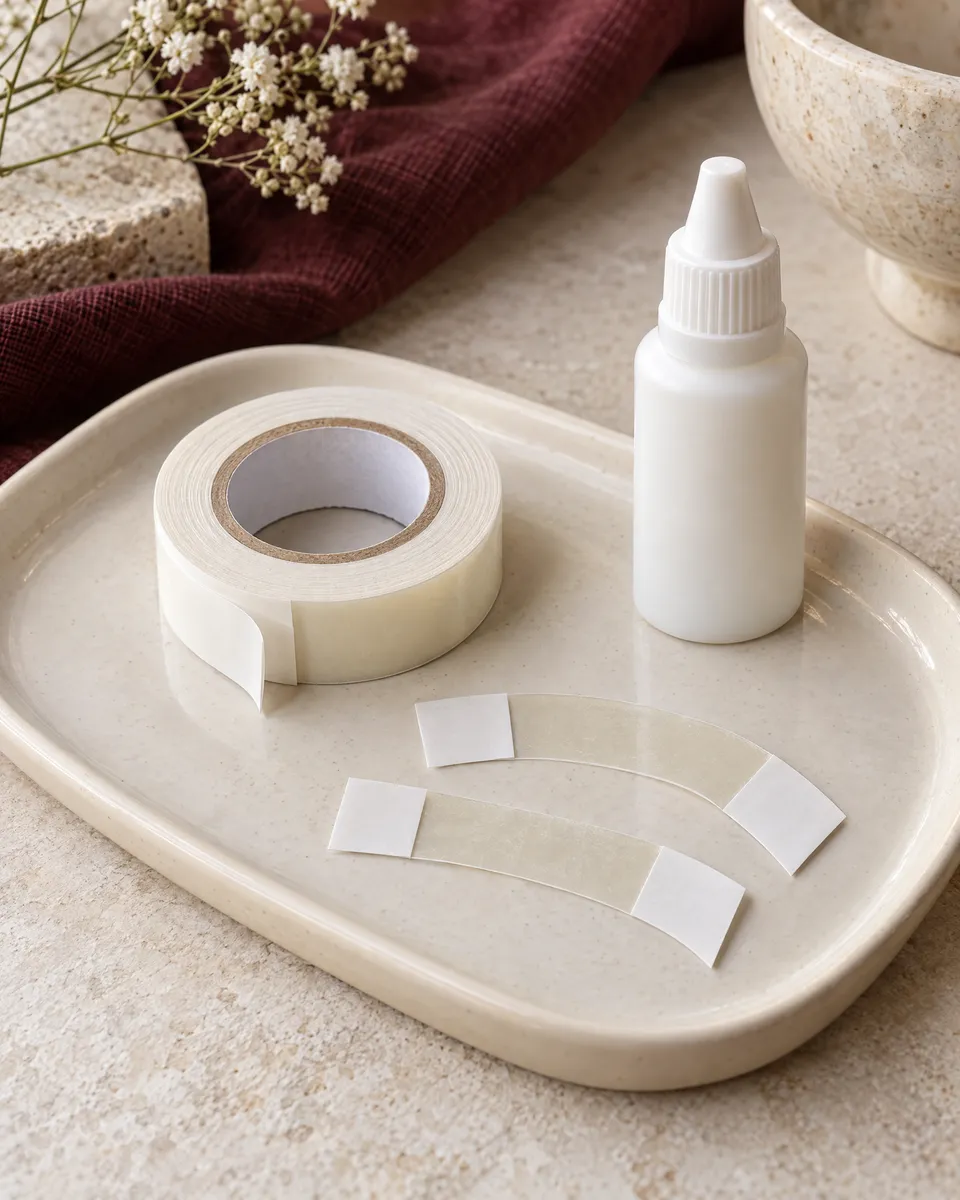
Wig adhesive: what to check before choosing
Make your comparison around information that can be checked: what the adhesive is called, what ingredients the label declares, which materials it names, and where the instructions say it should be applied. Those details are more useful than treating every wig glue as interchangeable. A label that leaves a key point unanswered is a reason to pause and ask about that specific product, not a reason to guess.
Wig adhesive types and their stated ingredients
The words on the front of a bottle can describe a product in broad terms, but they do not tell you everything about its use. Read the full product name, ingredient information and directions together. If it is described as a liquid wig adhesive, check whether the maker also identifies the intended application area and compatible base materials. Where the label lists ingredients without explaining suitability, do not infer compatibility from an ingredient name alone; ask the retailer or maker to clarify the exact product.
A water-based wig adhesive is still a particular formula with its own directions. “Water-based” does not by itself mean waterproof, sweatproof, suitable for every lace, or removable in a particular way. Look for those properties only if they are expressly stated by the maker, and use the stated conditions rather than extrapolating from the product name. Similarly, do not assume that every product called lace wig glue can be worn for the same length of time or in the same way.
If the label gives application and removal steps, read both before deciding. The removal method matters to your choice just as much as initial application: you should know whether the maker names a separate remover and whether it identifies the materials for which that remover is intended. For guidance focused on that separate step, see wig adhesive remover.
Check whether the label identifies lace compatibility
“Lace” can refer to a front panel or to a larger part of a wig base, so match the label to the construction you actually have. The American Cancer Society describes a lace-front wig as having a sheer lace panel along the front hairline, while a full-lace wig has a lace cap across the head. That distinction is useful when asking whether a product’s stated compatibility refers to the front panel, the wider cap, or another material; it is general wig-construction guidance, not an endorsement of any adhesive. American Cancer Society, “Choosing and Wearing a Wig”.
Check the piece’s care or construction information if you have it, then compare those words with the adhesive label. If either description is too general to tell whether the product fits your base, get clarification before use. Do not assume that a glue suitable for one lace panel or cap construction will suit another. If you are still deciding whether an adhesive approach is right for your setup, compare the intended-use information for wig tape as a separate type of securing product; do not treat tape and liquid glue as identical or interchangeable.
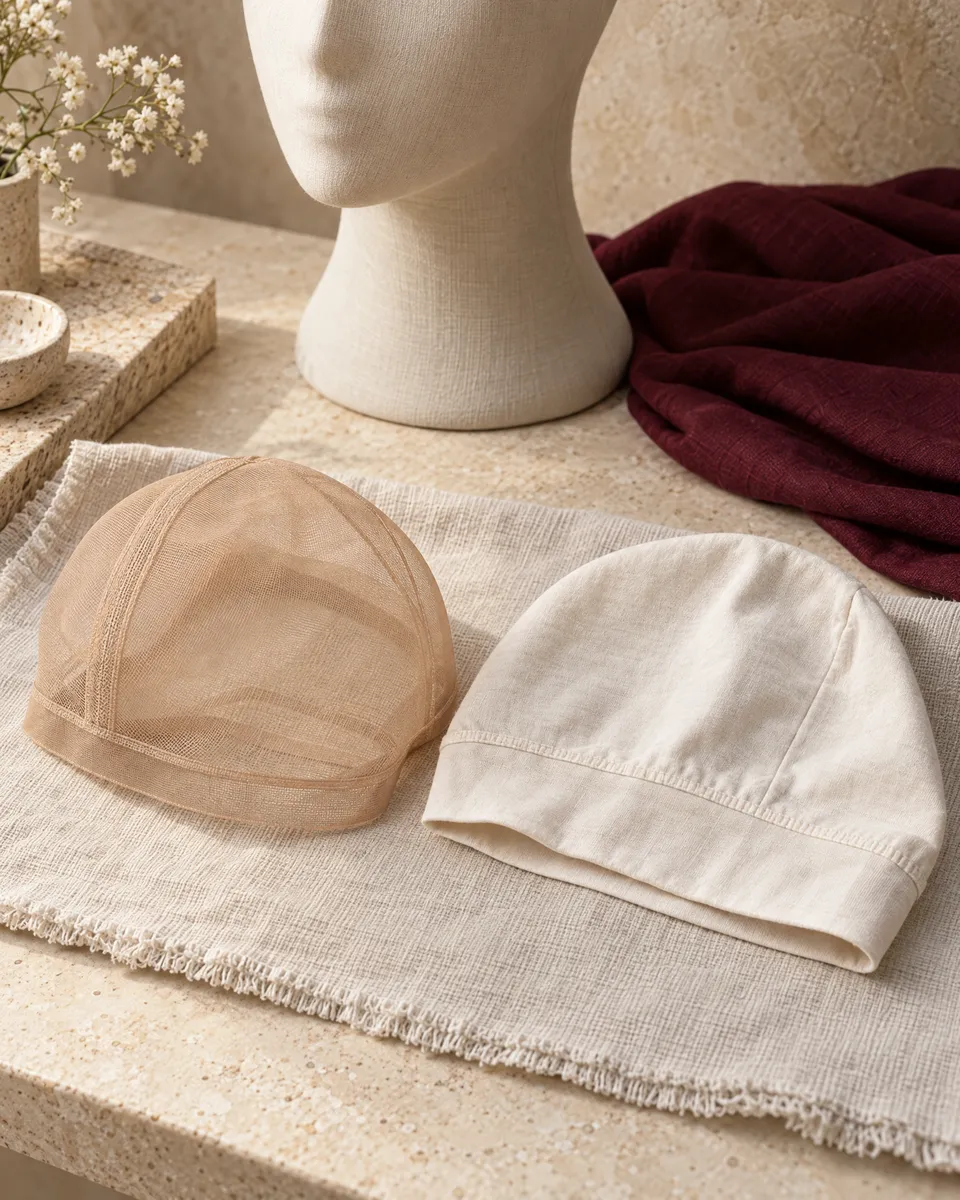
You can also consider what sits between the wig and your head as part of the overall wearing setup, without assuming that a liner changes the adhesive’s compatibility. The guide to wig caps and liners covers that separate accessory choice. A wig grip band is another distinct item to compare if you are looking at ways to secure a wig without selecting glue solely by a hold claim. The right choice depends on the particular piece and the product directions, not on a universal ranking.

Read the label and confirm base-material compatibility
A practical check is to line up the adhesive label with the wig information before opening the product. Identify the exact base or lace area, find the maker’s stated compatible materials, and note any limits or preparation steps. If either side is unclear, avoid filling in the gap with a general online tip: ask about that adhesive and that wig together.
Use the maker's directions for application and removal
Follow the specific maker’s directions for where and how to apply the adhesive, how it should be allowed to set if the instructions say so, and how it should be removed. Do not substitute a technique from another brand or an online tutorial; product directions can differ. Avoid adding a second product or changing the removal approach unless its own maker identifies it as suitable for the adhesive and relevant wig materials.
Before use, find the removal instructions as well as the application instructions. If the label names a remover, check the intended use and material information for that remover rather than assuming that any solvent or cleansing product is appropriate. Never pull at lace to dislodge adhesive. If the directions are missing, hard to understand, or do not address your base, stop and ask for the exact product information. That is especially important if you have a history of skin sensitivity or another health concern: this page cannot assess individual suitability, so seek appropriate professional advice before applying a product to skin.
Keep the adhesive’s use separate from routine hair care. Product residue on the wig and washing the fibres are different questions, and cleaning advice depends on the wig’s own care directions. See wig shampoo for wig-cleanser considerations, rather than using a hair product as an unverified adhesive remover. Once you are caring for the wig fibres rather than removing adhesive, follow the piece’s care label when choosing a wig brush, wig conditioner, or wig detangler spray. These are separate grooming choices, not substitutes for a maker-specified adhesive remover.

Application and removal: follow the product instructions
A simple 3-check routine helps keep the decision specific to your piece: first, identify the material at the intended attachment area; second, confirm the adhesive label names that use or obtain an answer from the maker; third, read the removal directions before applying anything. If one check fails, wait for clarification rather than testing an assumption on the wig. This approach is more reliable than choosing by a short description or a promised number of wear days.

| What you are comparing | What to look for | What not to assume |
|---|---|---|
| Liquid wig adhesive or wig glue | Declared ingredients, intended application area, compatible lace or base materials, and complete application and removal directions. | That all formulas suit all lace, or share a hold time or removal method. |
| Water-based wording | Any performance claims and use conditions stated separately on that product’s own label. | Waterproofing, sweat resistance, skin suitability, or a particular duration. |
| Lace-front versus a wider lace base | Whether compatibility refers to the front hairline panel or to the specific area and base you intend to use. | That a general mention of lace covers every construction. |
| Wig tape or another securing accessory | Its own directions and intended materials; compare it as a separate option. | That tape, a grip band, a liner and liquid glue work in the same way. |
| Removal product | Whether the adhesive maker specifies one and whether its instructions name your relevant materials. | That any remover or household product is suitable. |
Ask about adhesive product details
Tell us the style you have in mind. We can discuss the options, quotation and arrangements before you decide.
Ask about adhesive product detailsBefore you choose
What should I check before choosing an adhesive for a lace wig?
Read the full product label, including ingredients and application and removal directions. Check whether the maker identifies the lace or base materials you have and the area where the adhesive is intended to be used. If compatibility is unclear, ask about the exact adhesive and wig before use rather than relying on a general claim such as “lace glue”.
Does water-based wig adhesive mean it is waterproof or sweatproof?
No. Water-based describes the formula in broad terms; it does not establish waterproofing, sweat resistance, or how long the adhesive holds. Look for an explicit statement and its conditions on the product’s own label. If those details are absent, do not treat the wording as a performance guarantee.
How should I remove wig glue from a lace wig?
Use the adhesive maker’s removal directions and only a remover identified as suitable for the adhesive and relevant materials. Do not pull at the lace or substitute a different product’s method. If the instructions do not explain removal for your particular base, ask for product-specific guidance before proceeding.
Further reading
- American Cancer Society, Choosing and Wearing a WigSupports the specific distinction in the text between a lace-front wig’s sheer front hairline panel and a full-lace wig’s lace cap across the head; cited only as general construction guidance, not adhesive advice or endorsement.
Still weighing up your options?
Follow a related guide to make your next decision with clearer information.
Learn where a wig grip band sits beneath a wig, what to consider when choosing one, and how it compares with caps or liners. Ask OWNSTRAND about options.
Compare wig tape strips and rolls for lace-front use, check base compatibility and product directions, and ask OWNSTRAND about available options.

Compare wig shampoo options for synthetic and human hair, and check which care products suit your wig before choosing. Contact OWNSTRAND to ask about availability.
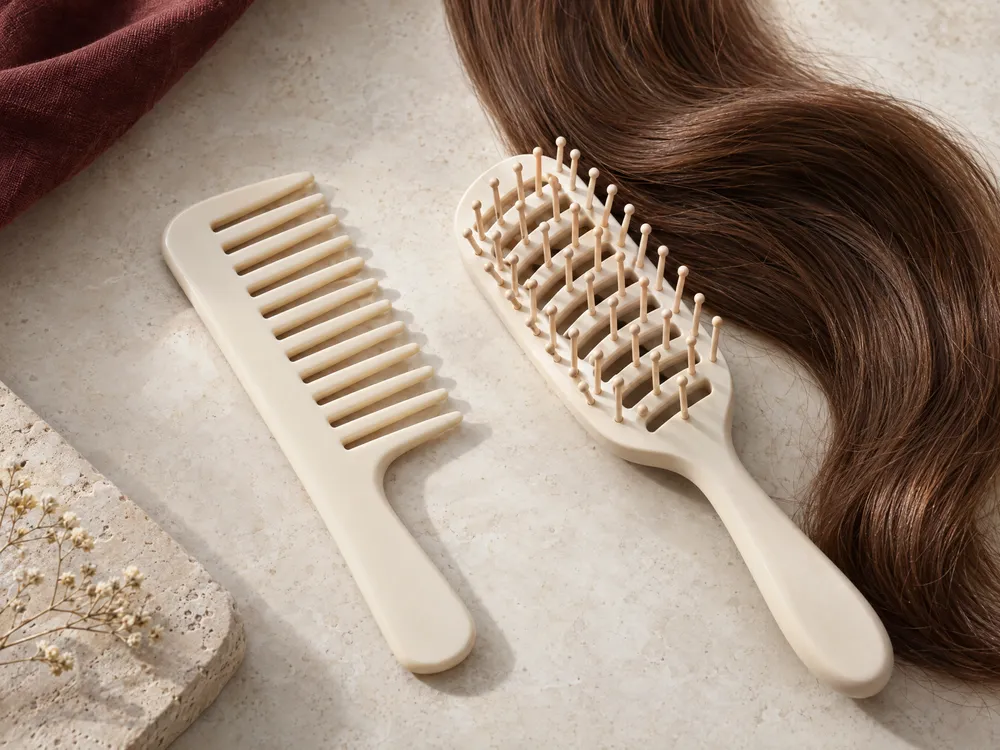
Choosing a wig brush depends on the fibre and the item’s care guidance. Compare brush and comb considerations, then ask OWNSTRAND about a specific item.