

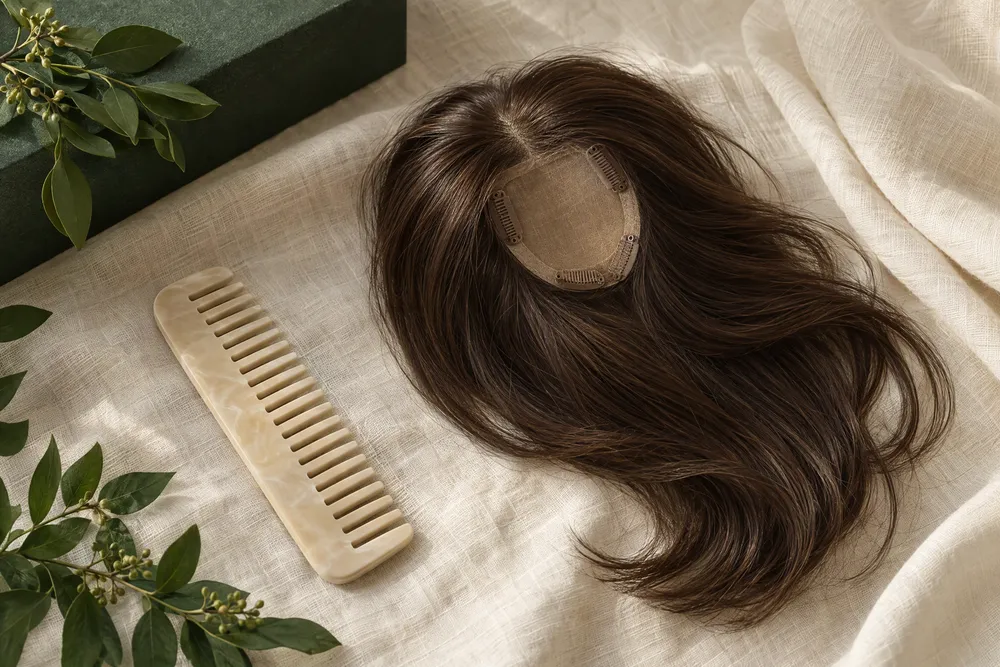
Wig Color Matching: Compare with Natural Hair
Start with your own hair in the places that will sit beside the wig. A useful comparison is not simply ‘my hair is black’ or ‘my hair is brown’; it considers depth, warmth, variation and the impression you want at the hairline and around the face.
Compare wig color matching with your own hair in consistent light
Make the comparison in one steady setting, ideally near a window with indirect daylight. Avoid judging a shade under a yellow bedside lamp, then comparing it with your hair under a cool office light: the change in illumination can make the same brown appear warmer, flatter or darker. The American Cancer Society’s general wig-selection guidance recommends considering colour in natural light and comparing it with your own hair; this supports the comparison method, not a guarantee about any particular wig. Look at the shade beside your hair rather than holding a screen image far away, and give your eyes a moment to adjust.
Check three areas separately: the roots, the middle lengths and the ends. Many people have natural variation, so a single flat shade may look more uniform than their own hair. If you want continuity, choose a shade that sits comfortably beside the most visible area when your hair is worn as usual. If your aim is a fresh look, a small difference in depth or warmth can be intentional. Compare your preferred style with black wigs when deciding between deep black and softer dark tones, and explore grey wigs if silver or salt-and-pepper variation is part of the look you want.
For blending, decide whether you want the wig to disappear into your existing hair or create a clear style change. A close match can make the transition less noticeable, while a slightly lighter or warmer shade can frame the face differently. If the style leaves your own hair visible, compare the exposed sections in the hairstyle you expect to wear—not only loose hair laid flat. Texture and length can also affect the overall impression: a colour may look more prominent across a long, smooth shape than in a shorter, layered cut. See natural-looking wigs for a broader look at how hairline and styling contribute alongside shade.

Using a Wig Color Chart and Swatches
A wig color chart helps you compare the options shown for a style, but the chart only has meaning when you know which style and shade details it describes. Use it to narrow choices, then assess the result in context rather than treating a number or name as universal.
Read a wig color chart as a shade reference
First, check that the chart or swatch belongs to the exact wig style you are considering. Colour names and numbers can be used differently across ranges, and a shade label on one style is not proof that another style with the same label will appear identical. Look for the style-specific colour choices and any description of tone or mixed shades. A single-tone shade, a blend and a shade with visible darker roots can produce different results even when their overall depth seems similar.
When comparing wig color swatches, sort them by the visual quality you want: depth (lighter or darker), undertone (cooler, neutral or warmer), and variation (even colour or a blend). Then compare the strongest candidates beside your natural hair and, if relevant, your brows or usual makeup. These are practical visual references rather than strict rules. People with Asian hair and a wide range of complexions may prefer different results, so use Asian wigs as a style comparison rather than assuming one shade suits everyone. If a colour is not represented clearly for a particular style, ask about that style’s displayed shade information before making your choice.
A chart can be especially helpful when you are deciding whether to keep a familiar tone or introduce a visible change. For example, compare a dark neutral shade for continuity with a warmer brown for softness; for grey, consider whether you prefer a blended salt-and-pepper effect or a more even silver impression. If you are choosing a wig in response to hair changes, colour preference remains personal: the alopecia wigs guide offers selection context without prescribing a particular shade. Fibre and styling also affect the finished look, so compare wig hair types if you are weighing how the material and texture relate to colour.
For a useful wig color chart online, note the style name, the exact shade label shown and the page where you saw it. Keep those details together when asking a question; a screenshot alone may omit a style variant or shade name. A swatch can communicate relative tone well, but it is still a display or sample viewed in particular conditions. It cannot show exactly how a complete wig will look on you, how the strands will catch light when moving, or how the shade will sit against your own hair.

Why Screen and Lighting Change Color Appearance
Colour is seen through both the material and the light around it. An online listing is a convenient place to compare options, but the same image can look different on another screen or in a different room.
Why a wig color chart may look different on screen
Your phone or monitor has its own brightness, colour settings and display characteristics. Automatic brightness, a night-time warm filter, vivid display mode and ambient reflections can all affect how a shade appears. The photo or graphic also has its own lighting and camera rendering. This is why a wig color difference on screen is possible even when you are viewing the same chart: the image is not a physical swatch under your own light. Use the image to compare broad relationships—such as darker against lighter or cooler against warmer—not to judge a tiny distinction as certain.
For a more consistent online comparison, turn off any strong warm screen filter if convenient, keep brightness comfortable and view the chart in the same room as your hair. Avoid comparing one shade on a bright screen and another in a dim thumbnail. If you revisit the choice later, return to the individual style page and confirm the colour label rather than relying on a saved crop. A wig color looks different in person than on screen for ordinary reasons of display and lighting; that difference does not by itself mean that one view is the definitive version.
Think about the setting in which you will most often wear the wig. Indoor warm lighting can make brown tones feel richer, while daylight can reveal cooler or more varied tones. If you usually wear your hair in a particular parting or style, compare the colour with those visible sections in similar light. Your desired result also matters: matching your own hair closely is one goal; choosing a flattering contrast or a new look is another. Keep the decision centred on what feels like you rather than chasing a screen image that no display can reproduce exactly.
If you would like to discuss a specific shade, send the style name and colour label when contacting OWNSTRAND Wigs. Our Kwun Tong salon is at Unit 2103, 50 Hoi Yuen Road, Kwun Tong, Hong Kong (利寶時中心). You can view samples and discuss a style in a private setting; for a handmade custom human-hair enquiry, the conversation can include head measurement, a discussion of grey-hair percentage and a return fitting with wash, cut and blow-dry. Ask for a quotation and availability for the option you have in mind. WhatsApp +852 5933 4697 is for enquiries and confirming arrangements, not an automatic order.




| What to compare | What to look for | How it helps |
|---|---|---|
| Depth | Does the shade sit close to your roots, lengths or the contrast you want? | Separates a familiar match from a deliberately lighter or darker look. |
| Undertone | Does it appear warmer, cooler or more neutral beside your hair in steady light? | Helps distinguish shades that have similar depth but a different overall feel. |
| Variation | Is the colour even, blended, or visibly varied with darker and lighter tones? | Shows whether the finish feels closer to your own hair’s variation or a more uniform style. |
| Viewing conditions | Are your hair and the swatch being viewed in similar, consistent light? | Reduces misleading comparisons caused by room lighting or a screen setting. |
| Style-specific label | Have you checked the colour details for this exact wig style? | Avoids assuming that a name or number means the same appearance across styles. |
Ask about a wig shade
Tell us the style you have in mind. We can discuss the options, quotation and arrangements before you decide.
Ask about a wig shadeBefore you choose
How can I compare a wig shade with my natural hair?
Compare the shade information for the specific wig style with your roots, lengths and any hair that will remain visible. Use steady, neutral or natural light and look at the shade beside your hair. If the style has a chart or swatch, treat it as a reference, not a guarantee of an exact match.
Why can wig colour look different in person than on screen?
Screen brightness, display settings, the light in your room and the lighting used for an image can all change how colour appears. An online chart is useful for comparing broad tone and depth, but it may not look identical in every viewing environment.
Is a wig colour chart an exact colour guarantee?
No. A chart or swatch helps you compare the shades presented for a particular style. Check the individual style’s colour details and remember that the material, lighting and display can affect the appearance you see.
Should I use the same colour number across different wig styles?
Check the colour details against each individual style. Do not assume that a shade name or number shown for one style will look identical in another; ranges may present tones or blends differently.
What should I send when asking about a shade?
Share the style name, the colour label shown for that style and, if useful, a screenshot that includes the relevant details. This gives us a clear starting point for an enquiry about the shade and its availability.
Further reading
- American Cancer Society — Wigs for Hair LossGeneral wig-selection guidance supports comparing a wig colour with your own hair in natural light. This is cited only for that practical comparison advice, not as an endorsement of OWNSTRAND or a claim about any specific style.
Still weighing up your options?
Follow a related guide to make your next decision with clearer information.
Browse black wigs and compare shade details for a natural-looking match. Check colour under different lighting, then ask OWNSTRAND about listed options.
Explore natural-looking wigs and natural hairline wigs through a practical guide to fit, colour, density, hairline and styling. Ask OWNSTRAND what to compare.

Explore grey wigs and salt and pepper wigs in grey, silver and white shades. Compare shade descriptions, then ask OWNSTRAND about product details and availability.
Explore Asian wigs by preferred length, colour and cap fit. Compare styling considerations without assuming hair type or availability; ask OWNSTRAND about options.