

How a hand tied wig is constructed
The term describes a way of attaching hair to cap material, not a complete specification by itself. To understand a hand tied wig, separate the attachment method from the amount of the cap that uses it; both details matter when comparing styles.
What hand tied wig means
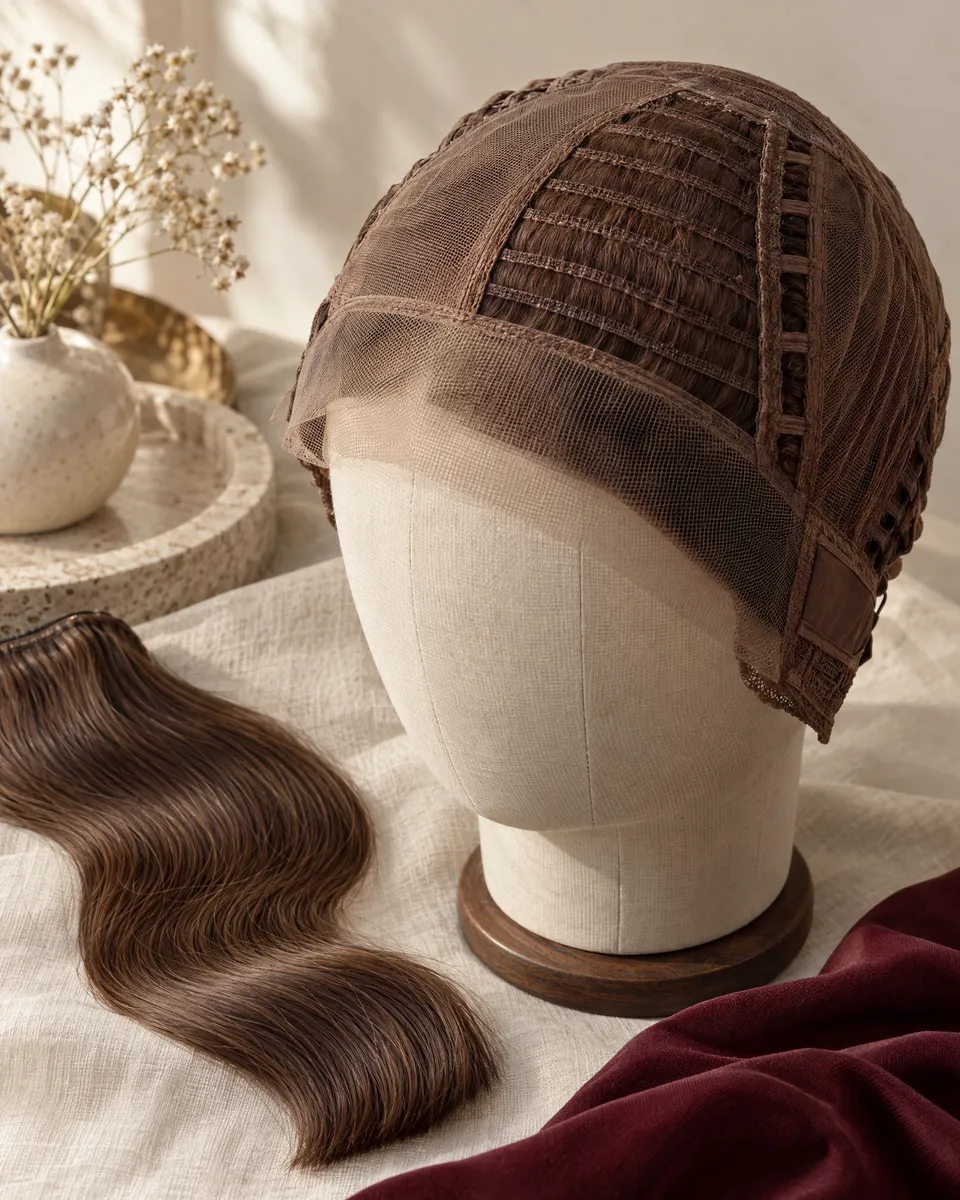
In a hand-tied section, individual strands or small groups are knotted by hand into the cap material rather than being attached along a sewn strip. The knots anchor the hair at particular points. A description may call this hand-knotted construction, but the label is useful only when you know which areas it refers to. A hand tied cap wig can use this method across one section while using a different construction elsewhere.
Look for plain-language detail about the top, parting area, sides, crown and back, rather than treating the product name as a map of the whole cap. If a listing only says ‘hand-tied’, it may be describing a feature, not claiming a fully hand-tied cap. Nor does the phrase alone tell you the fibre, cap material, fit, care requirements or whether a particular style suits your preferences. Those are separate points to establish from the style information.
Fully hand-tied construction and its scope
A fully hand-tied wig generally means that hand-knotting is used throughout the cap, but the phrase should still be read alongside the seller’s exact construction description. Ask what ‘full’ covers, whether any edge, perimeter or other area uses a different material, and how the hair is attached in each zone. The words ‘fully hand-tied’ should not be inferred from a hand-tied crown or a hand-tied part alone.
This scope check is especially useful when a style is also described as lace. Lace names the material or feature being discussed; hand-tied describes how hair is attached in stated areas. A hand-tied lace wig could therefore have more than one construction detail to understand. If you are comparing it with a full lace wig, compare the stated cap coverage and construction rather than assuming the labels mean the same thing.
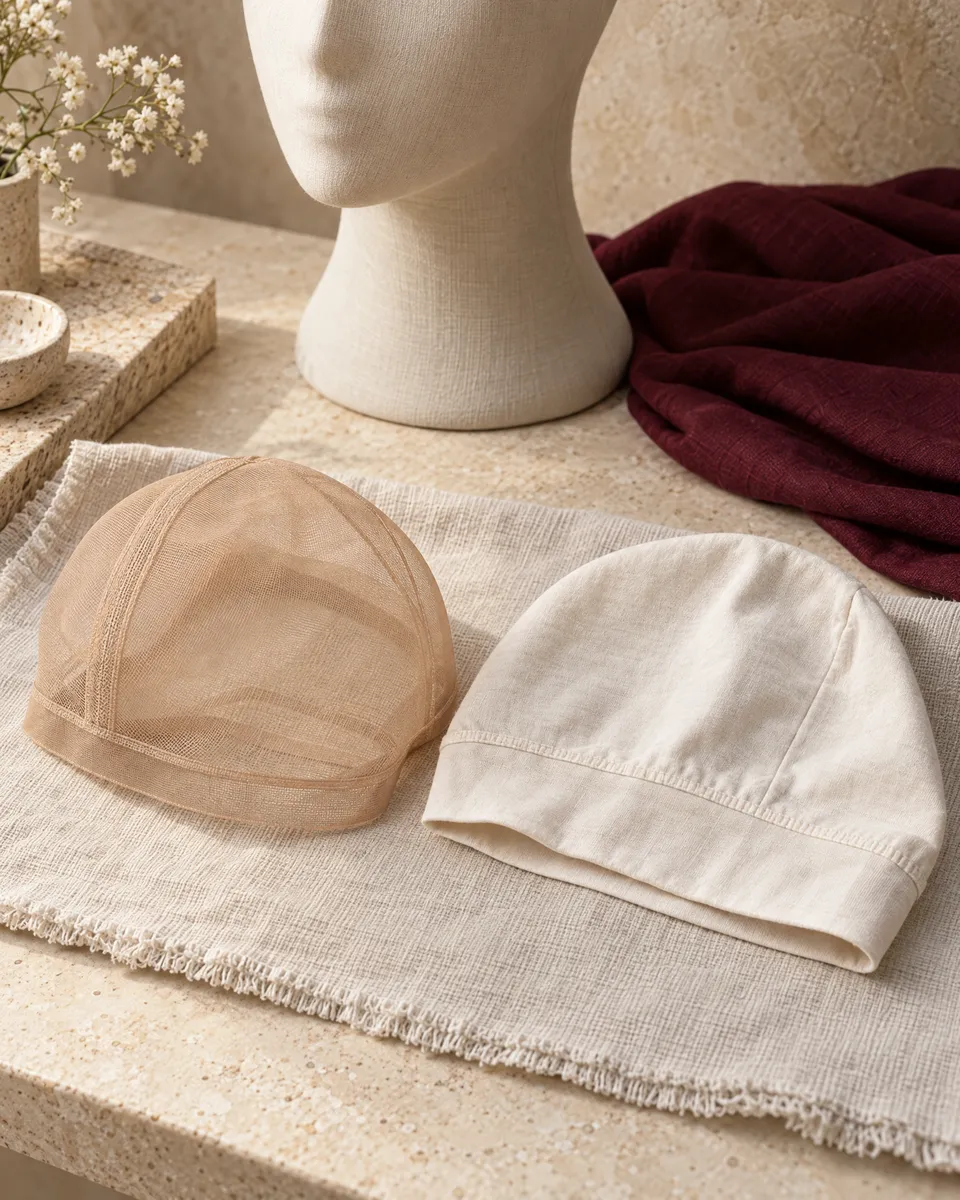
Hand-tied and wefted cap construction compared
Hand-tied and wefted describe different attachment approaches. Neither label, on its own, establishes that a style is better for everyone: the relevant comparison is the construction in the areas you care about and how clearly the product details describe it.
Check the cap details for each style
With hand-tying, hairs are knotted individually in the described areas. With wefting, hair is attached along strips that are sewn into the cap. Some styles combine methods, so a hand-tied top does not rule out wefts at the sides or back. If you are considering an open wefted wig cap, compare its named construction with the specific hand-tied areas on the alternative; do not assume a general category label supplies every detail.
Then compare the feature you actually want to understand. Someone focused on the visible parting may ask how that section is made; someone comparing coverage can ask which areas use wefts and what material covers them. A monofilament wigs description refers to another cap-construction term, while a silk top wig or PU wig cap raises material and placement questions of its own. These labels are not interchangeable with hand-tied, so check each style’s stated construction instead of ranking names in isolation.
If cap coverage or airflow is part of your comparison, read the actual coverage details and see the guide to a breathable wig cap. For a front-focused question, a lace front wig is a related construction to compare, but its label does not prove that the rest of its cap is hand-tied. The American Cancer Society notes that wig sizing can vary by brand; for fit as well as construction, use the individual style’s sizing and fit information rather than relying on a label alone. This general selection point is not an endorsement of any seller or a statement about a particular style.

Questions to ask when browsing hand-tied styles
Before choosing a style, make 3 checks. First, ask which exact areas are hand-tied and whether the description means a section or the entire cap. Second, ask what construction is used in the remaining areas, including whether there are sewn wefts and what cap materials are named. Third, confirm the practical details that matter to you, such as how the parting area is described, how to assess fit, and which care instructions apply to that exact style. These are specific questions, not assumptions about what every hand-tied wig offers.



| Description you see | What it tells you | What to clarify |
|---|---|---|
| Hand-tied section | Hair is individually knotted by hand in the stated area. | Which area is included, and what construction is used elsewhere? |
| Fully hand-tied | The wording indicates hand-tying across the cap, subject to the style’s precise definition. | Does ‘full’ cover every area, including the perimeter, and are any other methods used? |
| Wefted section | Hair is attached along sewn strips in the described area. | Where are the wefts, and are other areas hand-tied or made differently? |
| Hand-tied lace style | The description combines an attachment term with a lace reference. | Which part is lace, what area is hand-tied, and how is the rest of the cap constructed? |
Ask about cap construction on WhatsApp
Tell us the style you have in mind. We can discuss the options, quotation and arrangements before you decide.
Ask about cap construction on WhatsAppBefore you choose
What does hand tied mean in a wig?
It means that strands of hair are individually knotted by hand into cap material in the sections described. Check the particular style’s details to see which areas use hand-tying; the term alone does not describe every part of the cap.
Is every hand-tied wig fully hand-tied?
No. A hand-tied section does not establish that the whole cap is hand-tied. Look for a style-specific description of the coverage and ask what construction is used in the remaining areas if that is not clear.
How is hand-tied construction different from wefted construction?
Hand-tied sections have strands knotted individually, while wefted sections use hair attached along sewn strips. A cap may combine these methods, so compare the stated construction area by area rather than relying on the general style label.
What should I check when browsing a hand-tied lace wig?
Check which areas are hand-tied, which material is identified as lace, whether the whole cap or only selected sections use that construction, and what is used elsewhere. If browsing buy a wig online in Hong Kong, ask OWNSTRAND about the stated cap details for a particular style; an enquiry does not confirm stock or an order.
Further reading
- Wigs for Hair Loss — American Cancer SocietySupports the specific general selection fact stated in the article: wig sizing can vary by brand, so check fit and sizing information for the individual style. It does not endorse OWNSTRAND or establish any product-specific claim.
Still weighing up your options?
Follow a related guide to make your next decision with clearer information.
Explore how a breathable wig cap may allow airflow, compare cap coverage and materials, and ask OWNSTRAND Wigs about styles suited to your needs.

A silk top wig can be described by its top construction, but details vary by model. Compare terms with lace or monofilament tops, then ask OWNSTRAND about a style.
Explore monofilament wigs and learn how mono sections affect parting and crown coverage. Compare construction details and ask OWNSTRAND about a style.
Learn how an open wefted wig cap is described, how open cap and machine-made terms vary, and what to ask when comparing wig cap construction. Contact us.