

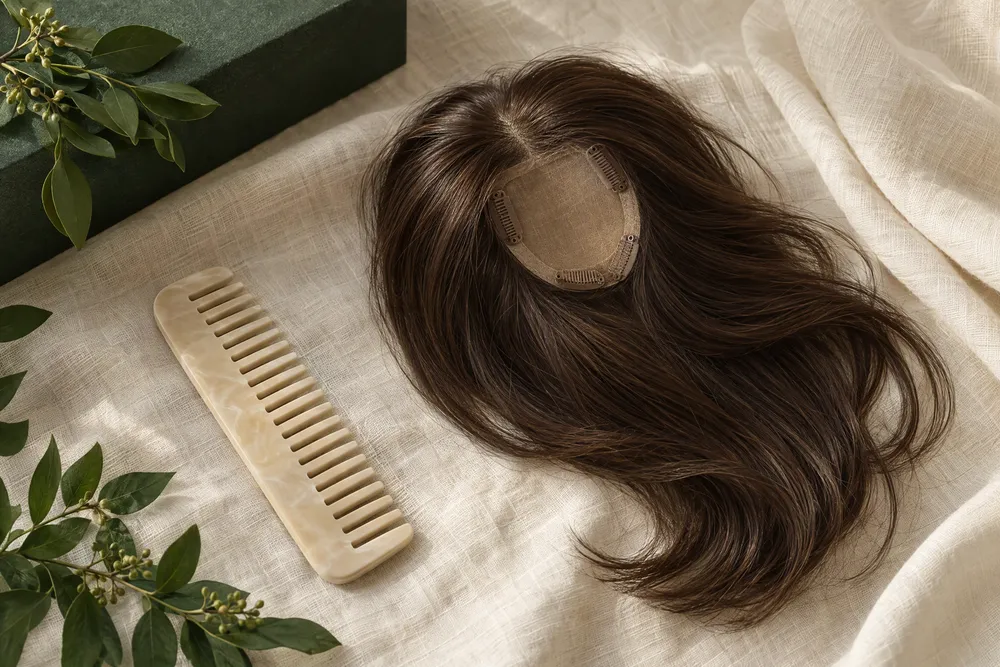
What monofilament wigs mean by mono construction
“Monofilament” describes a cap area and how hairs are attached, not one standard-sized section. If a listing calls something a monofilament cap wig, check whether “mono” refers to one zone or broader coverage. Shape, size and position vary by style, so read the cap description as a combination.
How monofilament wigs are constructed
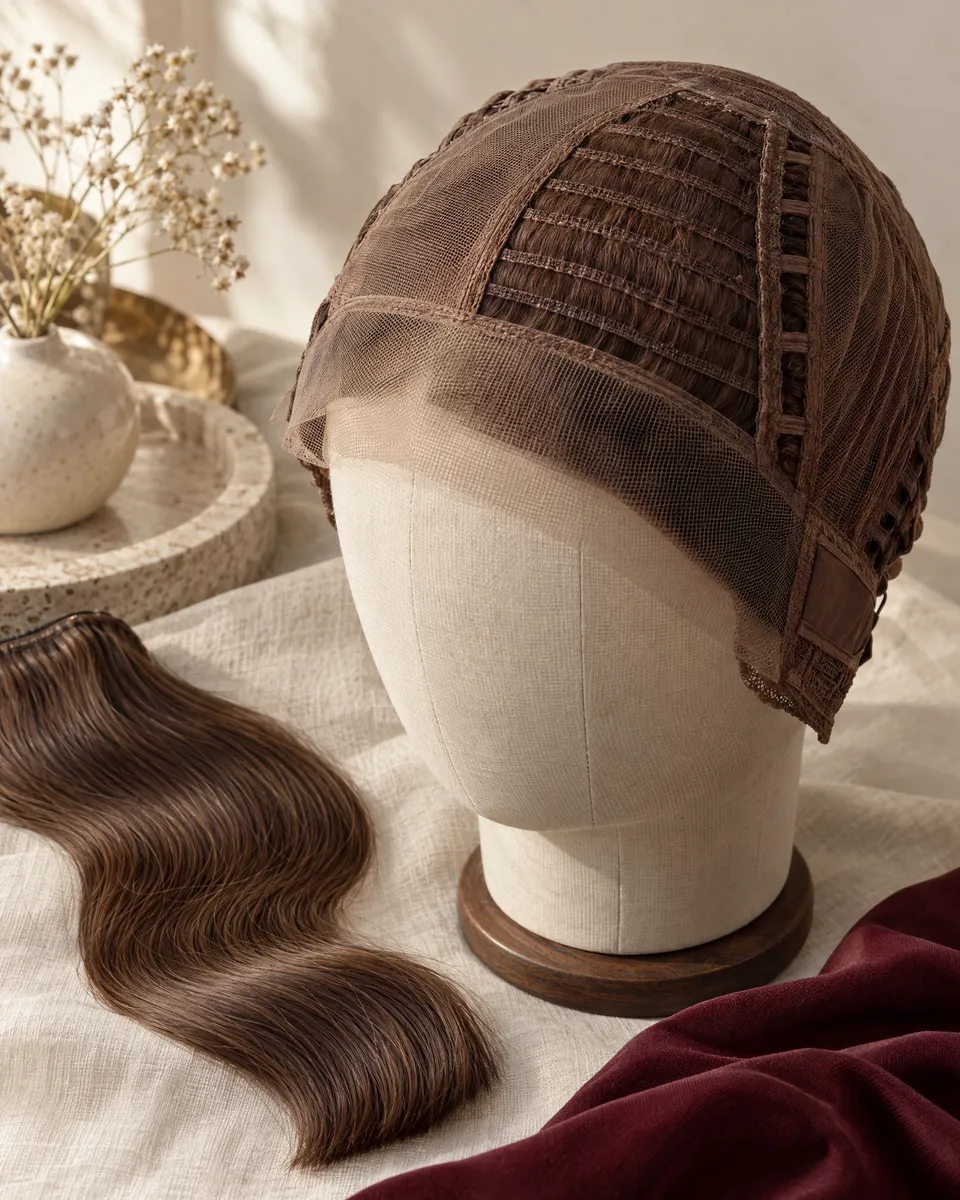
A monofilament section is fine mesh with hairs individually attached. At a part, it can give the impression that hair emerges from the scalp rather than from a visible row of wefts. It may cover a limited part, crown or larger top area; check the product wording or diagram for its boundaries.
The rest of the cap matters too: a mono section may be combined with wefts, lace or other materials. A mono-part label does not establish that the full top is mono, and “monofilament wig cap” does not necessarily mean the entire cap uses monofilament. Ask which zones use mono and whether the stated parting flexibility is limited to that area.
Monofilament is not a synonym for silk top; compare the distinct details in our silk top wig guide. A full lace wig also describes a different construction and does not, by its name alone, confirm a mono area. A monofilament hair topper is a partial base rather than a full wig, so first decide whether you want coverage over the whole head or at a particular area.
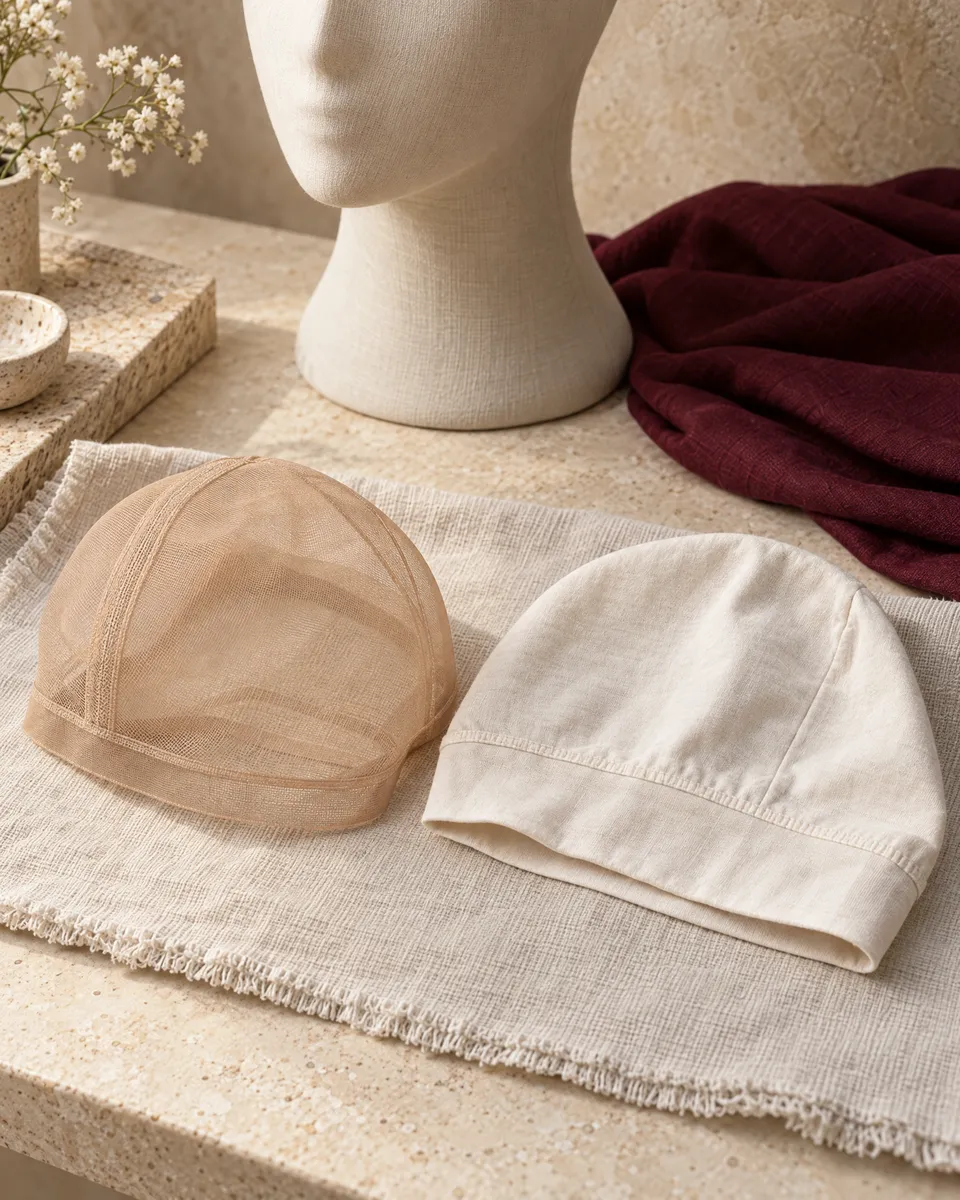
Parting options: check the mono area on each wig
Parting flexibility depends on the location and extent of the mono section, along with the rest of the cap and the way the hair is styled. Compare the actual boundaries of that section with the part you expect to wear, rather than treating “mono top” as a universal promise of unrestricted movement.
Where a mono area may sit: part, crown or top
A mono part signals a defined mesh area along a parting. Check its width and length, and whether the part can shift within the zone or is intended to stay in one position.
A mono crown places the mesh at the crown, not necessarily at the front or side part. If you expose the crown when arranging your hair, ask whether the section covers that area; do not assume it extends across the full top.
A mono top may indicate broader coverage, but terminology varies. Verify its boundaries and whether your preferred part falls within them. A broader zone may offer more room than a small defined section, but does not guarantee every parting direction. A diagram or written specification helps clarify.
Other cap labels describe different features: compare a hand tied wig or open wefted wig cap without assuming either tells you the mono coverage. A breathable wig cap concerns cap design; a PU wig cap is another construction to compare, not a synonym for monofilament. Check the areas and materials stated for the individual style.
The American Cancer Society’s Wigs for Hair Loss guidance discusses choosing full-wig or partial coverage such as a topper according to the area a person wants covered. This is general selection guidance, not a brand endorsement or a claim that one cap suits everyone. Decide the coverage you want, then compare mono placement and cap details.

Mono top, part and crown: what to compare before asking
Before choosing, turn the label into a few concrete checks: identify where you want to part the hair, confirm what the mono area covers, and understand what construction surrounds it. These checks make it easier to compare two styles without assuming that similar names mean identical caps.
Questions to ask about a monofilament wig cap
Use three checks to turn a label into a useful comparison. One: locate the mono zone. Is it a defined part, crown panel or larger top, and does it include your intended part? Use a specification or diagram; if boundaries are unstated, treat the parting range as unconfirmed.
Two: check the surrounding construction and hairline. Compare the top with the front and sides, especially if you wear the hair away from your face. Mono at the crown does not establish how the front hairline is made, and a hairline description does not tell you how much of the top is mono. Ask about each zone that matters.
Three: check fit and care for that exact item. Cap sizes and care directions vary, so use the product’s own specification rather than another wig’s instructions. Think about your usual part and styling; do not infer exact materials, dimensions, stock or colour availability from a catalogue photograph alone.
In practical terms, a mono part is relevant when your preferred part sits in its defined zone; a mono crown when crown coverage matters; and a broader mono top when you want a wider area to compare for parting. The boundaries and surrounding cap remain style-specific. Find OWNSTRAND at Unit 2103, 50 Hoi Yuen Road, Kwun Tong, Hong Kong (利寶時中心); ask about a style’s specifications and supply before visiting, as the address does not imply stock.
For a focused enquiry, note the style name, preferred parting position, desired coverage and stated cap details. WhatsApp +852 5933 4697 is for enquiries, quotations and confirming supply; a message is not an automatic order. The monofilament part wig guide also compares the terminology.



| Construction wording | What it points to | What to verify for the specific wig |
|---|---|---|
| Mono part | A defined monofilament zone along a parting | Its width and length; whether your preferred part sits within it |
| Mono crown | A monofilament zone centred at the crown | How far it extends; whether it covers the crown area you expose |
| Mono top | A monofilament area on top, potentially broader | The exact boundaries and parting range stated for that style |
| Mono with other cap panels | A mono section combined with other construction | Which areas use mono and how the front, sides and remainder are made |
Ask about a wig style on WhatsApp
Tell us the style you have in mind. We can discuss the options, quotation and arrangements before you decide.
Ask about a wig style on WhatsAppBefore you choose
What is a monofilament section on a wig?
It is a fine mesh area in the cap where hairs are individually attached. Its position and size vary: it may sit at a defined part, crown or broader top. Check the specific item’s construction description to see which areas are covered and how the remaining cap is made.
Can I part monofilament wigs in different directions?
It depends on the location and extent of the mono area. A mono part, crown and top refer to different zones, and the terms do not guarantee the same range across styles. Confirm that your preferred part falls within the stated section and follow the product’s styling guidance.
Is a monofilament top the same as a silk top?
No. They refer to different cap constructions. Do not assume one term describes the other or guarantees matching coverage; compare the specific product details and the areas each term describes.
What should I check before choosing a monofilament wig cap?
Check the mono area’s location and extent, whether it includes your preferred part, how the remaining cap and hairline are made, and the item’s fit and care specifications. Ask about the specific style and confirm supply before deciding if any detail is unclear.
Further reading
- American Cancer Society — Wigs for Hair LossSupports the general selection fact that a person can consider full-wig versus partial coverage such as a topper according to the area they want covered. It does not endorse OWNSTRAND or establish that any construction suits every person.
Still weighing up your options?
Follow a related guide to make your next decision with clearer information.
Explore full lace wig cap construction, coverage and fitting considerations. Compare it with lace front options, then contact OWNSTRAND Wigs to ask about styles.
Explore what a hand tied wig means, how hand-tied construction differs from wefted caps, and what to check by style. Ask OWNSTRAND about options.
Learn how an open wefted wig cap is described, how open cap and machine-made terms vary, and what to ask when comparing wig cap construction. Contact us.
Explore how a breathable wig cap may allow airflow, compare cap coverage and materials, and ask OWNSTRAND Wigs about styles suited to your needs.