
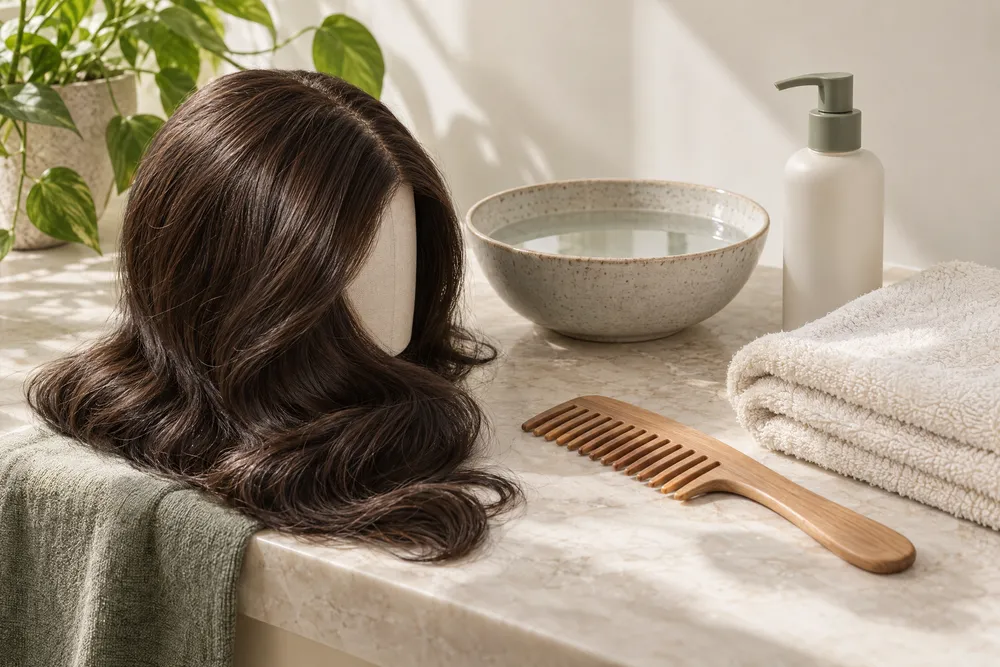
Why human hair wig tangling can happen
Tangles usually have a practical cause: loose strands cross, catch or rub together until a small knot forms. Looking at where the knot appears can help you adjust handling without blaming the wig or assuming that every rough patch means damage.
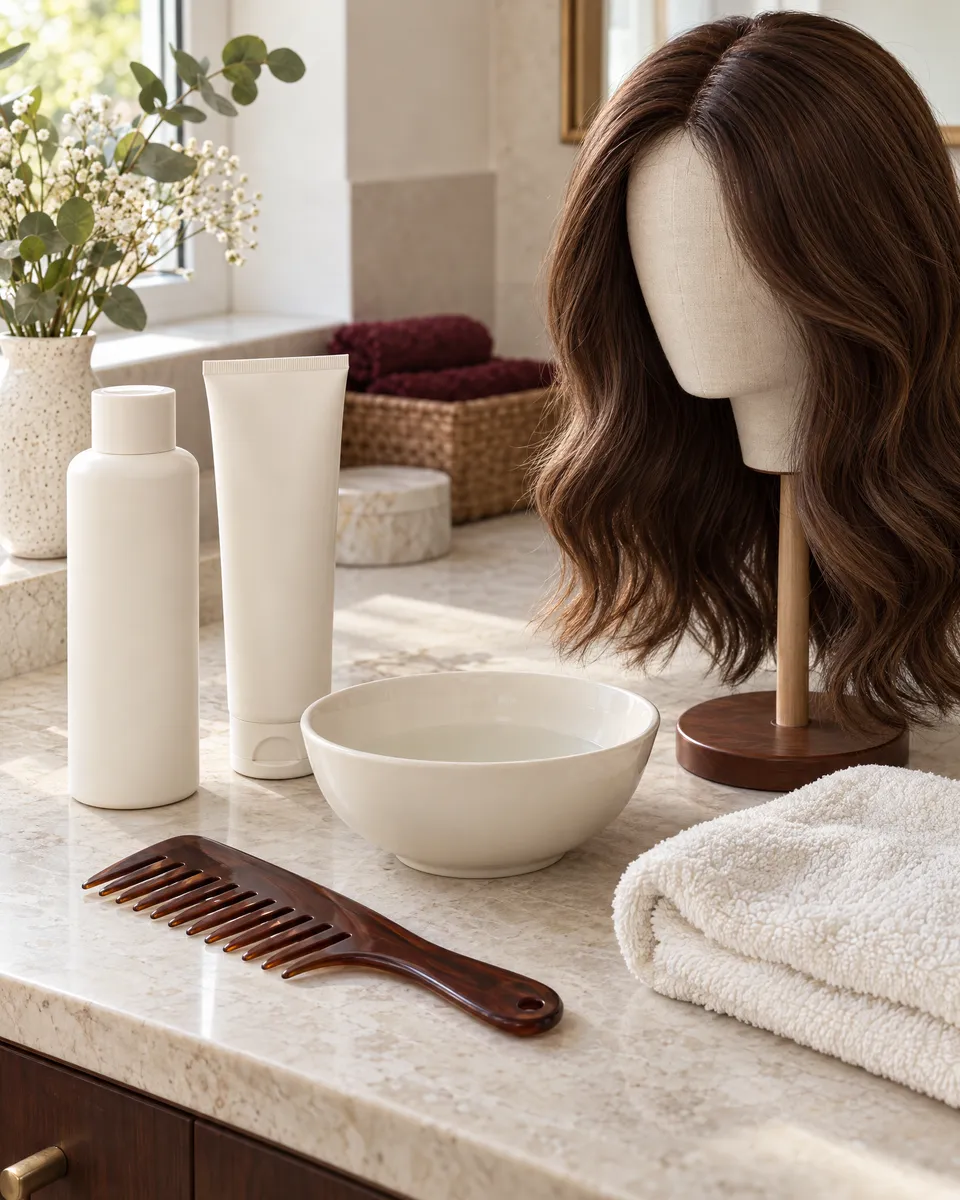
A gentle routine for knots, frizz and shedding
Choose a calm moment with enough room to see the ends and support the hair. Work in stages; a few careful passes are preferable to rushing through a snag. If the care label or maker gives a different instruction for your particular wig, follow that guidance.
How to detangle a human hair wig from the ends
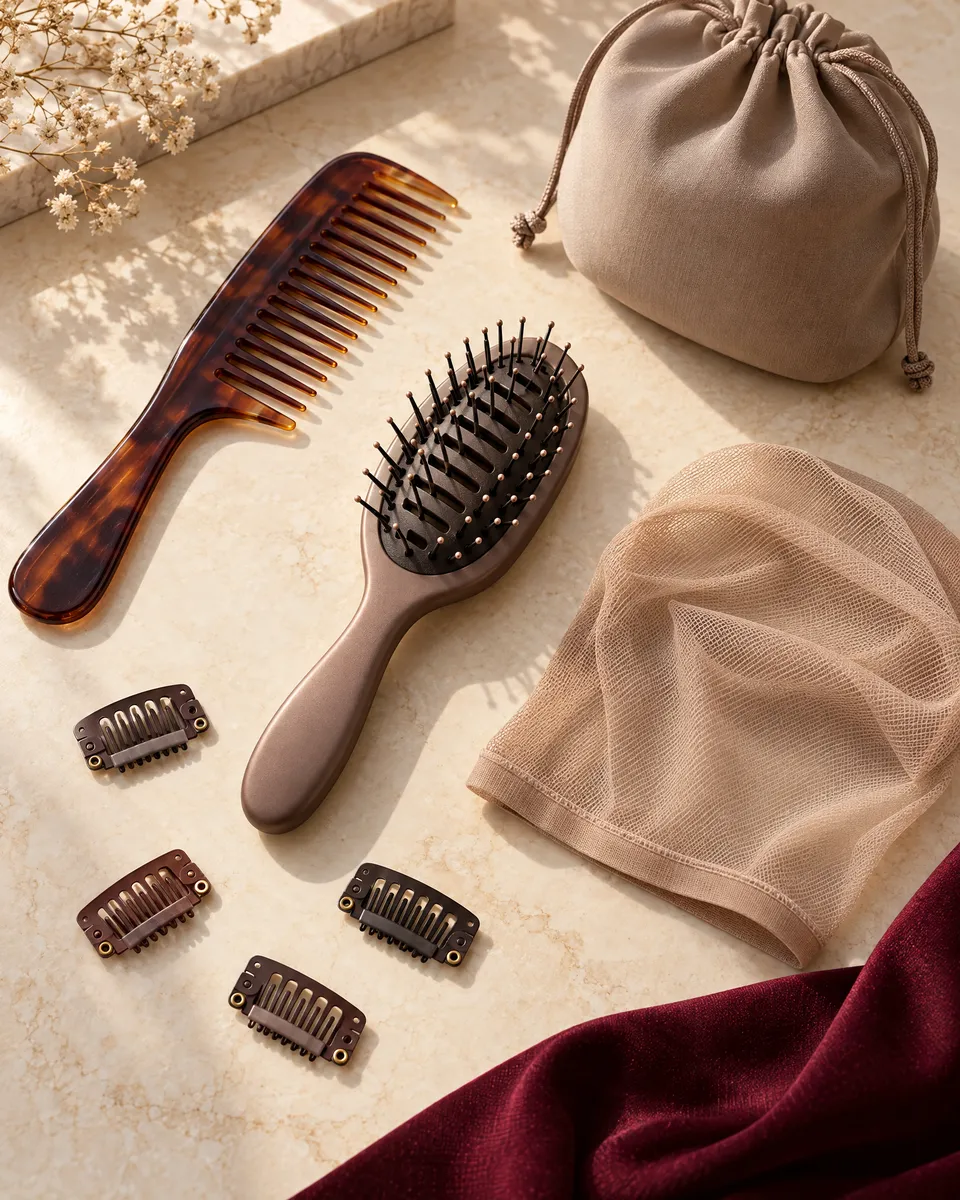
Set the wig securely on a suitable stand if that is how you normally handle it, or hold it so the hair is supported without stretching the base. Separate a manageable section with your fingers. Begin at the very ends and ease apart loose knots before moving a little higher. Keep the section you are not working on out of the way, and use short, light strokes with a tool suitable for the wig. If you are unsure which tool is appropriate, check the care directions rather than choosing by guesswork.
When you reach a knot, pause and loosen its outer strands gently with your fingers or the recommended tool. Do not drive a brush or comb straight through it, yank from the roots, or pull against the cap. Keep a hand close to the area being worked so the force is not transferred to the base. Repeat patiently, moving upwards only after the ends below are free. This end-to-root sequence is the useful answer to how to detangle a human hair wig without adding unnecessary tension.
Treat the hairline and any hand-tied or delicate area with particular care. If a knot will not release with light handling, leave it alone for now; repeated attempts can make the situation worse. Avoid adding water, conditioner, oil or styling product simply to make the knot slide unless the wig's own instructions recommend it. For related questions about styling after detangling, see can you use heat on a human hair wig and can you dye a human hair wig before making a change.
A gentle approach to human hair wig tangling
Build a simple habit around the places you notice knots, rather than brushing repeatedly when the hair is already smooth. Check the nape, the ends and areas that touch collars or scarves; separate any early snarl before it tightens. After wearing the wig, give it a quick visual check and remove loose tangles with the same low-tension method. This is a way to reduce avoidable friction, not a promise that tangles will never return.
For wash-day choices, consult shampoo for human hair wigs and how to wash a wig; do not assume a household product or a routine intended for another wig is suitable. Keep the hair arranged as directed while it dries and store it in a way that avoids crushing or rubbing the lengths; how to store a wig covers storage decisions. A human hair wig can also feel rough or more prone to knots in humid conditions. For that separate concern, see wig frizz in humidity. The American Cancer Society's wig guide discusses brushing and storage as parts of wig care, reinforcing why routine handling should be guided by the needs of the individual piece rather than one universal recipe.
A human-hair piece and a synthetic piece do not necessarily share the same care directions. If you are comparing fibre types, synthetic wig tangling is a more relevant guide for a synthetic wig. The wider wig care guides bring together practical topics, but always start with the instructions for the wig in your hands.

When to ask for care advice
A gentle routine is useful only while it remains gentle. If the knot tightens, the base starts to move, or you feel you have to pull, stop and reassess instead of trying a stronger technique.
What to do if shedding or frizz continues
Some loose hair may come away during ordinary handling, and no detangling method can guarantee zero shedding. To reduce avoidable strain, use light strokes, work on small sections and avoid tugging at knots or the wig base. If you are wondering how to stop a human hair wig from shedding, first distinguish a few loose hairs from a change that seems unusual for your piece. Note when you see it, where it is happening and whether it follows brushing, washing or styling; that detail can make a care conversation more useful.
Persistent human hair wig frizz may have more than one cause, including friction, humidity or a routine that does not suit the hair. Do not try to correct it with increasingly strong products or heat without checking the wig's own guidance. If the knot remains stuck, shedding seems unusual, or you cannot identify a suitable next step, pause and ask for advice about that particular wig. OWNSTRAND Wigs can discuss care enquiries via WhatsApp; send the question and, if helpful, a description of where the issue appears. This is a request for guidance, not an automatic order or a guarantee that a particular repair is possible. For broader upkeep and wear expectations, see how long does a wig last; the answer depends on use and care, not a single promise.


| What you notice | Gentle first response | When to pause |
|---|---|---|
| A small knot at the ends | Separate a small section and loosen from the tips upwards. | Pause if light strokes do not release it. |
| Knots where hair touches the nape or collar | Check the area after wear and gently separate early tangles. | Stop if the base moves or you need to tug. |
| Hair feels rough or frizzy | Review friction, humidity and the wig's own care directions. | Ask for advice before adding products or heat. |
| A few loose hairs during handling | Use lighter strokes and support the hair near the section. | Pause if shedding seems unusual or increases. |
| A snag near a delicate base or hairline | Avoid pulling against the base; leave it undisturbed. | Seek wig-specific advice if the knot persists. |
Ask about care for your wig on WhatsApp
Tell us the style you have in mind. We can discuss the options, quotation and arrangements before you decide.
Ask about care for your wig on WhatsAppBefore you choose
How should I detangle a human hair wig?
Work gently from the ends upwards in small sections, loosening knots a little at a time. Support the hair near the section and avoid forcing a brush or comb through a snag. Follow the care directions for your individual wig, and stop if the knot resists light handling.
How can I reduce avoidable human hair wig shedding while detangling?
Use light strokes, work on small sections and avoid tugging at knots or the wig base. These steps may reduce avoidable stress, but they cannot guarantee that shedding will stop. If the amount or pattern seems unusual for your wig, pause and ask for care advice.
What can I do about frizz or a knot that will not loosen?
Pause rather than pulling harder. Check the wig's care directions before using a product, water or heat, and ask OWNSTRAND Wigs for guidance if the knot persists or you are unsure which approach suits the piece. For product selection, WhatsApp +852 5933 4697.
Further reading
- American Cancer Society — Wigs for Hair LossSupports the specific general-care statement that brushing and storage are parts of wig care. It is cited as general guidance, not as an endorsement of OWNSTRAND or a claim that one routine suits every wig.
Still weighing up your options?
Follow a related guide to make your next decision with clearer information.
Wig frizz in humidity varies by fibre and style. Learn what to check for human-hair and synthetic wigs, and ask OWNSTRAND Wigs about care for a specific style.

Learn how to manage synthetic wig tangling with gentle, fibre-aware detangling and nape care. Ask OWNSTRAND about care for a specific style.
Browse practical wig care guides from OWNSTRAND Wigs, including washing, storage, detangling and everyday wear considerations for different fibres.
Learn how to wash a wig and how often to wash a wig, with fibre-aware steps and practical Hong Kong care tips. Ask OWNSTRAND about your wig.