

Start with the child’s day, not a product category
A family can make the comparison calmer by beginning with ordinary moments: getting ready for school, travelling, playing, resting, seeing relatives and being photographed. The question is not which option should look best in theory; it is which choice the child would be willing to use in those moments.
Let comfort and self-expression sit together
Ask the child open questions rather than offering a verdict. They may care most about looking familiar, feeling less warm, covering the scalp outdoors, putting something on without help, or being free to wear nothing at home. Their answer can change from one day to the next. That is useful information, not indecision to correct.
CancerCare suggests exploring whether a child would feel most comfortable in a hat, scarf or wig, while leaving room for strong feelings to be expressed. CancerCare’s child hair-loss fact sheet supports a choice-led conversation rather than a rule that one covering suits every child. A parent can record the child’s own words without trying to improve them.
St. Jude Together similarly frames hats, scarves, bandanas and wigs as personal options, and lists comfort, personal expression, warmth or sun protection, cost, ease of wear and ease of upkeep as factors to consider. That list is a useful prompt, not a scoring system. It helps a family notice the practical trade-offs that a single mirror check may miss.
- Name the situations that matter most to the child this week, rather than guessing from age or diagnosis.
- Write down one preferred feeling or look, one concern and one situation where the option would be used.
- Keep ‘no headwear’ on the list if that is the child’s preference in a particular setting.
- Revisit the notes after a school day, outing or quiet day because priorities may shift.
Make a small record before browsing options
A simple record turns a vague request into a conversation that another person can understand. It does not need specialist equipment. A mirror, ordinary indoor light, daylight near a window, a few photos and short notes are enough to capture what the family is actually trying to solve.
Use photos as prompts, not proof
If the child agrees, take a front, side and back photo in the same light. Add notes on where coverage seems important, whether glasses, headphones or a school cap are used, and what happens when the child looks down or turns their head. The aim is to preserve questions for a later conversation, not to judge appearance from one angle.
It also helps to note the timing and setting of each image: indoor classroom light, outdoor shade, a video call or a family occasion. A style that looks settled when sitting still can raise different questions when the child is walking, changing clothes or leaning over a desk. A photo cannot answer those questions by itself.
Families who are considering a hairpiece can use the record beside wigs for children with cancer hair loss to organise the next discussion. Bring only the images that the child is comfortable sharing. The important detail is the observation attached to each image, such as ‘wanted the fringe away from the eyes’ or ‘did not want to retie anything at school.’
| What to capture | Why it helps | Example note |
|---|---|---|
| Typical setting | Separates school, home and special-event needs | Needs a quick option before class |
| Movement | Shows which actions need a try-on check | Looks down to read and wears headphones |
| Visual preference | Keeps the child’s own priority visible | Prefers hair away from the face |
| Care routine | Prevents care from being assumed | Adult can help on weekends, not at school |
Compare the option against a moment of use
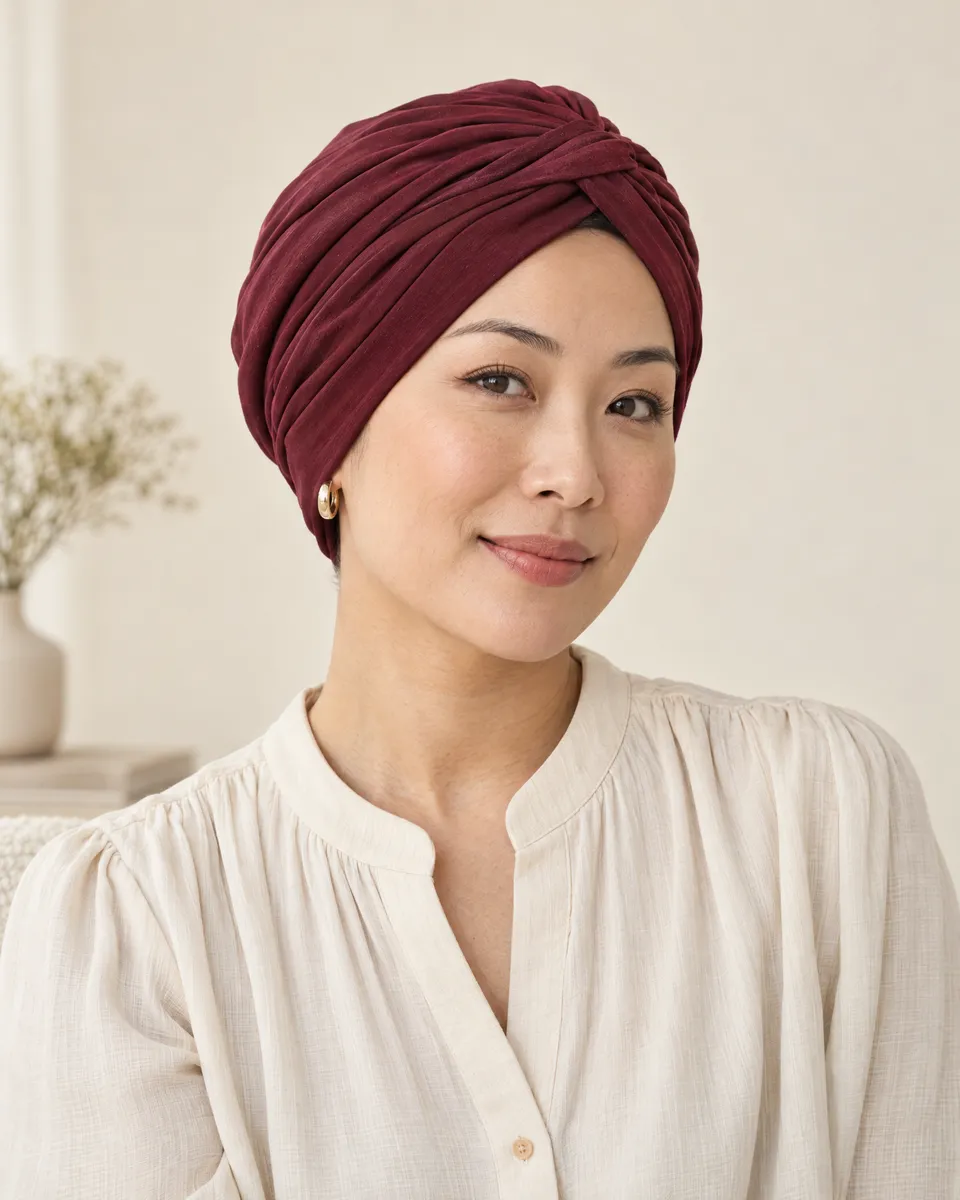
A useful comparison does not rank wigs above scarves or hats. It asks what has to happen in a particular moment and whether a given option can be explored for that moment. One family may want a familiar hair silhouette for a celebration; another may value a simple cover for a short journey. Both can be valid.
Map the option to the routine
Place the notes beside three or four everyday moments: leaving the house, a long classroom period, active play, resting at home and a photo occasion. For each moment, write what must be easy: putting on, taking off, keeping tidy, feeling less noticeable, or changing if the child no longer wants the cover. This separates a use need from an adult assumption about style.
When a family is deciding between a hairpiece and a lighter cover, wig or scarf for hair loss can be read as a comparison prompt. The useful follow-up is specific: ‘For the school run, does the child want a hair look, a fabric cover, or neither?’ One answer should not be treated as a permanent choice for every context.
Write down what the child can do independently and what requires an adult. That is not a test of maturity. It is a practical way to identify whether an option creates pressure at a busy time of day. If the answer is unclear, ask to see the action slowly during a fitting or sample discussion rather than promising that any option will be effortless.
Check visible fit and movement with care
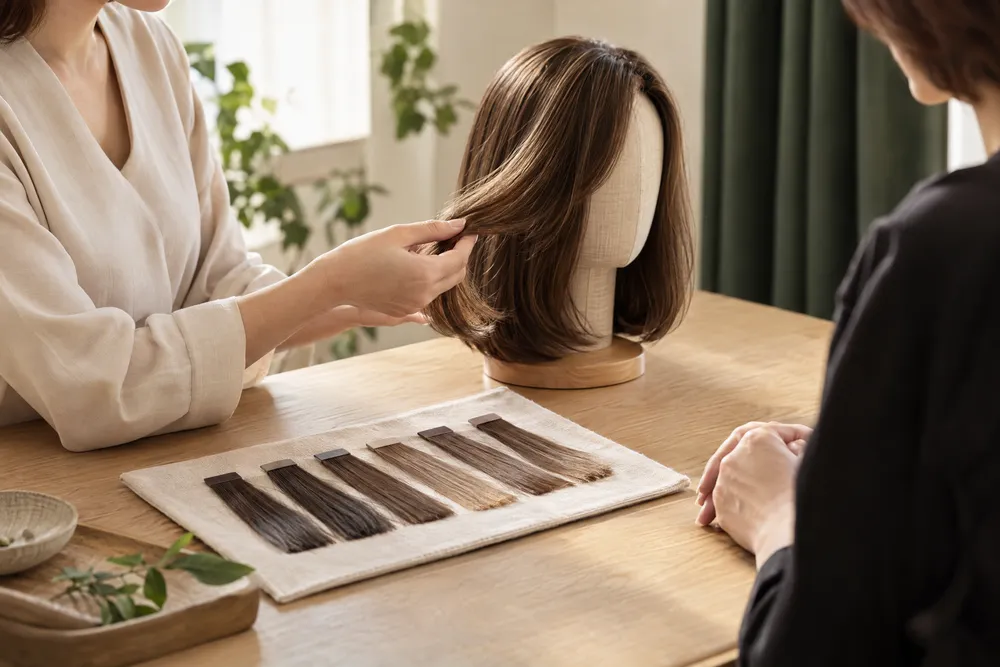
A calm try-on is a chance to observe, not to force a decision. Keep the child in control of pauses and stop points. The aim is to see how an option sits during ordinary movement and to identify questions for the supplier or the child’s care team, not to diagnose a scalp concern from appearance.
Watch ordinary actions in a gentle sequence
Start by looking in the mirror while sitting, then standing. If the child is happy to continue, ask them to turn left and right, look down as if reading, look up, smile, talk and put on familiar glasses or headphones. Note what they say and what you can see: a distracting edge, a change in coverage, a style that falls into the face, or an adjustment they dislike making.
A support accessory should be discussed as part of a specific fit question, not assumed to solve every movement concern. For example, ask whether a wig grip band is appropriate for the chosen wig, the child’s current comfort and the intended activity. Ask how it is meant to be placed and what to do if it feels uncomfortable, rather than tightening it until the appearance seems settled.
Fit may be different before, during or after hair loss, and St. Jude Together notes that treatment-related hair loss is not always predictable. Its guidance also says newly exposed scalp can be tender and calls for following the care team’s skin-care instructions. If there is tenderness, redness, flaking or a treatment-specific concern, pause the product comparison and ask the child’s own clinical team what needs confirming.
- Ask permission before each movement check and stop when the child asks to stop.
- Record a specific adjustment, such as ‘needs help around the ear,’ instead of calling the whole item good or bad.
- Repeat the same short sequence when comparing another option so the observations are comparable.
- Keep medical or skin concerns separate from a cosmetic fit opinion and take those concerns to the care team.
Turn observations into questions that reveal scope
The value of the record appears when it becomes short questions that can be answered clearly. A good question names the child’s priority, the setting and the uncertainty. It is more useful than asking whether an option is simply ‘best’ or expecting a supplier to infer a family’s routine from a photo.
Ask for a demonstration, not a promise
Use a question such as: ‘The child wants hair away from the face for a school photo; which details can we view or try so we can judge that?’ Or ask: ‘We need to know whether an adult can help with this before class; can you show the steps we would need to practise?’ These questions create a practical discussion without assuming a particular result.
If the notes point to a made-to-measure conversation, ask what is measured, what can be selected and what still needs to be confirmed after fitting. The overview of custom vs ready-made wigs is a useful place to separate the question of fit from the question of ready-to-wear convenience. A custom option is not automatically the answer to every concern, and a ready-made option is not automatically unsuitable.
Keep a separate column for limits. For example: ‘Photo shows a preferred shape, but we have not checked it with glasses’; ‘child likes the colour in daylight, but has not worn it for an outing’; or ‘we do not know the appropriate care routine yet.’ This turns uncertainty into an enquiry item rather than letting it become an implied promise.
Avoid false signals from photos and first impressions
Photos and a quick look in the mirror are useful records, but they are partial. They capture one light level, one expression and one posture. They cannot show every part of comfort, care, changing fit or the child’s feeling after a full day. Treating them as evidence of everything can create unnecessary pressure.
Name what an image can and cannot answer
A photograph can help a child point to a parting, length, fringe direction, amount of visible coverage or overall silhouette they like. It can also help a family remember which questions came up during a viewing. Use neutral notes: ‘likes this front view’ is clearer and kinder than ‘this is the right look.’ The child may prefer a different answer once they see the option in another setting.
An image cannot confirm long-term comfort, how an item behaves through the day, whether an accessory is appropriate, or whether a particular care product is suitable. Nor can a family infer a medical cause or treatment timeline from an image. St. Jude Together advises discussing likely hair-loss effects with the care team because risk depends on the particular treatment and other factors.
Be cautious with comparisons that turn a natural difference into a fault. Indoor and outdoor light can make colour look different. A close-up can make an edge look more prominent than it does at conversation distance. A child’s quietness may mean concentration, tiredness or simply a wish to move on. Ask a simple follow-up—‘Would you like to wear it again?’—instead of filling in the answer.
- Label each image with the place, light and activity rather than calling it a final result.
- Do not use a parent’s preferred photo as a reason to overrule the child’s stated preference.
- Keep a question open when it has not been tried in the relevant setting.
- Seek care-team guidance for treatment or scalp questions rather than drawing conclusions from images.
Keep care questions specific to the chosen item
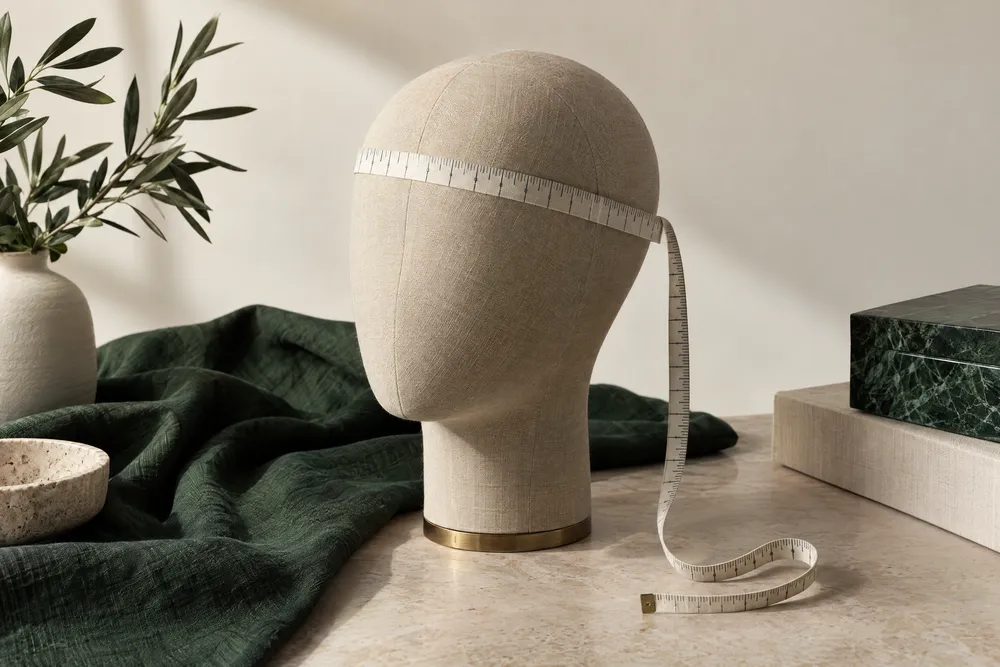
Care should be discussed after the family has identified the option they are actually considering. A product name alone does not establish how a particular wig, fibre, cap construction or child’s situation should be handled. Ask for the item-specific guidance and keep that guidance with the record rather than transferring it from one option to another.
Pair each product with one exact care question
If the family is shown a brush or comb, ask which tool is intended for the chosen item, where to begin and which handling steps should be avoided. The wig brush page can help keep the enquiry focused on the tool rather than assuming that every brush suits every wig. Record the answer in the child’s routine language: ‘adult helps after school’ or ‘leave this step for home.’
For cleansing, ask what the maker or supplier specifies for that exact wig and how the family can tell when cleaning is needed. A link to wig shampoo is useful for opening a product-specific conversation, but it is not a universal washing instruction. If scalp care is part of the question, take that part to the child’s care team rather than treating wig care as medical guidance.
Conditioning questions need the same precision. Before using wig conditioner, ask whether it applies to the selected item, what result it is meant to support and any handling directions that should be followed. This avoids making a broad claim from a label or applying a routine learned for one construction to another.
If tangling is the concern, write where and when it happens before asking about wig detangler spray. The answer may depend on the item and its instructions, so the meaningful enquiry is not ‘Will it fix tangles?’ but ‘Is this suitable for this wig, and how should it be used according to its directions?’
Take three clear notes into the next enquiry
The final step is modest: reduce the record to the few details that will make the next conversation productive. This can be a fitting discussion, a conversation with a support worker, or a question for the care team. The family does not need to settle every future situation before making an enquiry.
Use a concise enquiry script
Start with the child’s preference: ‘They want something that feels less noticeable during a short school event,’ or ‘They prefer a simple cover for travel and do not want hair around the face.’ Add the relevant movement or routine: ‘They wear glasses’ or ‘an adult can help at home but not at school.’ Then say exactly what remains unconfirmed.
Bring the record, not an expectation that a photo or category determines the answer. Ask to view the relevant details, learn what can be adjusted and understand which questions the supplier cannot answer. If the child has treatment-related scalp concerns or the family needs to understand likely hair loss, the clinical team remains the appropriate source for that part of the discussion.
For an OWNSTRAND conversation, the family can begin with the child-focused comparison guide and then use the notes to ask focused questions. The purpose is to make the child’s own comfort and routine visible in the decision, not to pressure the family into a prescribed look or a quick purchase.
| Child’s priority | What to observe or record | Question to take forward |
|---|---|---|
| Familiar appearance | Which length, fringe or coverage the child points to | Which details can we view in the chosen light? |
| Independence | Which steps the child wants to do alone | What would need adult help in the morning? |
| Movement | Looking down, turning, glasses or headphones | What should we check during a try-on? |
| Different settings | School, travel, home and an occasion | Would we choose the same option for each moment? |
| Care routine | Who will handle care and when | What care guidance applies to this exact item? |
Ask OWNSTRAND on WhatsApp
Tell us the style you have in mind. We can discuss the options, quotation and arrangements before you decide.
Ask OWNSTRAND on WhatsAppBefore you choose
Must a child choose a wig, scarf or hat after hair loss?
No. Headwear is a personal choice, and a child may prefer a wig, a scarf, a hat, another covering or no covering in a particular setting. The useful conversation is about what feels manageable and what the child wants, while leaving treatment and scalp-care questions to the care team.
What should a family record before a headwear enquiry?
Record the child’s preferred look or feeling, the setting where the item would be used, movements or accessories such as glasses that need checking, who would help put it on, and the one question that remains unanswered. A few labelled photos can help explain a preference, but they should not be treated as proof of fit or comfort.
When should a family ask the child’s care team rather than a supplier?
Ask the care team about the likely effects of a particular treatment, scalp tenderness or skin care, and any concern that is medical rather than cosmetic. A supplier can discuss an item and its stated care directions, but cannot replace advice from the child’s own clinical team.
Further reading
- CancerCare — Helping Your Child or Another Loved One Cope With Hair LossSupports the child-centred discussion of hats, scarves and wigs, and the need to make space for feelings around hair loss.
- Together by St. Jude — Hair Loss in Childhood CancerSupports the listed choice factors, the personal nature of headwear, treatment-related uncertainty and the direction to follow the child’s care team for scalp concerns.
- Cancer Council — Wigs, Turbans, Scarves and HatsSupports using a practical comparison of headwear types and discussing fit and care requirements rather than assuming one option suits all situations.