

Decide what “subtle” means before the fitting
The most useful starting point is a baseline, not a trend image. Think about the appearance you want people who know you to recognise at a normal conversational distance. That baseline may be your recent haircut, a usual parting, a softer fringe, a particular amount of temple coverage, or simply the feeling that the hair does not arrive in the room before you do.
Choose two visible priorities and one practical priority
Write down no more than two appearance priorities. For example, you may want the front to sit lightly around the face and the crown to avoid looking fuller than your usual hair. A long wish list often creates competing instructions. A short list lets you see whether a small adjustment actually protects the look you value, rather than chasing a generic idea of naturalness.
Then add one practical priority, such as being able to look down at a phone without shifting attention back to the hair, or feeling comfortable with glasses. The American Cancer Society notes that front placement and even ear-tab position matter when fitting a wig; those are useful things to observe, not measurements to copy blindly from one piece to another. American Cancer Society’s wig-fitting guidance gives a helpful rationale for checking them.
If your aim is a change in coverage rather than a full new silhouette, name that clearly. A visit for wig fitting Hong Kong can be more productive when the question is specific: “Can we compare this familiar outline with a slightly softer front?” That gives the fitting conversation a visible decision to work through rather than a request to make something simply less obvious.
- Name the feature you want to preserve before naming a feature you want to change.
- Use words such as softer, closer, lighter, lower or less volume only with the area they describe.
- Keep one practical situation in mind: glasses, commuting, conversation, wind, or a long seated day.
Bring a reference record that can survive different light
Photos are prompts for discussion, not a colour certificate. Their value is that they preserve proportion, placement and the overall level of change you are comfortable with. A good record makes it easier to say what you notice, while leaving room to compare the actual piece in person rather than trusting a screen.
Take four simple views and label the context
Use recent, unfiltered photos if possible: a front view with a relaxed expression, a three-quarter view that shows how the hair meets the face, one side view, and a back or nape view. Take them at an ordinary distance. A close selfie can exaggerate a fringe or make a part look wider than it appears to another person standing across from you.
Label each image with the setting: window light, outdoor shade, indoor warm light, or an evening photo. The American Cancer Society specifically suggests photographs of a current hairstyle and natural light for comparing a familiar hair colour with a wig or swatch. That supports using light labels and bringing unfiltered originals; it does not make a phone image an exact colour match. Read the source guidance.
Include one note about the hair you normally style away from the camera. Perhaps you tuck one side, wear a low part, lift the fringe, or allow a little unevenness. These lived-in details can be more relevant to a subtle transition than a polished reference image. They also remind you to assess the piece in a position you would genuinely wear, rather than in a pose chosen only for the mirror.
| Bring or capture | What it helps you compare | Question to ask |
|---|---|---|
| Relaxed front photo | Face framing and the apparent start of the front | Does this front feel close to my usual outline? |
| Three-quarter photo | Parting direction and temple transition | Which side should look quieter or fuller? |
| Side or nape photo | Neckline, profile and where the shape finishes | Does the back sit where I expect when I turn? |
| Light label | Whether tone shifts between surroundings | What should I compare in window light and indoor light? |
| One plain note | A habitual tuck, glasses or daily movement | Can we check this while I wear it normally? |
Check position, comfort and movement separately
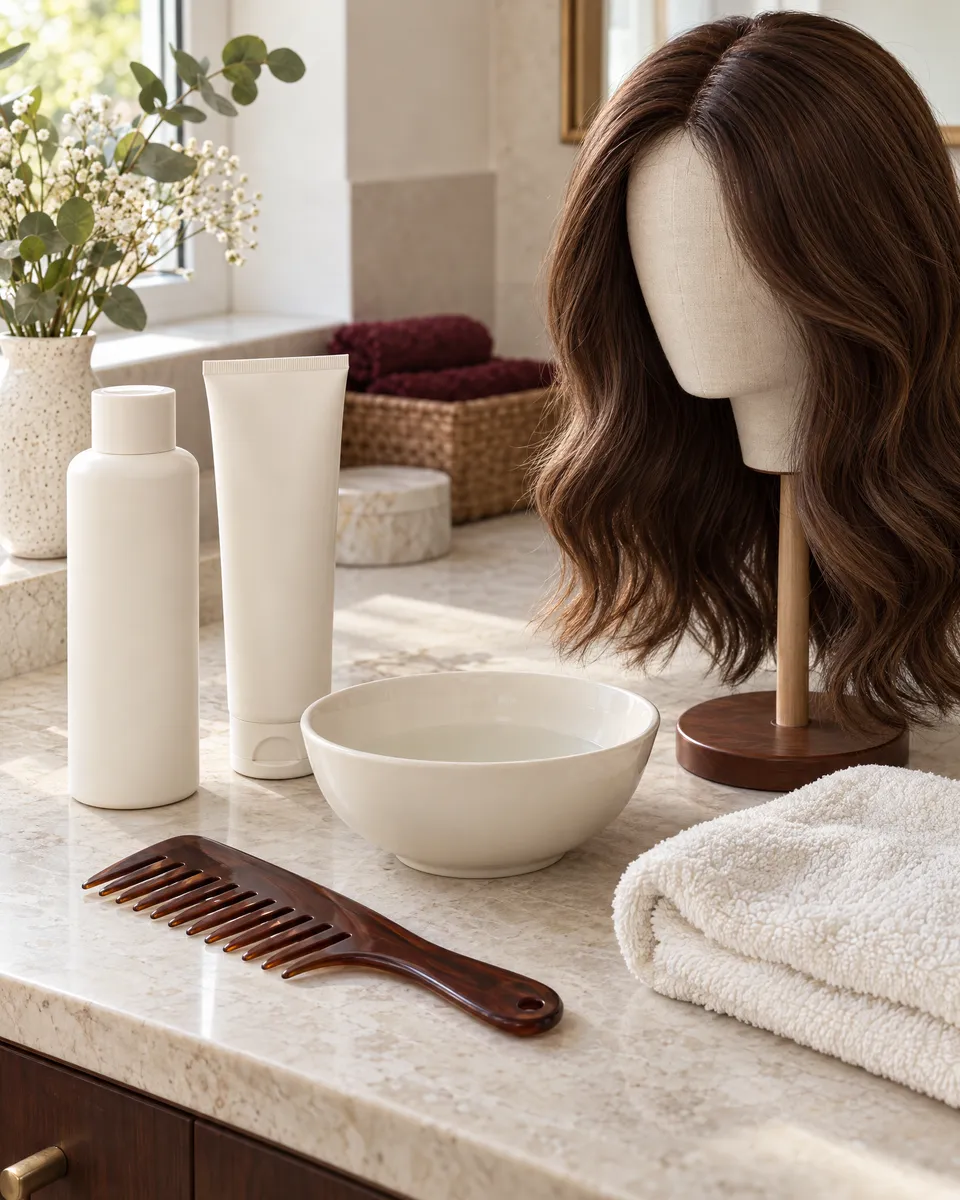
A look can seem convincing when you sit very still and then feel wrong as soon as you turn, look down or put on glasses. Separate visual checking from comfort checking. This prevents a small positioning issue from being mistaken for a problem with colour or style, and it makes your feedback easier to act on.
Use a short movement sequence instead of a single mirror pose
Start with the front, each temple, the part and the nape. Ask yourself whether the front seems placed where you expect, whether the two sides read evenly, and whether the back remains smooth when you turn. Do not try to make every strand identical. A subtle result often depends more on a believable overall line than on a motionless, perfectly arranged surface.
Next, look down, look up, turn gently to both sides, sit and stand, and put on or remove glasses if you use them. Breast Cancer Now says a wig should fit snugly and should not move around the head. Use that as a practical reason to report a shift, pressure point or rubbing sensation during the try-on, not as a promise that every piece needs the same adjustment. Its fit advice is here.
Describe the location and timing of a concern. “The nape lifts when I look down” is more useful than “the back feels strange.” “The right temple feels different after three turns” distinguishes a motion issue from a style preference. If the piece is being considered before a change in your own hair, say so. Fit needs may change, and an individual fitting should confirm what adjustment is appropriate.
- Look at front, temples, part and nape before styling details distract you.
- Repeat the same gentle movements for each option rather than judging one only in the chair.
- Mention pressure, slipping, lifting or rubbing at the exact point where you notice it.
- Take only the permitted comparison photos and ask before recording any fitting area.
Turn observations into selection questions, not assumptions
A fitting can include different routes: a ready-made full wig, a topper or hairpiece, or a custom discussion. The point of your record is not to declare which construction is best. It is to make a comparison more precise and to avoid assuming that a catalogue name, an online image or a familiar phrase tells you how a specific option will sit on you.
Keep construction, style and category in separate questions
Ask one question at a time: “Which option keeps the amount of front framing closest to my reference?” Then ask: “What can we check about the part and nape in person?” Finally ask what care or adjustment instructions apply to that exact piece. Macmillan Cancer Support notes that a familiar volume, or slightly less volume, may make a change less noticeable. That is a useful starting comparison, not a universal rule about what will look right on you. Macmillan’s choosing guidance explains the context.
If a small addition is closer to your goal than a full head change, keep it as a separate route in the conversation. The Hairdo hairpieces catalogue is a useful page to have in a shortlist, but the page alone cannot establish whether a particular item will provide the coverage, placement or balance you want. Bring the same reference record to any comparison so the scale of change remains visible.
If you are seeking a traditionally masculine silhouette, the HIM men’s wigs catalogue can be a distinct starting point for browsing. Do not infer a hairline, cap feel, density or fit from the label. Instead, use your profile photo and one clear question about the front, sideburn area or crown to compare the option with the appearance you are trying to retain.
When looking at Amore wigs, write down the exact feature that caught your attention rather than treating the brand as the feature. Perhaps it is a quieter crown, a side part or a length that echoes your reference. Asking to examine that one attribute helps you decide whether the visual effect comes from the style, the way it is placed, or the photo used for display.
A comparison with TressAllure wigs can follow the same method. Put the reference next to the option, then ask what changes at the face and nape when you shift from the front view to the side view. That keeps a small, real visual concern at the centre of the fitting instead of treating a catalogue image as a finished result.
If Wig Pro wigs are part of your shortlist, make a note of the everyday situation you want to test: wearing glasses, looking down, or moving from a bright entrance into indoor light. Confirmation must happen with the specific option and its instructions. A category page can help you organise questions, but it cannot verify details for every item.
Make care part of the subtle-change plan
Care affects how a piece presents between fitting days, especially at the ends, nape and part. It deserves a place in the conversation because a beautiful first impression is not the same as knowing how to maintain the look. The appropriate routine depends on the actual fibre, construction and supplier instructions, so general tips must not be transferred across every option.
Ask for the routine that belongs to the specific piece
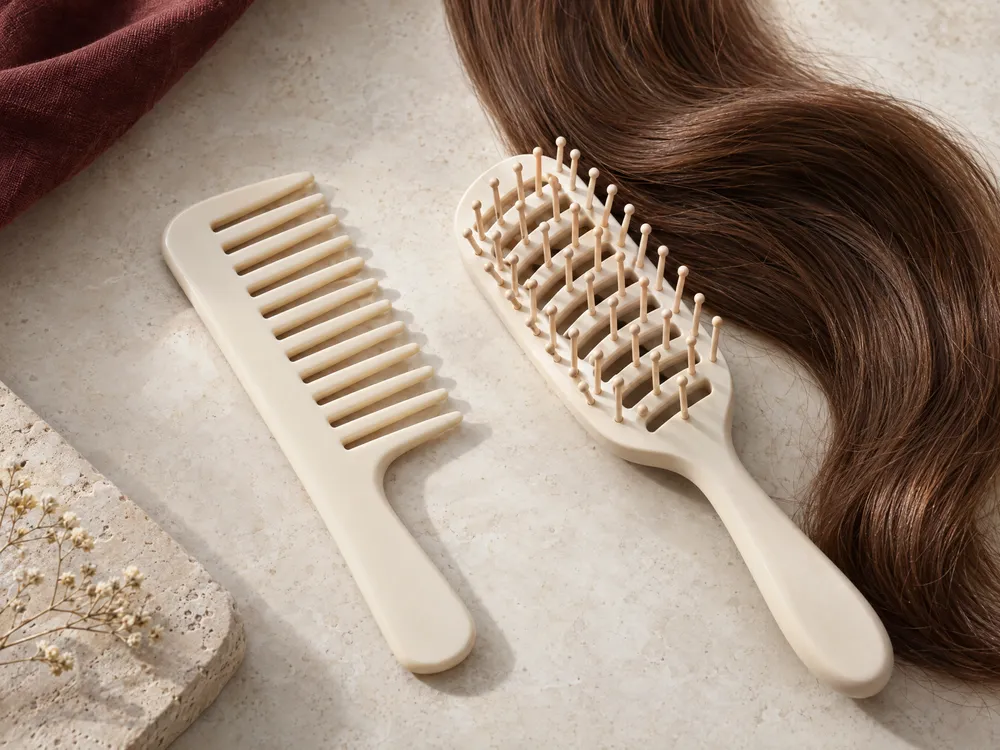
Ask where the piece should rest when it is not being worn, how it should be detangled, and which tools or products are suitable. For a short period between wears, the American Cancer Society recommends a wig stand and says wig-specific care products should be used. That supports asking about storage and product compatibility, not assuming every wig needs the same routine. See its care guidance.
If you want to understand the storage step before deciding, review the page for a wig stand for storage. During the fitting, translate that into a practical question: “Is this the shape and routine you recommend for this piece after a normal day?” The answer should be confirmed for the item in front of you, particularly if you are comparing different fibres or lengths.
For longer or more movement-prone hair, it can also be sensible to ask how to remove tangles without pulling through them. The wig detangler spray page can help you identify the product category to discuss, but it is not evidence that any spray suits every wig. Ask whether the particular piece can use it, how much to apply, and whether brushing or a different method is preferred.
Do not use ordinary heat styling tools, colour treatments or a care routine borrowed from another wig unless the specific instructions allow it. The American Cancer Society cautions against heat tools unless the wig is heat resistant. This is why “Can I do this with this exact piece?” is a better completion-fitting question than “What do people usually do?”
- Confirm the storage position that is appropriate for the piece you are considering.
- Ask which detangling approach, tool and product category its instructions permit.
- Keep heat, colour and any special handling as separate confirmation questions.
- Record the answer with the option name so advice from one piece is not carried to another.
Leave with a compact enquiry for the next step
The final preparation step is to turn everything into a short enquiry you can repeat without losing the point. This is useful whether you are booking, returning to compare options or asking a follow-up question. It also makes it easier to identify what the fitting has answered and what still needs to be checked before you decide.
Use a four-part note that leaves room for confirmation
Start with the baseline: “I want the completed look to stay close to this parting, front framing and nape length.” Add the requested change: “I would like slightly less visible volume around the crown.” Then give the use context: “I wear glasses and want to check it when looking down.” Finish with the open question: “Which option can we compare in person, and what care instructions apply to it?”
This wording is specific without claiming that your photo determines the answer. It gives the fitting a practical sequence: look, move, discuss and confirm. If an option does not meet the first priority, say so early. A subtle change should feel intentional, not like a compromise you cannot explain after you leave.
When you are ready to ask, send the four-part note with one or two unfiltered reference photos through the enquiry route. The aim is a focused conversation about appearance and handling, not a remote promise about stock, price, construction or final suitability. A clear record helps you prepare for a wig fitting with subtle changes while allowing the actual fitting to resolve the details that photographs cannot.
| Observation | Why it matters | What still needs confirmation |
|---|---|---|
| Front and temple outline | It shapes the first impression around the face. | How the specific piece sits after fitting and normal movement. |
| Parting and crown volume | They affect whether the overall change feels familiar or fuller. | Whether adjustment or styling creates the intended everyday effect. |
| Nape during a turn | It shows whether the back remains visually tidy in motion. | The suitable adjustment and care routine for that item. |
| Light in photos and mirror | It reveals that tone can appear different by setting. | The final in-person comparison of the actual hair or swatch. |
| Glasses and gentle movement | They surface comfort or position concerns early. | Whether the exact option can be adjusted for your needs. |
Ask OWNSTRAND on WhatsApp
Tell us the style you have in mind. We can discuss the options, quotation and arrangements before you decide.
Ask OWNSTRAND on WhatsAppBefore you choose
What should I record before preparing for a wig fitting with subtle changes?
Record your usual parting, face-framing shape, crown volume, nape length and one or two situations in which comfort matters. Use recent, unfiltered front, three-quarter, side and back views, then label the lighting. These references help you state a preference; they do not specify an exact final colour or construction.
Which visual checks make preparing for a wig fitting with subtle changes more useful?
Check the front, temples, part, crown and nape while still, then repeat the check while looking down, turning and using glasses if relevant. Notice whether a concern is visual, positional or physical. Naming the location and moment of the concern gives a fitter a clearer starting point than saying the whole look feels unnatural.
How can I turn preparing for a wig fitting with subtle changes into clear enquiry questions?
Use four parts: the familiar baseline, the small change you want, the real-life situation to test and the point that needs confirmation. For example: “I want to preserve this part and nape shape, reduce crown volume slightly, test it with glasses, and understand the care instructions for this option.”
Further reading
- American Cancer Society — Wigs for Hair LossSupports taking reference photos, using natural light for comparison, basic position checks, wig-specific care products, short-term stand storage, and confirmation of heat suitability.
- Macmillan Cancer Support — Wigs for cancer treatmentSupports the limited familiar-baseline comparison of similar or slightly reduced volume and the need to follow instructions for the individual wig.
- Breast Cancer Now — Wigs, scarves and headwearSupports a general snug, non-moving fit check and the practical role of observing fit during a fitting.