

Start with two named styles, not a brand verdict
The most useful comparison is narrow enough to check. Put one Ellen Wille style and one Raquel Welch style beside each other only after choosing a similar length, texture or intended occasion. A sweeping comparison of two catalogues soon mixes different fibres, caps and image treatments, so it cannot answer a practical fitting or care question.
Make the style name the unit of comparison
Save the exact style name, collection name and the page URL before noting anything else. The starting point can be the current selection of Ellen Wille wigs, but a listing is only a starting record, not proof that every style within a brand shares the same construction. If the name is missing from a screenshot, ask for it before comparing cap or colour descriptions.
Keep the method when you later look beyond these two labels. A page for Estetica wigs can be assessed using the same fields without implying that its catalogue terms mean the same thing. Brand terminology is a clue to investigate; the exact product description is the evidence you need for that product.
- Write each complete style name exactly as shown, including any size or colour suffix.
- Match one or two comparable traits, such as length and texture, before comparing other details.
- Mark a statement as either listed, visible in an image, or still unconfirmed.
Build a catalogue record before judging the photos
A simple worksheet prevents one polished image from carrying too much weight. Copy the wording that appears on the listing and retain the date you viewed it. If a listing changes later, your notes still show whether a question arose from an absent detail, a visual impression, or an explicit product statement.
Use the same fields for both entries
Place each named style in a separate column. Record the listed fibre, cap wording, size label, colour code or shade name, length, fringe or parting description, and the care instructions linked from that entry. Then add two empty lines: one for what the image appears to show and one for what you need to ask. Empty space is useful because it stops a missing specification from becoming an assumption.
If you are weighing where to continue, use the same record while you compare wig shops in Hong Kong. The relevant question is which details can be checked and clarified for a particular style, not which shop or brand is declared best by a general description.
- Copy each catalogue label verbatim.
- Keep dated, named screenshots.
- Mark absent fields as unconfirmed.
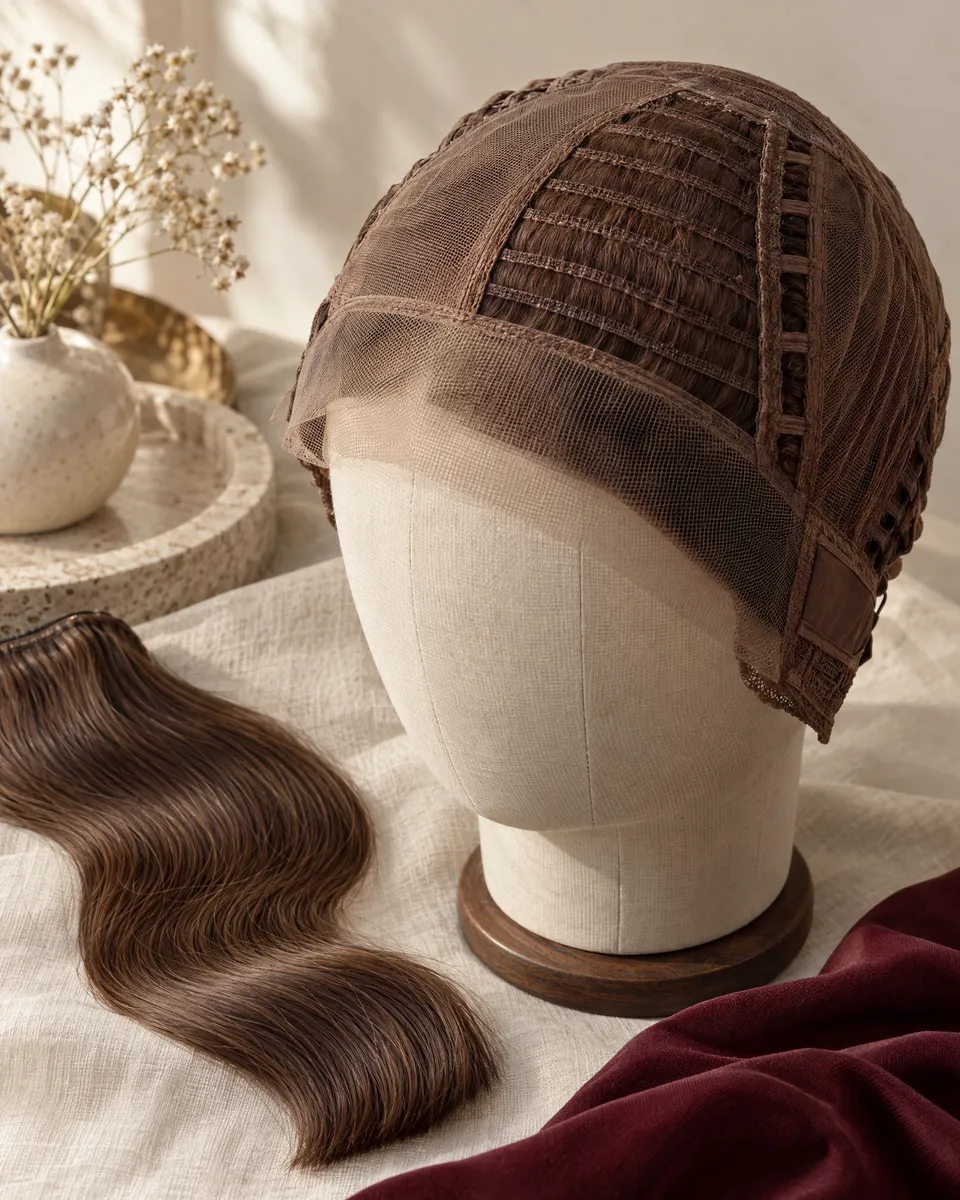
Read cap construction as a listed feature
Cap terms affect what you should ask, but a front-facing photo cannot reliably reveal all cap materials or construction zones. Read the product text first. Treat a visible hairline, parting or crown as an observation that may prompt a closer question, rather than as proof of a specific lace, monofilament or hand-tied feature.
Separate construction words from comfort assumptions
Write down the exact words used for the front, top, sides and nape. Then ask which named area they describe. This matters because the Ellen Wille Plus-cap information discusses particular Pure Power Plus styles with a 100% hand-tied, silicone-infused design; it is not a basis for assigning that construction to an unrelated Ellen Wille style, still less to a Raquel Welch one.
A light appearance in an image is also not a measurement of airflow or coverage. If daytime warmth or coverage is a concern, use a breathable wig cap discussion to organise your questions: which cap area is being described, what material information is listed, and what can actually be inspected? That route is more useful than reading the word ‘breathable’ into a photo.
For a lace-front description, ask which edge is lace and how it should be handled. For a hand-tied description, ask whether the wording covers the full cap, a top area, or another zone. The answer may change both the care routine and whether the item suits your preferred amount of adjustment.
Turn size information into a fit question
A size label is not a personal fit result. Record your measurements in the same way for both candidates, then ask how the listed cap and its adjustment features relate to those measurements. This preserves a useful distinction: the catalogue may define a size category, while only a real comparison can establish whether a particular cap feels appropriate to you.
Bring three measurements to the comparison
Use a soft tape to record circumference, ear-to-ear across the top, and front-to-back from hairline to nape. These are the three measurements set out in Ellen Wille’s official sizing guidance. Record the numbers beside each style rather than writing ‘small head’ or ‘average fit’; numerical notes make a follow-up question concrete without claiming that either brand uses identical sizing.
The same guidance says Ellen Wille’s standard size is Petite/Average and identifies special Petite and Large styles by name, while also discussing differing stretch across named construction types. Read that as a prompt to check the individual listing. It does not prove that every cap stretches equally, or that a Raquel Welch label will correspond to an Ellen Wille label.
When images and labels leave an important gap, the choice between a remote comparison and an in-person follow-up is its own decision. The considerations in custom wig salon vs online Hong Kong help frame that choice without turning an online image into a fitting guarantee.

Compare colour codes, root detail and viewing conditions
Colour is often the first detail noticed and the least stable part of a screen-to-screen comparison. Different screens, image processing, background tones and lighting can shift a brown, grey or rooted shade. Catalogue images are still useful, but their main job is to help you formulate a shade question, not to certify the result you will see in every setting.
Treat a swatch name and a photo as separate evidence
For each candidate, copy the exact colour code and shade name, then note any written reference to a darker root, blend or highlighted tone. Add an image note such as ‘warm indoor light’ or ‘back view only’. Do not translate a named rooted shade from one brand directly into the language of the other. Similar-looking names can describe different arrangements of tone.
A gradient question deserves its own line in the record. Looking at ombre wigs can help you state whether you are asking about a root-to-length transition, a lighter face-framing area, or a general multi-tonal effect. That distinction prevents the vague request ‘Is it ombre?’ from obscuring what you actually wish to see.
For Raquel Welch entries, the official Colors & Care page lists named colour systems and distinguishes shade groups such as Shadow Shades. Use that source to check the meaning of a code within the relevant range, but do not use it to infer that every catalogue image has identical lighting or that a discontinued or unlisted shade can be obtained.
- Record the code, name, root wording and photo conditions separately.
- Ask for clarification about the specific transition or tone that matters to you.
- Do not make a colour decision from a screen capture alone when the precise tone matters.
Keep fibre, care and attachment questions connected
Fibre and care details belong in the same comparison because the maintenance question is meaningful only for the construction and fibre of the exact style. Start by copying the fibre term from each entry. Then locate the care instruction that names that fibre or product category, rather than applying one memorable rule to all synthetic or all human-hair items.
Ask what applies to the exact fibre and cap
HairUWear’s Raquel Welch Colors & Care page separates fibre categories and gives specific instructions for named synthetic fibres. For its Tru2Life heat-friendly synthetic fibre, it cautions that hot water can damage the fibre and states a low-to-medium heat limit of up to 350°F/180°C. Treat that figure as information for that named fibre only, not as a heat rating for an unspecified Raquel Welch style, any Ellen Wille style, or every synthetic wig.
The same source cautions that lace is delicate and should not be tugged or pulled, and says synthetic fibre should not be coloured. These points are useful prompts: ask how the exact cap should be handled, whether its fibre is named in the care guide, and whether the style is intended to retain its supplied texture. They are not a substitute for product-specific directions when the catalogue entry differs.
Attachment requires the same discipline. If you are considering a wig adhesive, ask whether that method is intended for the exact cap, lace area and wearing situation. Do not infer a need for adhesive from a natural-looking hairline, and do not infer that an adhesive-free claim from one named cap applies to another.
Plan the removal question at the same time. A wig adhesive remover is relevant only after the attachment method, cap material and care instructions are clear. Keeping these notes together makes it easier to avoid a mismatched product assumption and to request exact handling information for the style under consideration.

Send a short enquiry built from your record
Once the worksheet is complete, reduce it to the few details that could change your choice. A focused enquiry is easier to answer and less likely to receive a generic catalogue description. It also makes clear that you are seeking confirmation, not asking someone to guess from a screenshot.
Use observation, question and intended use
Name both styles and list the field that needs confirmation. For example: ‘I am comparing [style A] and [style B]. My measurements are [three figures]. The listings use [cap terms]. Can you clarify which cap area those terms cover and whether either entry has a product-specific care note?’ Add one colour question only if the root, blend or code could affect your choice.
Mention your intended use in ordinary terms, such as a preference for a particular length, a desire to inspect a cap detail, or the need to understand routine care. Avoid declaring that an unseen item will be comfortable, available or suitable. A factual request creates room for an accurate reply and keeps the catalogue comparison within the evidence you actually have.
If you need help organising the observations into a next question, OWNSTRAND can be contacted through the link above. Bring the saved style names, codes and screenshots; they are more useful than a request to compare two brands in general. Availability, exact construction and suitability should be confirmed for the specific item at the time of enquiry.
- Identify the two exact styles and the date of the pages you viewed.
- State your three measurements only when fit is part of the decision.
- Ask one question each about cap, colour and care only where the catalogue leaves a gap.
- Keep an answer attached to the relevant style rather than filing it as a brand rule.
| Detail | Useful conclusion | Limit to keep in view |
|---|---|---|
| Named style and collection | Identifies the exact item to ask about | Does not establish current availability or price |
| Cap description | Supplies a feature to clarify by cap area | Does not transfer to another style or brand |
| Size label and measurements | Creates a concrete fit question | Does not guarantee personal fit |
| Colour code and image | Defines the tone or gradient to discuss | Does not guarantee screen-to-real-life colour |
| Fibre and care note | Shows which product-specific guidance to check | Does not create a universal heat or care rule |
| Attachment wording | Identifies a method that needs confirmation | Does not prove an accessory is required or appropriate |
Ask OWNSTRAND on WhatsApp
Tell us the style you have in mind. We can discuss the options, quotation and arrangements before you decide.
Ask OWNSTRAND on WhatsAppBefore you choose
Should I compare an Ellen Wille style with a Raquel Welch style by brand name alone?
No. Start with two named styles that share a meaningful trait, then compare the details stated for those entries. A brand name does not prove that two caps, fibres, sizes or colour systems are equivalent.
Can a catalogue photo confirm the cap construction?
Usually not by itself. A photo can prompt a useful question about a hairline, parting or crown, but the exact cap wording and the area it describes should be checked on the product entry or confirmed for that named style.
What is the most useful information to include in an enquiry?
Include the complete style names, the page date or screenshot, your three measurements if fit matters, and the one or two unresolved questions about cap, colour or care. Ask for confirmation of the specific item rather than a general brand promise.
Further reading
- Unlock the Perfect Fit: Sizing Made Easy | Ellen WilleSupports the three measurement method and shows why size and stretch must be checked against a named cap and style.
- Unveiling the Perfection: Ellen Wille Plus Caps | Ellen WilleSupports the named Pure Power Plus-cap example and the warning not to transfer its construction features to unrelated styles.
- Colors & Care | Raquel Welch / HairUWearSupports the distinction between named fibre categories, exact-fibre care guidance, lace handling caution and colour-code context.