

Start with the decision your enquiry must answer
A practical visit begins with one decision, not a long list of product names. Decide whether you are mainly comparing visible coverage, a hairline effect, colour against your usual clothes, day-to-day comfort, or care effort. That choice tells you which observations deserve space in your notes and which questions can wait.
Describe the situation in which you expect to wear it
Write one ordinary situation in a sentence: work under office lighting, weekend outdoor errands, video calls, or a social occasion. Then write what you hope will look or feel different in that situation. A clear use context stops an enquiry from becoming a search for a universally “natural” answer, because visible length, parting, movement, and maintenance matter differently from one routine to another.
If Kwun Tong is the destination you are considering, use the wig shop in Kwun Tong page as a starting point for a focused enquiry rather than as evidence that a particular style will be available. Bring your one-sentence situation and ask which details need to be checked against an actual option. That keeps the conversation anchored to your routine instead of a vague impression from a screen.
The same note allows fairer comparisons. Someone comparing a wig shop Tsim Sha Tsui enquiry with a Kwun Tong enquiry can ask the same questions about appearance, fitting, and upkeep. That is more dependable than comparing promotional images, which rarely show your full wearing context.
- State the one situation in which the wig matters most to you.
- Name the single visible result you want to inspect in person.
- Mark questions that require an actual item or direct confirmation.
Make a small visual record before you travel
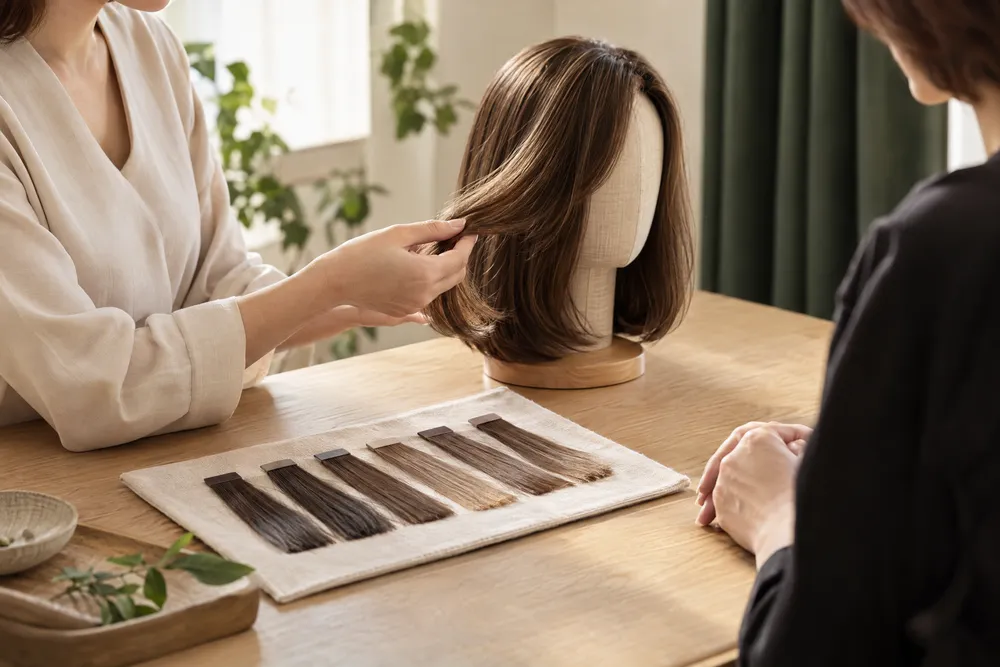
Photos are not a specification, but they can prevent memory from changing between home and a conversation. Keep the record small enough to explain in a few minutes: an unfiltered front view, a side or three-quarter view, and one image that shows the hairstyle or outline you tend to prefer. Add a brief note about the lighting and your usual parting.
Use repeatable light and familiar styling
Take the images near a window in even daylight if possible, with no beauty filter and no dramatic overhead light. The American Cancer Society’s wig guidance similarly suggests using natural light when comparing a hair reference with a wig. The point is not to declare one image “true”; it is to give colour and contrast a more consistent starting condition for discussion.
A reference should show what you normally do, not a one-off salon look. If you wear a centre part, tuck hair behind one ear, or prefer a soft fringe, note that beside the picture. When you want language for discussing colour, length, and cap fit together, the Asian wigs guide can help you frame the questions without presuming that one look suits every face or routine.
Keep inspiration images separate from identity matching. A screenshot may show a useful length, fringe, or movement, but its lighting and density may not match your context. Label it “like the outline” or “like the side volume”, so the conversation can focus on the feature you actually like.
Record fit questions without trying to self-fit
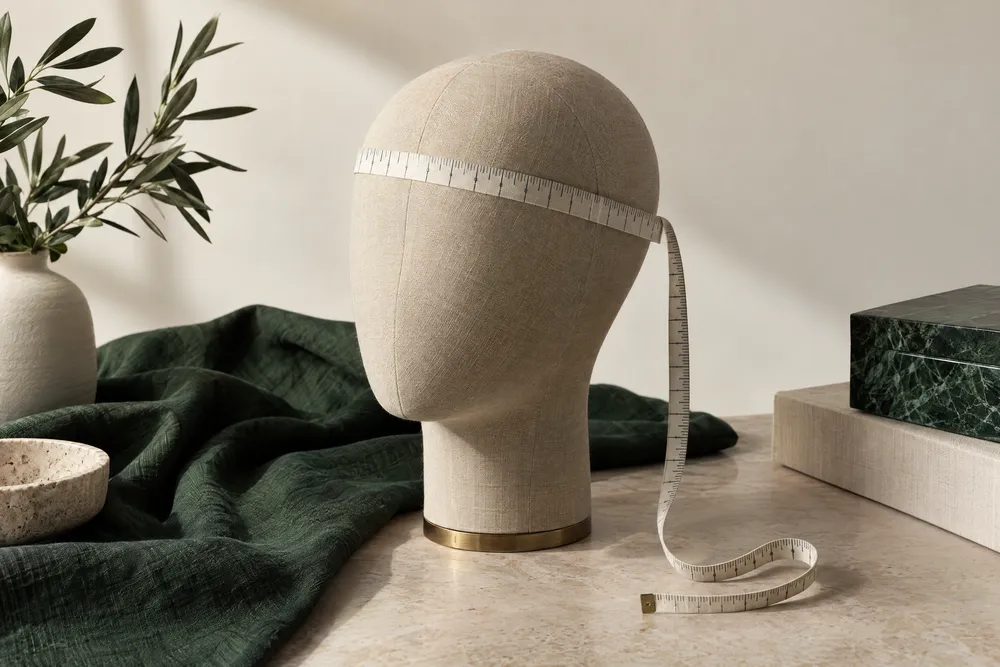
A tape measurement can make a fitting conversation more specific, but it does not decide the right item by itself. Treat any dimensions as notes to take along, not as a substitute for checking an actual cap, attachment approach, or wearing position. Comfort and appearance still need to be considered together when the relevant option is discussed.
Separate dimensions, pressure points, and coverage priorities
If you choose to measure, write down which route you used: around the head, from front to back, or from side to side. These are common discussion dimensions in the American Cancer Society’s guide to measuring a wig. Do not turn a home note into a size guarantee. Different products may use different charts or adjustment systems, so the actual item remains the point of confirmation.
Also note where you notice pressure, heat, a sensitive area, a changing hairline, or a parting you want to keep visible. These are wearing preferences, not medical conclusions. For a reader considering visible top coverage or an attachment discussion, the men's hairpiece Kwun Tong page gives a related place to turn those observations into direct questions about styles and samples.
Separate “what must be covered” from “what must remain believable when I turn my head”. The first is the area to address; the second is the edge, parting, hairline, or side profile to inspect. This avoids asking only for more volume when the real concern is a visible transition.
- Bring dimensions as reference notes, not as a final size selection.
- Identify any area that feels uncomfortable or that you do not want compressed.
- Separate the coverage area from the edge or parting you want to examine.
Turn observations into questions you can compare
The strongest notes use observable words. Instead of writing “I want it realistic”, write “I want to see the front in daylight”, “I prefer a lower-density outline”, or “I need to understand the washing routine before deciding”. Each sentence gives the person answering your enquiry something concrete to address or qualify.
Ask about the feature, the trade-off, and the care implication
For each priority, prepare three linked questions: what feature might address it, what visual or wearing trade-off comes with that feature, and what care or handling does it require? This format makes it easier to compare an online research route with a wig shop Kowloon visit. You are comparing answers to the same decision rather than assuming that a category label gives the same result across products.
Keep material and construction terms separate from outcomes. A label can describe fibre or a cap feature, while your question may concern movement, a parting in usual light, or washing. Ask how the term affects the specific option. If that cannot be confirmed, keep it on your list rather than guessing.
When comparing a Hong Kong Island option, the wig shop Causeway Bay guide can be another useful reference for keeping your criteria consistent. Do not let one polished reference photo overrule your own notes about routine, scalp comfort, or the angles you want to check. The benefit of a checklist is that it preserves the same standards across different enquiries.
Plan the Kwun Tong visit without assuming availability
Travel planning should leave room for confirmation. Before setting out, send your short list of priorities and ask what can realistically be discussed or checked. Do not infer stock, a particular sample, a fitting slot, a return term, or a care service from a page image. Those details depend on the current enquiry and the specific option under consideration.
Confirm the practical facts that affect your decision
If you decide to contact OWNSTRAND, its stated sole shop address is Unit 2103, 50 Hoi Yuen Road, Kwun Tong, Hong Kong (利寶時中心). Put the address, your reference images, and your questions in the same note so nothing essential is left on a different device. The purpose of the message is to clarify the discussion you need, not to assume a product, timing, or service outcome before confirmation.
People exploring cosmetic coverage in relation to thinning or alopecia can use the alopecia wigs guide to organise selection questions about coverage, colour, and cap fit. A cosmetic enquiry cannot identify the cause of hair loss or replace health advice. Keep the visit focused on the appearance and wearing questions you want answered, and seek appropriate healthcare advice separately if you have health concerns.
If travelling with a companion, agree on their role. They may compare side views or remember questions, but the wearing preference remains yours. Ask for a comment on a specific observation, such as whether the front appears balanced under ordinary lighting, rather than an unqualified verdict.
Treat photos as evidence, not proof
A photo can reveal a preference, but it cannot establish all aspects of fit, fibre behaviour, colour under changing light, or care. This limit is useful rather than disappointing. It tells you which points to reserve for an actual discussion and which points you can settle before leaving home.
Put uncertainty beside every important observation
Write “needs live check” next to any observation that depends on movement, edge placement, comfort, or light. Cancer Research UK’s overview of wigs and head coverings notes that people may bring photos of a prior hairstyle and that supplier instructions should be followed for care. That supports using photos as a conversation aid, not as a complete fitting or maintenance answer.
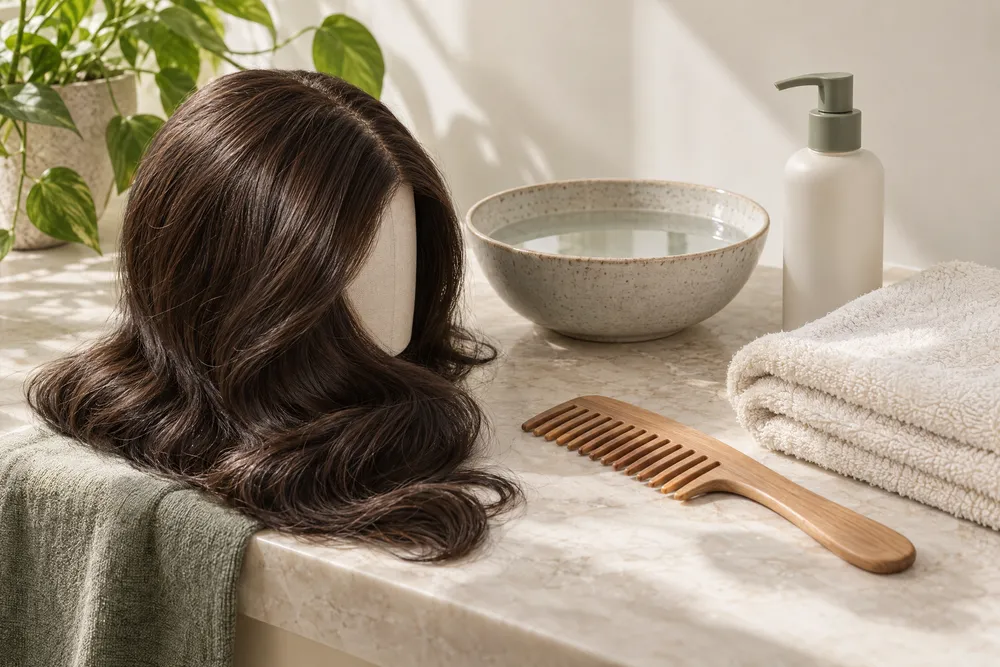
Care questions need the same restraint. The American Cancer Society warns against using a dryer or curling iron unless the particular wig is heat resistant. Ask for instructions for the actual item rather than transferring a property from a different wig, fibre, cap, or image. Its care directions are more reliable than an appearance-based assumption.
Your record remains useful beyond one destination. Someone also considering wigs New Territories can bring the same image set and the same uncertainty notes. The checklist is not a rating system for shops. It is a way to ensure that every enquiry addresses the same unresolved points before you compare the answers.
- Mark movement, comfort, colour under different light, and washing as live-check items.
- Ask for care instructions for the exact item, not for a general category.
- Keep inspiration images separate from observations about your own hair and routine.
Pack a one-page enquiry sheet for the next step
The finished checklist should fit on one phone screen or one sheet of paper. Its job is not to make the decision for you. Its job is to prevent the most useful questions from disappearing once you are looking at options, discussing a colour, or thinking about the journey home.
Use a short order that mirrors a real conversation
Start with your use situation and two personal photos. State the area or effect you want to inspect, then add reference dimensions and comfort notes. List three questions: what feature may suit the priority, what trade-off you should see or feel, and what care requires confirmation. Leave space for the answer and any follow-up point.
This order leaves space to change your mind after seeing a colour in person or learning that a feature has an unexpected care implication. It also makes a later message clearer because you can refer to a written observation. Keep separate notes on what was shown, explained, and still needs confirmation.
When ready to enquire, send the details needed to start a useful conversation: your wearing context, images you are comfortable sharing, and questions to answer. A focused message makes it easier to receive a response that addresses the decisions behind the trip.
- Use situation and two unfiltered personal photos.
- Coverage, hairline, parting, or comfort priorities to inspect.
- Reference dimensions and any live-check points.
- Three feature, trade-off, and care questions for the actual option.
| What to record | Why it helps | Question to ask |
|---|---|---|
| Usual wearing situation and lighting | Sets a real context for judging outline, colour, and routine. | Which feature should I inspect for this situation? |
| Front and side photos with no filter | Shows your normal parting and visible boundaries without claiming a final match. | What can these photos help compare, and what needs a live check? |
| Coverage and edge priorities | Separates the area you want addressed from the hairline or parting you want to assess. | How would this specific option handle both priorities? |
| Reference measurements and comfort notes | Makes fit questions more precise while leaving selection open for confirmation. | Which dimensions or comfort points matter for this item? |
| Care and styling concerns | Prevents a general product assumption from becoming an unsuitable routine. | What care directions apply to this exact option? |
Ask OWNSTRAND on WhatsApp
Tell us the style you have in mind. We can discuss the options, quotation and arrangements before you decide.
Ask OWNSTRAND on WhatsAppBefore you choose
Do I need to choose a style before travelling to Kwun Tong?
No. It is enough to identify the setting in which you expect to wear the wig and the features you want to inspect, such as outline, coverage, parting, or care effort. Bring a small image record and ask questions about actual options. The aim is a clearer conversation, not a decision made solely from photos.
How much should I measure before a wig enquiry?
Measure only if it helps you explain your starting point. You can note around-head, front-to-back, or side-to-side dimensions, together with pressure or comfort concerns. Treat them as reference information. They do not guarantee a size or show how a particular cap, adjustment, or wearing position will feel.
Can a photo confirm colour, comfort, and heat styling?
No. A photo can show a preferred outline and provide a colour reference in known lighting, but it cannot prove comfort, fit, fibre behaviour, or whether an item accepts heat. Ask about the exact option and follow its own care directions. Do not apply a care instruction from one wig to every other wig.
Further reading
- American Cancer Society: Wigs for Hair LossSupports general guidance on using natural light and existing hairstyle photos for comparison, common measuring routes, and the need to check heat resistance for the particular wig.
- Cancer Research UK: Wigs, hats and scarvesSupports the limited planning point that prior-hair photos can assist a fitting discussion and that care should follow supplier instructions for the relevant item.