

When a self-check is worth doing
Do the check when you can describe the look you want but cannot yet say where a base should sit or which area concerns you most. It is particularly useful when the visible area changes after you make a part, tilt your head, or move from window light to an ordinary indoor setting. The record is for a conversation, not a substitute for trying a suitable piece.
Start with the coverage question, not the clip question
Begin by identifying the area you want added hair to address: a widening part, a crown that looks open, or a broader top area. A clip position only makes sense after this area is clear. The American Hair Loss Association explains that a topper is a partial hairpiece and that base size, attachment and remaining hair affect suitability. Its guidance says a base should cover visible thinning and reach stronger hair for attachment. American Hair Loss Association’s hair topper overview supports recording both coverage and nearby hair.
If your notes show that the desired coverage extends beyond the hair you would expect clips to hold, treat that as a fitting question rather than trying to force a smaller outline. A hair topper vs wig comparison can help frame the coverage difference before you enquire. The decision is about the area to cover and the practical attachment conversation, not about making one category win in every situation.
- Write the one area you most want to discuss before taking any photos.
- Note whether the concern is mainly a part, a crown, a front edge, or several connected areas.
- Keep “where should it sit?” as an open fitting question rather than a conclusion.
Set up light, mirrors and notes that can be repeated
A fitting conversation is clearer when photos show everyday styling. Use one time of day and your normal part, rather than every possible hairstyle. Consistency is more useful than a polished image because it lets a fitter compare your usual hair with the position you are considering.
Take four views and label what each one shows
Use a front view, each three-quarter view, and a view from above or behind with your head neutral. A mirror plus a phone timer can help, but there is no need to chase a dramatic angle. For every image, write the part direction, the light source and whether your hair is freshly washed, dry, or styled with product. Those three notes explain many apparent differences between one photo and the next.
Do not draw a permanent position on your scalp or assume a familiar crown point equals the best front edge. Instead, use a temporary paper sketch. Mark the line of your part, the limits of the area you want covered and any place where remaining hair feels notably fine. This is also the moment to ask how to measure a hair topper base size, because dimensions describe the base rather than a universal placement rule.
Map potential clip zones without fastening anything
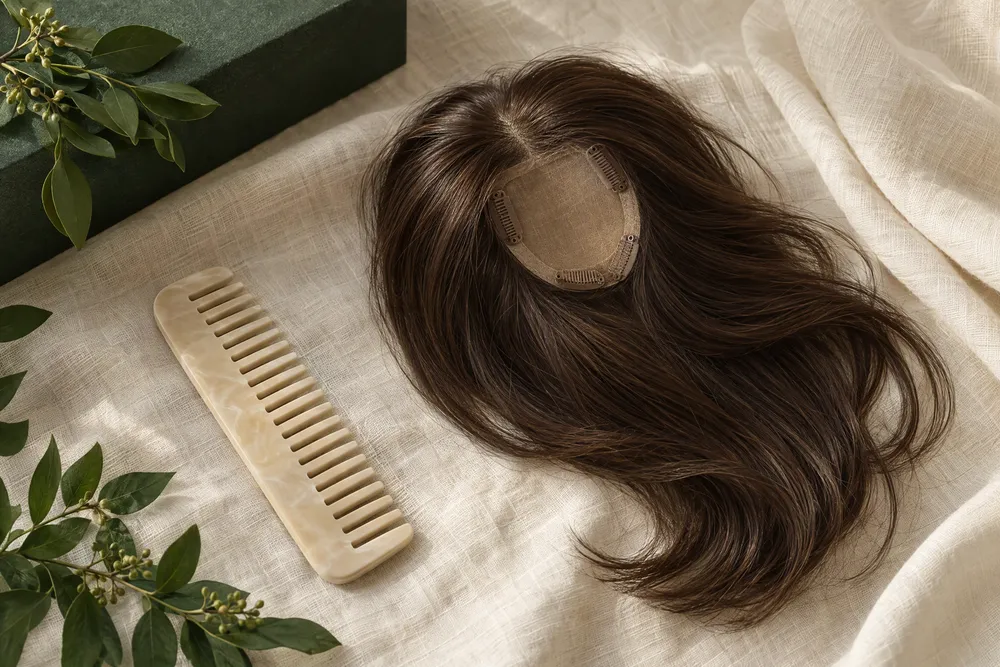
A self-check can flag areas to discuss, but it cannot confirm that a clip pattern will suit you. Keep it visual: compare the coverage area, your part and nearby hair rather than attempting a finished installation with an unknown topper.
Separate a potential landing zone from the edge you want hidden
On your outline, use a mark for the coverage boundary and another for hair that might blend over an edge. Then circle sparse, short or uncertain places. This separates whether the base can cover a visible area from where attachment must be assessed. The American Hair Loss Association notes that repeated clips on weak or miniaturised hair can produce mechanical stress. Its clip attachment section supports bringing “I am unsure about this zone” to a fitting rather than trying to conceal it.
If clips are the attachment method you want to explore, browse the construction context of a clip-in hair topper before your appointment. Use the page to understand the category, then ask at the fitting how the actual base and its clips relate to your own part and surrounding hair. A generic diagram or another person’s routine cannot establish that answer for you.
Read the visual clues in order: part, crown, edge and balance
Mirror checking can turn one concern into several apparent problems. Work in an order: part, crown from above, edge around the coverage area, then the blend with your own length and texture.
Use the part as a reference, not a line that every base must copy
Write down whether the part is centred, side-swept or changes through the week. A part that seems narrow straight on can look different from above, while a shifted part may alter where you expect the front or side of a base to sit. The point is not to create a “correct” map. It is to give the fitter a clear starting view and explain which daily styling habit you hope to preserve.
When your main concern sits at the top, the broad term crown hair topper may help you articulate the coverage direction you are investigating. Keep a separate note for balance: does the crown appear more open only under overhead light, or does the overall top-to-length proportion feel different in every normal view? That distinction leads to a more useful conversation than simply asking for more density.
| View | What to record | Question it supports |
|---|---|---|
| Front | Usual part and any visible front edge | Where should the chosen coverage begin relative to my everyday part? |
| Three-quarter left | How hair falls over the left side | Which edge is most likely to need blending on this side? |
| Three-quarter right | Any difference from the left side | Does my asymmetry change the placement discussion? |
| Above or behind | Crown visibility and the surrounding hair | What coverage area should be checked in person? |
Turn observations into clear fitting questions
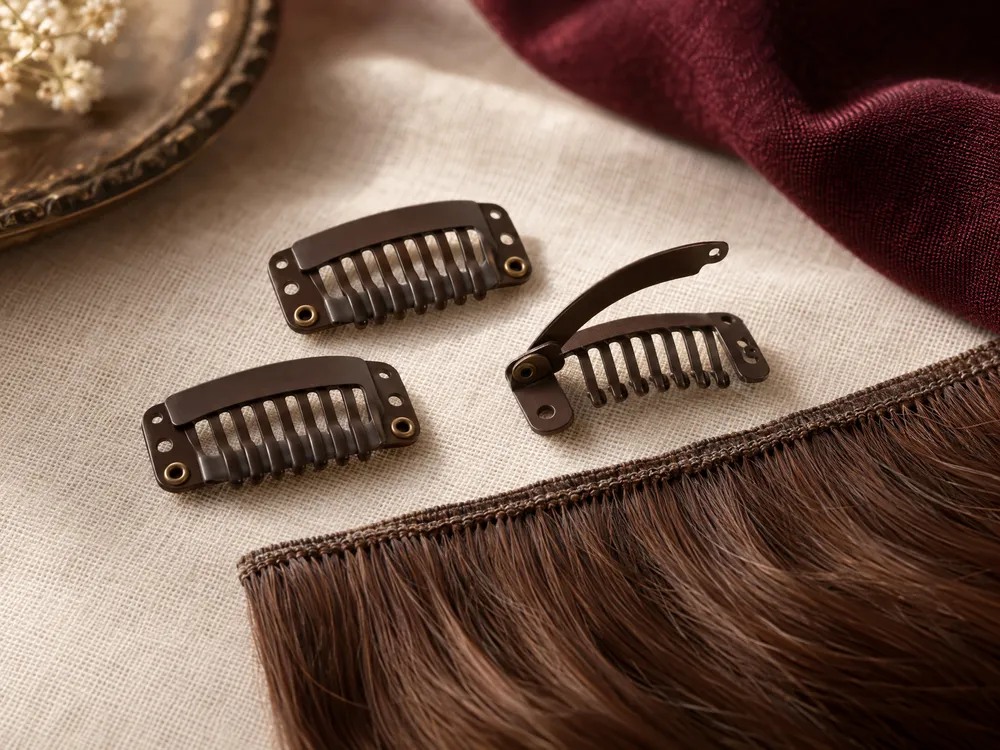
Each observation becomes useful when it produces one question answerable with the actual piece. Ask what can be checked at fitting and what depends on construction or fibre; do not ask for an all-condition guarantee.
Ask one question about placement, one about blending and one about care
For placement, ask: “With my usual side part, which coverage boundary should we assess first?” For blending, ask: “Which side or edge should we view in both mirror distance and a photo?” For care, ask: “Does this item’s material change what I should do after trying or wearing it?” These questions keep the focus on a specific observation and allow the answer to remain product-specific.
If fibre is part of the decision, a synthetic hair topper is a distinct product category to discuss rather than a promise that all synthetic pieces respond the same way. The American Hair Loss Association similarly states that some synthetic fibres tolerate controlled heat while others can be damaged by temperatures routinely used on human hair. Ask for the care guidance for the exact piece instead of carrying an instruction from one fibre type to another.
If a removable fringe is also on your mind, clip-in bangs are a separate category to discuss. Record how you want a fringe to meet your natural hairline, but do not let that front-detail goal answer a crown-coverage question. Keep the two photo notes distinct so the fitting can focus on the right visible boundary.
For added length or lower-head fullness, consider clip-in hair extensions as a separate option. Note the length you want to discuss, then return to the topper record for the part and crown. Different pieces can have different attachment, blending and care discussions even if you imagine them in one finished style.
For broader detachable additions, hairpieces can help you name the option you intend to ask about. Bring the same four views if helpful, but label which goal belongs to which item. That simple separation prevents an enquiry about a fringe or length from becoming an assumption about topper placement. This keeps the discussion focused on the correct option.
Know what photos and first impressions cannot confirm
Photos preserve a view but cannot show every fit issue. Camera height and light can hide lifting, while a still image does not show comfort in movement. Mark photo limits so fitting can assess what needs in-person inspection.
Treat a flat-looking image as a prompt to inspect, not proof
A topper may appear smooth in a single front photo while the crown, corners or rear need a closer mirror check. Luxy Hair’s own application instructions describe aligning a topper with the part, securing the front and rear clips, and then checking that it lies flat without ripples. That sequence supports a useful fitting habit: look at overall alignment first, then inspect the base condition after the attachment is evaluated. Luxy Hair’s topper application instructions are product-specific, so they should not be treated as a universal procedure for every design.
Do not make a comfort decision from a photo, and do not interpret scalp changes from this self-check. If you notice persistent tenderness, pain, irritation or a sudden change in hair loss, set aside the cosmetic record and seek appropriate professional advice. The self-check is about communicating an appearance and fitting concern. It is not a way to diagnose a scalp or decide whether a medical issue has a particular cause.
- A photo can show an angle but cannot prove day-long comfort or suitability.
- A visible edge may reflect light, camera height or styling, so compare more than one controlled view.
- Any concern about pain, irritation or sudden hair changes belongs outside a cosmetic self-check.
Pack a compact checklist for your next enquiry
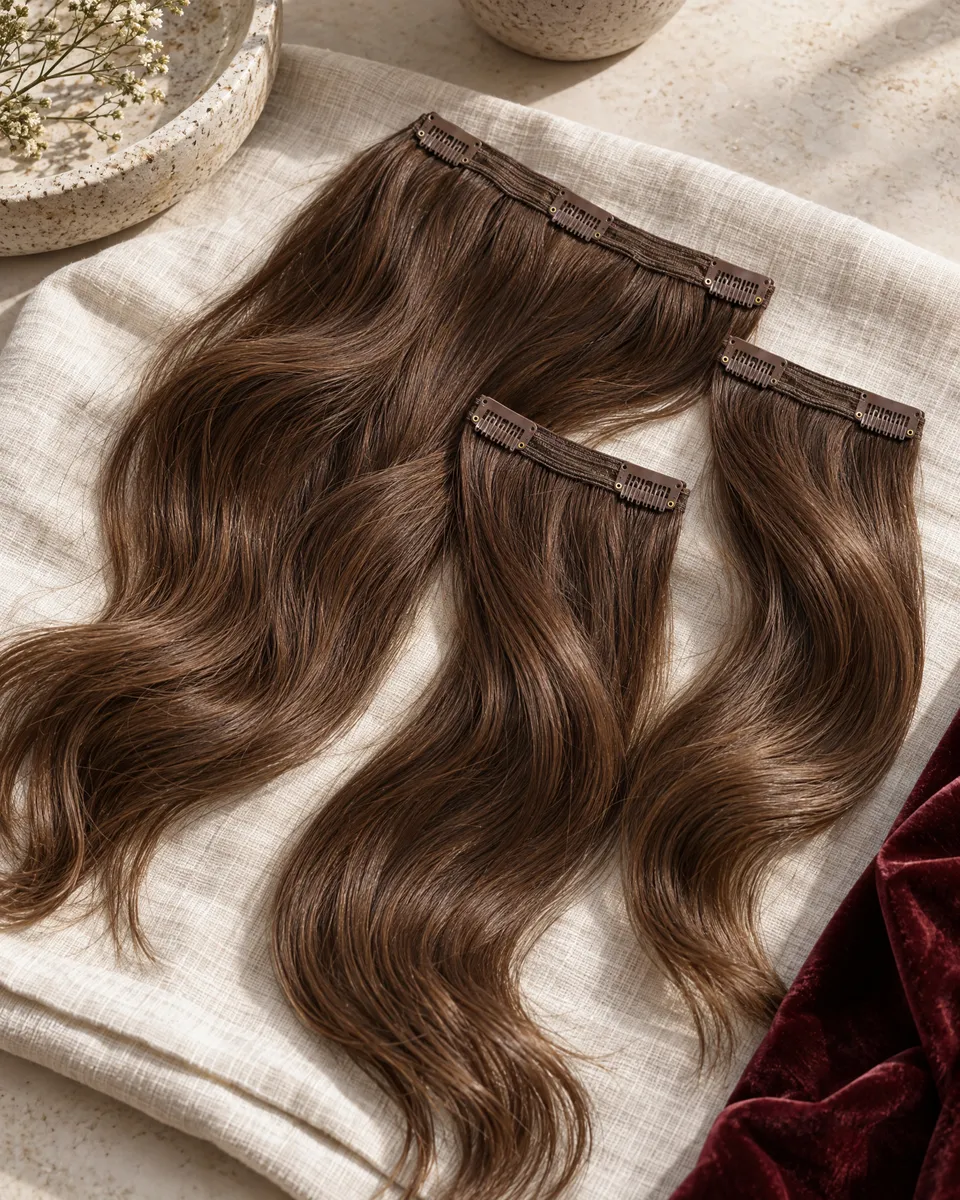
The best record is short enough to use. Before an enquiry or fitting, reduce your notes to the photos, a marked outline and three questions so the conversation can begin with clear context.
Bring evidence of your everyday style, not a perfect test result
Select the four views that most clearly show your normal part and crown. Attach the outline that marks the desired coverage area and any uncertain surrounding zones. Add three questions: the first about position, the second about blending, and the third about the care or attachment detail you want confirmed. Say plainly when a photo was taken under overhead light or after styling, because that context affects how the image should be read.
OWNSTRAND can use this record as a starting point for an enquiry about the clip-in hair topper direction you are considering. The helpful outcome is not a promise based on an image. It is a clearer discussion of the actual options, the observations worth checking in person, and any detail that should be confirmed for the item rather than assumed from a category.
- Four labelled views in your normal part and typical light.
- One sketch showing coverage, blending hair and uncertain zones.
- Three focused questions: position, visual blending and item-specific care or attachment.
- A note of any factor that a photo cannot answer and should be checked at fitting.
| Record item | What to note | Why it helps at a fitting |
|---|---|---|
| Usual part | Centre, left, right or variable | Shows the styling reference you want to preserve. |
| Coverage area | Part, crown, front, or a connected top area | Keeps the discussion focused on what you want addressed. |
| Surrounding hair | Areas that look stronger, fine or uncertain | Creates an informed question about attachment assessment. |
| Four photos | Front, both three-quarter views, above or behind | Allows comparison across useful angles instead of one selfie. |
| Light and styling | Window or indoor light; dry, styled or product-used hair | Explains why scalp visibility or blend may look different. |
| Three questions | Placement, blending and item-specific care | Turns observations into a practical enquiry rather than a vague request. |
Ask OWNSTRAND on WhatsApp
Tell us the style you have in mind. We can discuss the options, quotation and arrangements before you decide.
Ask OWNSTRAND on WhatsAppBefore you choose
Should I clip a topper onto my own hair before a fitting to test the position?
Not as a self-test with an unknown piece. Record the coverage area, part and uncertain surrounding zones instead. The actual base, attachment method and your remaining hair should be assessed together during a fitting or product-specific discussion.
How many photos should I take for a hair topper clip placement self-check before a fitting?
Four labelled views are usually enough for a focused record: front, both three-quarter views, and above or behind. Use the same usual part and add a short note about light and styling so the images can be read in context.
Can a photo tell me whether a topper will be comfortable or secure?
No. A photo can show a part, crown and visible edge, but it cannot confirm comfort, tension, flatness through movement or suitability of an attachment method. Use it to frame what should be checked in person.
Further reading
- American Hair Loss Association — Hair Toppers for WomenSupports the distinction between partial coverage, base coverage of visible thinning, attachment to stronger remaining hair, and the limits of clip placement on weak hair.
- Luxy Hair — How do I apply the Luxy Hair Topper?Supports the product-specific application sequence of aligning to a part, fastening clips and checking that the topper lies flat without ripples.
- Jon Renau — Topper Resource GuideSupports that manufacturer guidance treats identifying coverage and topper placement, application and removal as distinct practical topics.