

When a widening-part map is worth making
Make a map when the part looks more visible than you expect, when the concern changes with your usual styling, or when a general request for more volume feels too vague. The map is an appearance record. It is useful before a product enquiry because it separates the part line itself from the surrounding crown, fringe, and side hair.
Start with the view you actually live with
Begin on a normal hair day rather than arranging a special test. Wear the part where you usually wear it. Then notice whether scalp visibility starts close to the forehead, opens mainly through the middle, or becomes clearer near the crown. Also note whether the line stays narrow at the front and spreads later, or appears broad throughout. Those distinctions affect the questions about coverage much more than a single comment such as ‘my hair looks thin’.
A widened centre part can be one visible feature of female pattern hair loss, but it is not a diagnosis from a photograph. Cleveland Clinic notes that a clinician may look at the centre-part width and other areas of the scalp, and may investigate other causes when appropriate. Read its explanation of female pattern baldness as context for why an appearance map should not replace health advice. Sudden, patchy, painful, or otherwise concerning changes deserve a qualified healthcare discussion.
Set up light, mirrors, photos, and notes
The point of preparation is consistency, not studio-quality imagery. A repeatable set of observations lets you compare what the part shows from different views and helps another person understand the same area. Keep the routine simple enough to repeat before a consultation or after changing your usual styling.
Use ordinary styling and stable conditions
Choose a bright, even place near daylight if possible. Avoid taking the only reference photo directly under a strong ceiling light, which can exaggerate contrast at the scalp. Keep your hair dry and styled as it is on a normal day. Use a front mirror for one straight-on view, a second mirror or a helper for the crown, and your phone for a close but not distorted record. Do not use filters that smooth the scalp or alter hair colour.
The value of matching views is supported by clinical photography practice, even though your personal enquiry does not need to become a medical photo session. A study on hair-loss documentation taught staff to take frontal, temporal, and top-or-crown views, and treated the correct angles as part of proper documentation. Its standardised hair-loss photography protocol is a useful reason to capture more than a single overhead selfie. For an enquiry, label the views simply as front, part, and crown.
- Take the photos with the same part direction you wear most often.
- Write down the light source and whether hair was freshly washed, brushed out, or held with styling product.
- Keep one front view and one top-or-crown view; add a side view only if the part turns or changes direction.
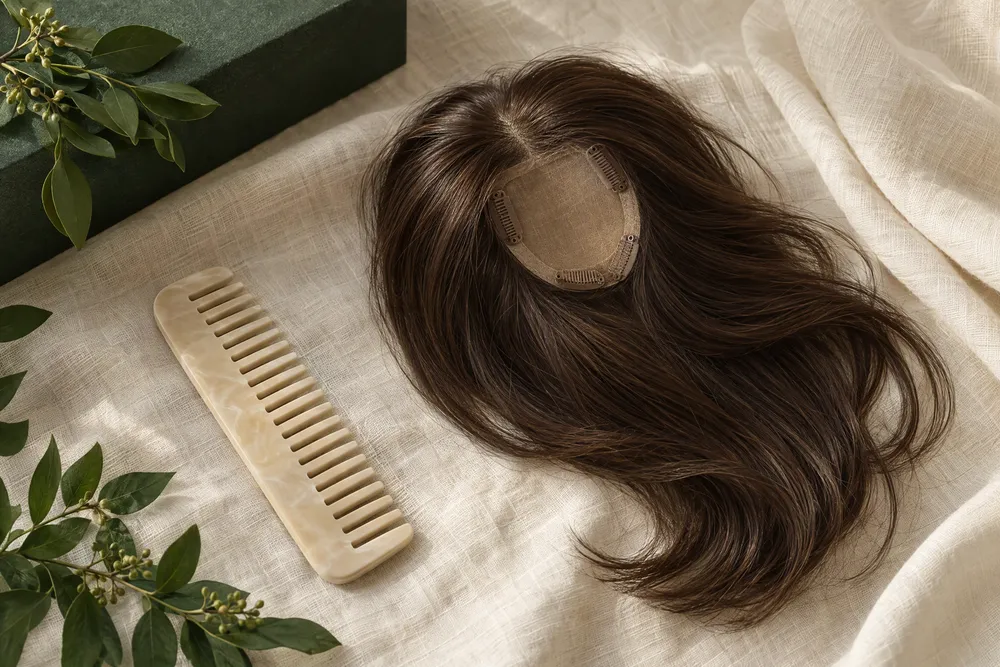
Map the part from front to crown
Think of the part as a route with landmarks, not a line that needs one exact measurement. This makes it easier to say where coverage matters and where your own hair already blends well. It also prevents a broad crown request from being based only on the point nearest the mirror.
Mark start, middle, turn, and crown
In your notes, mark four points. First, record the start just behind the front hairline. Second, describe the middle section where the line is most visible. Third, identify any turn where a side part opens or bends. Finally, mark the crown point where the hair naturally changes direction. At each point, write whether the visibility is low, moderate, or high in that day’s conditions. These are descriptive labels, not density measurements or medical grades.
Then sketch the outline that you would want a cosmetic piece to address: a narrow strip along the line, a small oval around the upper crown, or a wider area that blends into both sides. If the concern is specifically part visibility and low volume around it, the hair topper for widening part guide can help you frame a coverage conversation. Bring the sketch as a starting point, while leaving base size and placement open for confirmation against the actual piece and your own hair.
| Map point | What to record | Why it matters in an enquiry |
|---|---|---|
| Front start | Whether the part appears immediately behind the hairline | Clarifies whether the visible concern begins at the front or farther back. |
| Mid-part | Where the scalp line looks narrow, moderate, or broad | Shows the main area you want to discuss without claiming a precise measurement. |
| Direction change | A bend, side sweep, or separation in the part | Helps explain the direction in which surrounding hair must blend. |
| Crown | Whether visibility increases where hair changes growth direction | Keeps crown coverage from being overlooked when the front looks satisfactory. |
| Side blend | How far the concern reaches towards either side | Gives context for the boundary that should sit beneath existing hair. |
Connect the map to topper and base questions
A map does not select a piece by itself. It gives you a disciplined way to compare the visible area, the hair needed around it for blending, and the questions a consultant should answer. Keep the language focused on the effect you want to see rather than assuming a material or construction will solve every concern.
Ask about coverage before hair length or colour
Show the front-to-crown map first and ask where the proposed base would sit in relation to it. Then ask what hair outside that outline needs to remain available for blending, especially around your regular part and crown swirl. This is a more useful opening than asking for a ‘small’ or ‘large’ solution with no visual reference. The overview of hair toppers is a sensible next read when you want to distinguish partial coverage from a broader hair solution.
Keep construction terms separate from the map
If hair fibre is part of your comparison, say that it is a separate question from the area to be covered. A human hair topper page may help you organise questions about fibre options, but it does not establish that every hair type, length, or finish will blend with your map. Ask to see how a proposed option behaves with your direction of parting and daily styling before treating the material label as an answer.
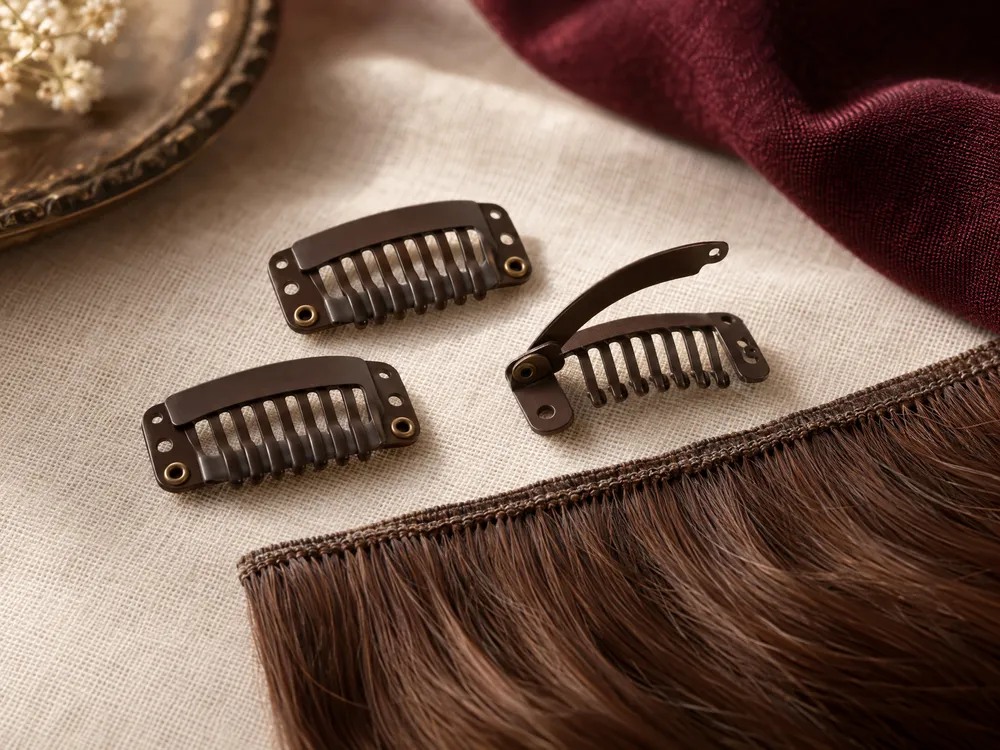
Likewise, a base term should be discussed as a description of the piece, not as proof of an invisible result. If you have heard the term, the silk top hair topper explanation can help you ask what that base means and where it may be visible. Follow up with practical questions: where would the part sit, what edge would be covered by your own hair, and which details must be checked on the specific option?
Turn observations into clear enquiry questions
Good enquiry questions describe the observed area, the normal hairstyle, and the decision you need help making. They do not ask a photo to guarantee a result. This approach also lets you identify when the original concern is a widening part and when a different styling need is taking priority.
Describe the coverage need in one sentence
Try this structure: ‘My usual part starts here, opens most at this point, and I want to understand coverage that blends under the hair I leave around it.’ Add whether you mainly wear a centre part, a fixed side part, or a changing part. If you are comparing the part concern with other detachable styling categories, a broader hairpieces overview can give useful names to those categories. It should not be used to assume that all types address a crown map in the same way.
Rule in or rule out a different visible concern
Sometimes the notes reveal that the concern is concentrated at the forehead, not along the part. In that case, say so rather than forcing a crown solution into the question. A look at clip-in bangs can help you distinguish a detachable fringe discussion from a request about widening-part coverage. The useful outcome is a clearer brief: does the visible scalp line remain the concern after the front is styled, or is the issue mainly the shape of the fringe?
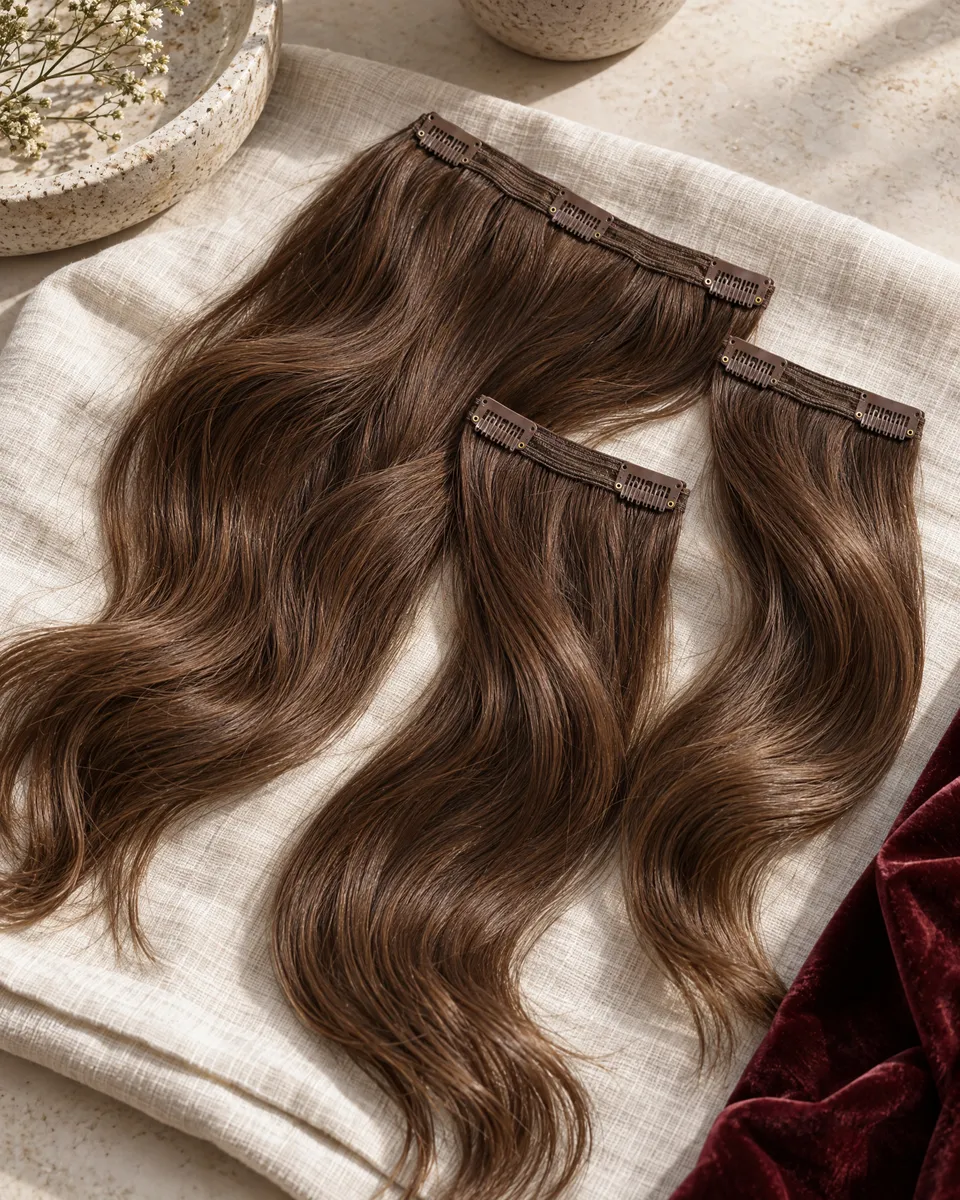
Other notes may show that the part is acceptable, but you want a fuller tied-back look for a specific styling situation. A clip-in ponytail extension is then a separate styling conversation, because it is not evidence about where a widening part needs coverage. State the hairstyle you expect to wear and ask how the attachment position relates to your remaining hair, rather than treating an event style as a solution to the mapped scalp area.
For a bun-focused style, the same distinction matters. A scrunchie hairpiece may be relevant to visible fullness around a tied bun, but it does not replace the front-to-crown record. Keeping these requests separate means a consultant can respond to the part map, then discuss any updo styling goal without overstating what one item can do for another area.
- Where does my normal part begin, and at which landmark does it look most open?
- Which surrounding hair do I normally leave loose to cover the boundary of that area?
- Do I need help with the part itself, the fringe, or a tied-back style; and are those separate enquiries?
Know what photos cannot confirm before the next check
A phone image can show an observed pattern, but it cannot confirm how a particular item will sit, move, feel, or blend under every light. It also cannot determine why the part looks different. Treat photos as communication aids and reserve fit, comfort, construction, and any health concern for the appropriate real-world conversation.
Avoid the common false signals
Part visibility can look stronger after a fresh wash, under top lighting, or when the hair has been pulled tighter than usual. A close phone lens can also make a small line look larger than it appears at conversational distance. Conversely, dark filters and carefully arranged surrounding hair can hide the boundary you are trying to discuss. Write down those conditions instead of deleting the inconvenient image. The contrast between two honest views is often more useful than a single flattering reference.
Do not use the map to estimate hair count, diagnose a scalp condition, or assume a specific size, attachment method, availability, or outcome. At the next enquiry, show the labelled front, part, and crown views. Ask what must be checked in person, including the relation between the proposed coverage area and the hair you use for blending. If your concern has changed quickly or brings physical symptoms, consult a qualified healthcare professional rather than relying on cosmetic mapping.
- Bring the same three views, with the light and styling notes beside them.
- Circle one coverage priority and one area that already blends well.
- Ask which placement, edge, and day-to-day styling points require checking on the actual option.
- Keep cosmetic questions separate from any question about a sudden or symptomatic scalp change.
| Observation | Useful enquiry question | What still needs confirmation |
|---|---|---|
| The part opens mainly through the middle | Where would partial coverage begin and end around this section? | Placement against your own hair and the proposed option. |
| Visibility increases at the crown | How should the crown direction be assessed for blending? | How the specific piece sits with your crown swirl and styling. |
| A side part turns toward one temple | Which direction should be shown in the reference photos? | How the actual base and surrounding hair behave in that direction. |
| The front looks satisfactory but the top does not | Should the enquiry focus on crown coverage rather than the hairline? | Whether a particular coverage approach is suitable after an in-person check. |
Ask OWNSTRAND on WhatsApp
Tell us the style you have in mind. We can discuss the options, quotation and arrangements before you decide.
Ask OWNSTRAND on WhatsAppBefore you choose
How many photos should I bring to a widening-part enquiry?
Three simple views are usually a practical starting record: front, part, and crown. Keep the same hairstyle and note the light. The aim is not a perfect photo set; it is enough context to show where the visible line starts, changes, and blends.
Should I measure the width of my part in centimetres?
A precise home measurement is not necessary for this enquiry. Use landmarks and descriptive notes such as low, moderate, or high visibility. Ask for any placement or sizing check to be made against the specific option and your own hair, rather than treating a photo measurement as final.
Can a widening-part map tell me which topper is right?
No. It tells a consultant what you see and how you normally style your hair. It cannot confirm material, construction, fit, attachment comfort, or the result on your hair. Use it to ask better questions, then confirm the relevant details on the actual option.
Further reading
- Cleveland Clinic: Female Pattern BaldnessSupports the general context that widening at the centre part may be observed, that clinicians assess part width and other scalp areas, and that visible signs are not a substitute for appropriate evaluation.
- Standardization of Clinical Photos for Tracking Management of Hair Loss PatientsSupports the practical value of consistent frontal, temporal, and top-or-crown views in hair-loss photo documentation; the article adapts this only as a communication record for an enquiry.