

Start with three clear facts before you ask
A useful enquiry is built from information that can be checked. The three facts are simple: the full product identity and directions, the planned contact situation, and a dated observation if a change has already happened. Keeping them separate avoids turning uncertainty into a premature conclusion.
Separate an observation from an explanation
Write down what you know before deciding why it happened. You may know the product name, where it touched, and when discomfort or a visible change appeared. You may not know the cause. That distinction is useful when reading guidance about wig adhesive skin irritation. It keeps an attachment-area observation separate from a claim about an ingredient, a wig construction, or your skin.
Use ordinary, literal words in the note. “Itch at the front hairline after removal” is more useful than “my scalp rejected it.” Add the date and anything else that contacted the same area. A brief record is not a diagnosis or a product verdict. It is a way to preserve the details that may otherwise be forgotten when you later ask for product information or professional input.
- Name the exact item instead of relying on its product category.
- State one precise contact area and when contact was expected or noticed.
- Describe what changed without naming an unconfirmed cause.
- Keep missing information marked as unknown rather than filling it in from memory.
Read the label and directions for the exact item
A product label cannot predict an individual response, but it gives a conversation a reliable starting point. Save the full name, version, ingredient panel where provided, directions, and warnings. Do this from the item in hand whenever possible, not from an old listing or a similarly named product.
Capture the wording before marketing language
Photograph or copy the label before you contact anyone. The FDA’s Allergens in Cosmetics advises consumers to read ingredient panels and follow maker directions. It also says that terms such as “hypoallergenic” and “for sensitive skin” have no federal definition in the United States. That is a reason to ask about the actual wig adhesive, not a statement about Hong Kong law or a prediction of personal compatibility.
Ask the provider for the complete information for the exact version you hold. Useful questions include whether the listed directions cover your intended placement, what the maker says about removal, and whether a label image is current. Do not infer a formula from a product family, a retailer photograph, or an online comment. Exact wording makes it easier for the recipient to confirm what is known and to say when the information is unavailable.
Map the contact points and wearing context
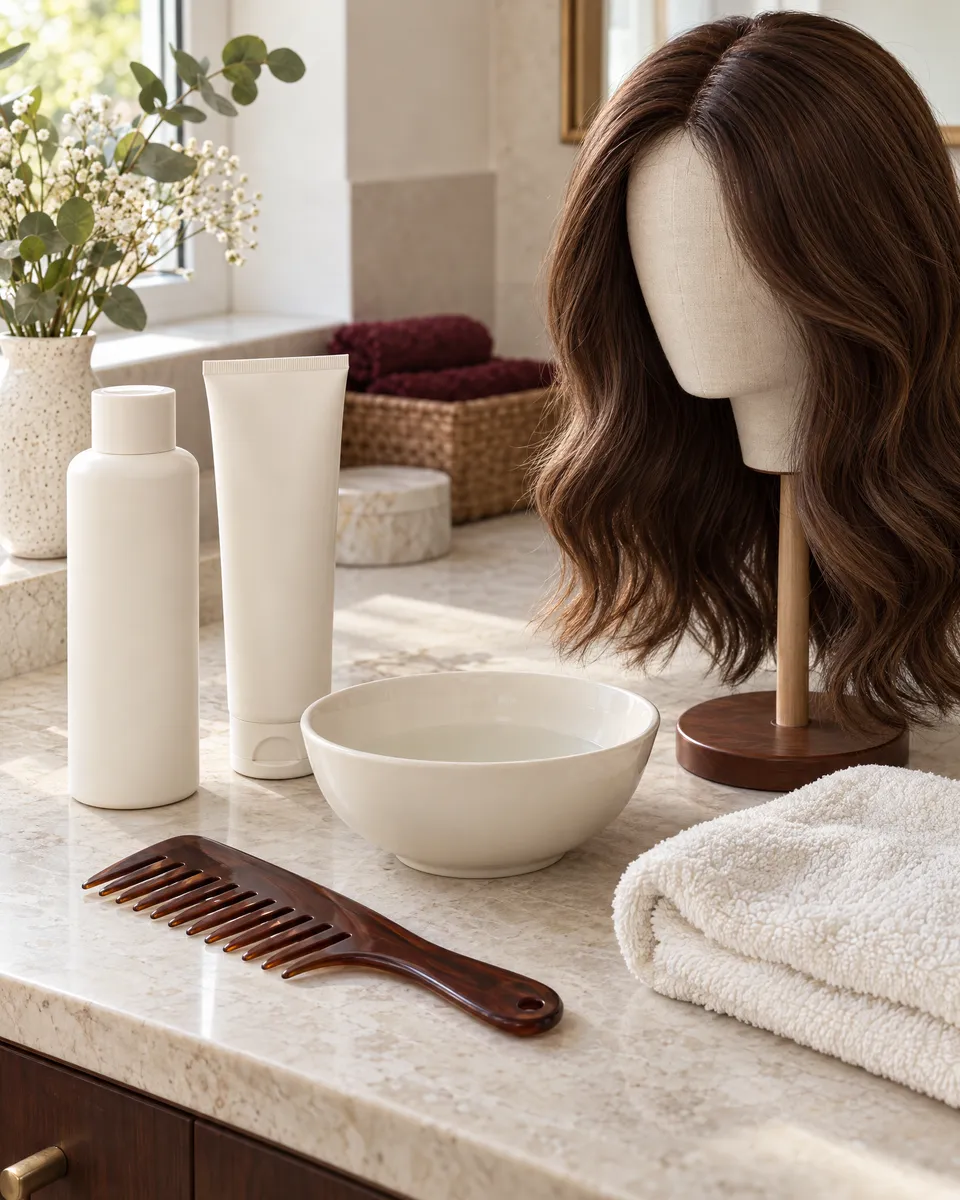
The same product question means different things at a front hairline, behind an ear, along a cap edge, or on an area that already felt dry. A contact map does not identify a cause. It makes the setting specific enough for someone else to understand the concern and respond to the right part of it.
Describe place, timing, and surrounding products
Note whether the skin was intact before application and when you noticed the change: before attachment, while wearing, during removal, or afterwards. The NHS page on contact dermatitis lists possible signs such as itchy, blistered, dry, or cracked skin and notes that symptoms can appear within hours or days after contact with a substance. Those details help describe what happened. They do not identify the responsible product from a photo.
Attachment method belongs in the same map. If you are considering wig tape, write the intended placement and any other item that would touch nearby skin. Tape, an adhesive, a liner, a skin-care product, and a remover may raise different information questions. Listing them separately is more useful than sending one broad message saying that the whole wig felt uncomfortable.
- Where: name one area, such as front hairline or behind one ear.
- When: note whether the observation came before application, during wear, at removal, or later.
- What else: list each skin, attachment, and removal product separately.
- What changed: record visible redness, flaking, swelling, itch, or discomfort without assigning a cause.
Include remover and accessories in the same picture
The attachment item is only one contact point in a wearing routine. A complete question also names what helped release it and what sat between the wig and skin. This is not a reason to assume those items caused a reaction. It is a way to avoid leaving out products that may matter to the provider or clinician reviewing the timeline.
List products in the order they were used
Record the sequence in plain language: preparation product if known, attachment item, period of wear, and removal item. If you used a wig adhesive remover, include its exact name and when it contacted the area. This gives the manufacturer or seller a defined question about its instructions. It also avoids treating removal as an afterthought when the visible change was first noticed during or after that step.
A barrier or comfort accessory should have its own line in the note. wig caps and liners can be a useful category to discuss when you want to understand construction and contact points. Ask which surfaces are expected to touch the skin and how that item is intended to be used. Do not turn its presence into proof that an attachment method will suit your skin or resolve an unexplained concern.
- Keep the product names separate, even when they were bought together.
- State the order of contact instead of assuming the attachment item was the only relevant detail.
- Ask about directions for each exact item, including the removal product.
- Say clearly when you do not know a product’s complete ingredients or purpose.
Ask the product provider questions they can answer
A seller or manufacturer can often clarify product identity, published directions, available label information, and the intended role of an accessory. They cannot diagnose a skin condition from a message. Shape the enquiry so the recipient can give a precise product answer, while leaving any healthcare question in the right conversation.
Lead with facts and end with one decision question
Start your message with the exact product name and label image, if available. Then add the contact area, the timing, and the list of other products. End with a narrow question such as: “Can you confirm the current directions and ingredient information for this exact item?” Another useful question is: “Which product details should I provide if I need to discuss this observation with a healthcare professional?” This format is clearer than asking for a blanket assurance.
Keep selection questions separate from safety questions. A glueless wig is an attachment category you can ask about without assuming it guarantees comfort or a skin response. Ask which construction features secure that exact wig and which surfaces may contact the skin. Do not ask a provider to identify the cause of a rash from a photograph. This boundary keeps retail information from becoming a medical conclusion.
- Can you confirm the full label and directions for this exact product version?
- Does the published information address this intended placement and removal question?
- Which accessory or removal details should I include so the routine is described accurately?
- What information can you confirm, and what would need a healthcare professional’s assessment?
Know when the question needs healthcare input
Your written record can also make a healthcare conversation more efficient. It shows the exact items, locations, sequence, and timing without asking you to diagnose yourself. Persistent, recurrent, or severe skin concerns deserve assessment rather than repeated guessing, particularly when a visible change continues after the original wearing situation.
Bring the record, not an at-home diagnosis
The NHS advises speaking to a GP when contact dermatitis is persistent, recurrent, or severe. Seek urgent help for breathing difficulty or swelling of the face, lips, or mouth. Those situations are health matters rather than wig-selection questions. For other concerns, bring the label photographs and timeline so a healthcare professional can see what actually contacted the area and what you observed, without relying on memory alone.
A home note is not a clinical patch test. Cleveland Clinic explains that provider-led patch testing can help investigate contact dermatitis and may include substances such as adhesives, cosmetics, fragrances, and preservatives. That distinction matters. Do not copy a home testing routine and call it diagnostic. Ask a healthcare professional whether assessment is appropriate, and let them decide what information or testing is relevant to your situation.
| Record | What to write down | Why it helps the next question |
|---|---|---|
| Exact item | Full product name, version, label image, directions, and warnings | It ties the enquiry to the actual item rather than a broad product category. |
| Contact point | One precise area and whether the skin was already irritated or intact | It distinguishes a location-specific observation from a general comfort complaint. |
| Timeline | Before application, during wear, at removal, or later | It gives the recipient a sequence without claiming a cause. |
| Other contact | Attachment, remover, liner, and skin products used that day | It prevents relevant products from being silently left out of the question. |
| Observed change | Date, visible change or sensation, photo if useful, and action already taken | It gives a product provider or healthcare professional a clear starting point for follow-up. |
Ask OWNSTRAND on WhatsApp
Tell us the style you have in mind. We can discuss the options, quotation and arrangements before you decide.
Ask OWNSTRAND on WhatsAppBefore you choose
Can a label that says “for sensitive skin” answer all my wig adhesive questions?
No. It may be a useful cue to read the item more closely, but it does not predict your individual response or confirm that the directions match your intended use. Keep the exact label, contact situation, and any observation together, then ask the provider what can be confirmed for that product version.
What should I send to a product provider if I notice a change near the hairline?
Send the exact product name, a label image if available, the precise contact area, a short timeline, and the names of any other attachment or removal items. Then ask one narrow question about published directions, ingredient information, or the information needed for a further enquiry. A photo can support the record, but it cannot diagnose the change.
Is my home record the same as a clinical patch test?
No. A home record simply preserves what you used and observed. A clinical patch test is a healthcare process used to investigate possible contact dermatitis. Do not call a home observation diagnostic. If a concern is persistent, recurrent, or severe, ask a healthcare professional whether assessment is appropriate.
Further reading
- U.S. Food and Drug Administration — Allergens in CosmeticsSupports the advice to check ingredient panels and maker directions and the limited statement that sensitive-skin marketing terms have no federal definition in the United States.
- NHS — Contact dermatitisSupports the limited description of possible visible changes after contact, hours-to-days timing, and the prompt to seek assessment for persistent, recurrent, or severe symptoms.
- Cleveland Clinic — Patch TestSupports the distinction between a home observation and provider-led patch testing for contact dermatitis; the page notes that adhesives, cosmetics, fragrances, and preservatives may be among test substances.
- American Academy of Dermatology — How to test skin care productsInformed the article’s caution that a home observation is not a diagnostic adhesive procedure. No skincare-product test routine is republished as an adhesive instruction.