

Start with intent, not an attempt to copy someone
The most helpful reference is not the one that looks most dramatic online. It is the one that lets you explain what you noticed and why it matters in your daily life.
Write the use context before judging the style
Begin with a one-line purpose. You may want a familiar silhouette for work, a softer frame around the face, a lower-maintenance weekday option, or simply a different direction from your usual hair. Add where you expect to wear it most often: indoors, outdoors, on video calls, at formal events or across a mixed routine. This note prevents a beautiful image from taking over the decision when its context is unlike yours.
Then name the parts you actually want to borrow. It might be the length at the jaw, the way a fringe opens, the balance between the crown and sides, or a shade that appears calm beside the skin. Avoid writing that you want the person in the photo. A wig sits with a different face, head shape, parting and movement. The goal is a clear preference, not a promise of a duplicate identity.
Separate a familiar look from a new direction
If you are looking for something close to your usual appearance, include one older image that shows your everyday hair rather than only a styled occasion. Cancer Council Australia notes that people who want to match their usual colour and style can begin looking before hair loss or use a photo taken beforehand. Cancer Council's wig-selection guidance supports the value of that earlier visual record; it does not make an old photo a fit or colour guarantee.
A new direction can be just as valid. Mark it as a deliberate change, then describe the boundary you want to retain. For example, you may like a shorter outline but not a severe fringe, or a lighter effect but not a high-contrast root. That contrast helps another person see the difference between your inspiration and your non-negotiable preference.
- Write one purpose for the reference before saving more images.
- Circle no more than three features you would like to discuss.
- Label any image that is inspiration only, rather than a close-match request.
Build a small reference set that can be compared
One tightly cropped image may hide the length, parting or proportions that made the style appealing. A small, labelled set gives your enquiry enough context without turning it into an unmanageable gallery.
Choose four views before collecting ten similar ones
Use one front view, one three-quarter view, one side or back view, and one image that shows the overall length. These do not need to come from the same person. Their purpose is to show different questions: framing around the face, where volume sits, how far the hair falls, and whether the outline stays blunt, layered, rounded or loose. Save the image at a readable size so the original context remains available.
Keep each file or screenshot beside a short note. State which feature you are observing, whether the hair is clearly styled, and what you cannot see. A back view may show a useful length but tell you nothing about the front hairline. A front portrait can suggest a parting yet hide the density at the crown. Naming the gap stops an assumption from becoming a requirement.
Include your own neutral record when it is comfortable
If you choose to add your own photo, take a simple front and three-quarter view in ordinary light, with no beauty filter or heavy colour edit. The purpose is not to judge your appearance. It is to show proportion and provide a reference for the questions you have already identified. You can crop the surroundings and share only what feels appropriate for your enquiry.
If your situation involves treatment-related hair loss, a photo collected before visible change may be useful for recalling a familiar style. It is also reasonable to wait and prioritise a current fitting conversation. Cancer Council Australia says some people choose after hair loss because it can provide a better fit, and advises allowing for head-size variation. A photograph records an appearance preference; it does not settle the physical fit.
- Keep the original image and your note together rather than relying on memory.
- Save only images that reveal a different useful view or feature.
- Leave filters, portrait retouching and collages out of the comparison set.
| What to save | What it helps you observe | Question it can support |
|---|---|---|
| Front view | Face framing, fringe and part | Which front outline am I responding to? |
| Three-quarter view | Balance between crown, sides and face | Where does the volume seem to sit? |
| Side or back view | Length and outer silhouette | Is the endpoint blunt, layered or rounded? |
| Ordinary-light image | Overall tone in a familiar setting | Does the tone still appeal away from studio light? |
| Your short note | Priority and limit | Which feature matters most, and what remains open? |
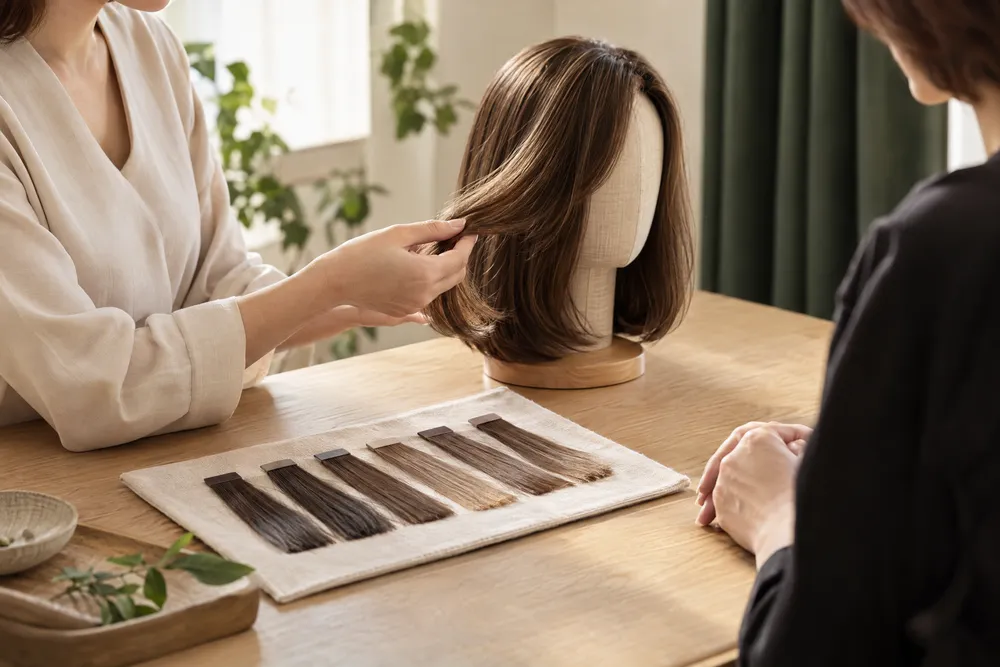
Read shape, apparent density and movement separately
A style can seem right because several visual effects happen together. Pulling them apart makes the reference more honest and makes an enquiry easier to answer.
Describe the silhouette before the individual strands
Look first at the outside line. Does it widen at the cheeks, taper toward the jaw, sit close at the nape, or build height above the temples? Then check the length in relation to visible landmarks such as chin, shoulder or collarbone. These are practical observations, not measurements for a custom piece. They give a consultant a better sense of the visual balance you liked than a broad request for a short or long style.
Next, identify the cutting effect. A blunt end can make a shape look fuller, while softer ends can make it look lighter in the photo. A curl or bend may also create apparent width that disappears when the hair is straight. Write what you see rather than guessing how it was made. You can say that the ends look softly broken up, for example, without assuming a particular construction or styling process.
Treat visible fullness as an observation, not a specification
Words such as natural, full and light are useful only when you attach them to an area. Note whether you mean the top, the sides, the front or the overall outline. A portrait can make the crown look fuller because of angle, backlighting, wind or the way the hair was arranged before the photograph. That is a reason to ask a narrow question, not to assume that a particular density will create the same picture.
Movement deserves its own line in the note. Ask whether you like a smooth shape, a soft bend, a defined wave or a more textured finish. Notice whether the photo was taken still, mid-motion or after deliberate styling. This distinction matters because a reference can show the result of a moment rather than an all-day state. It also makes it easier to discuss what routine you are willing to maintain.
Record colour and light without treating pixels as proof
Colour is often the fastest part of a reference photo to notice and the easiest part to overread. A useful note records the viewing condition as well as the apparent shade.
Label the light around the face and hair
For each image, write whether it appears to use daylight, shade, warm indoor lighting, cool indoor lighting or mixed light. Also note if a bright window, coloured wall or strong lamp is beside the face. These simple labels are more reliable than trying to identify an exact shade name from a screenshot. They help distinguish an overall colour preference from a temporary cast in one image.
This is not merely a matter of taste. Canon's explanation of white balance explains that different light sources have different colour proportions, and that a camera's colour adjustment may change how a scene is rendered. Canon gives the example that an uncorrected white wall can appear yellow under tungsten light or green under fluorescent light. A reference photo should therefore be read as evidence of one viewing condition, not as a colour standard.
Use comparison notes instead of a single colour label
Describe the relationship you see: warmer near the face, deeper at the root area, cooler in shade, or more golden at the ends. If two images disagree, keep both and label the difference. The disagreement may be useful because it shows where you want a tone to remain calm or where you are comfortable with variation. It does not show which image is the only correct one.
Avoid using an edited social-media image as the only source for a major colour choice. Leave the image unaltered, and do not correct it until it matches your screen preference. If a neutral object happens to be visible, retain it in the screenshot as a small check on the whole frame. The practical aim is to make the lighting uncertainty visible, rather than to pretend it has disappeared.
- Label warm, cool, daylight or mixed light beside each saved image.
- Note whether the tone changes at the root, around the face or at the ends.
- Keep colour filters and screen edits out of the record you send.
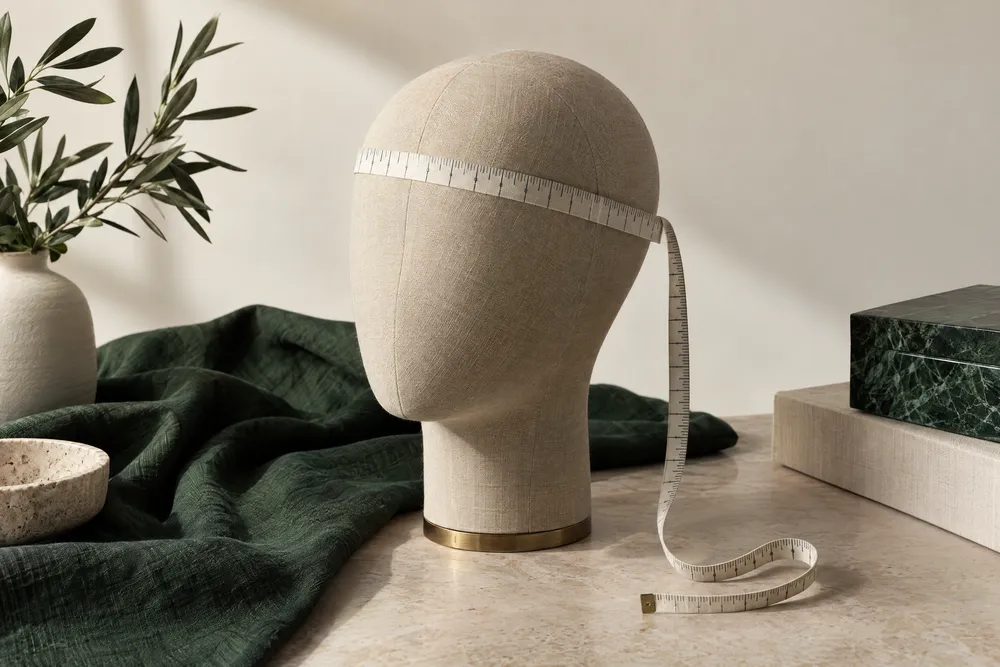
Turn the record into specific enquiry questions
The completed reference set should reduce guesswork. It lets you ask about an actual priority and leave room for item-specific facts that pictures cannot provide.
Ask one question about style and one about material
Start with the visual question: does the sample or option have a similar face-framing length, parting direction or overall outline to the feature you marked? Then ask a separate material and care question. If you are comparing human hair wigs, say which reference feature matters and ask what should be confirmed for that specific option. Separating these questions avoids treating a style image as proof of fibre, construction or maintenance needs.
Use the same approach when exploring synthetic wigs. The screenshot may express a preference for a smooth bob, a textured wave or a lighter look, but it cannot verify how an individual option should be cared for or how it will sit. Ask what you need to know about the actual piece, and keep the image as the explanation for your visual priority rather than as evidence of a product property.
Keep fit, timing and comfort questions visible
A focused set of notes gives purpose to a custom wig consultation Hong Kong. You might bring a front and side reference, then ask which elements are realistic to discuss, what current head measurement is needed for fit, and which parts of the photo do not translate into a specification. This is clearer than sending a single image with a request to make it the same.
When a hair-loss-related choice is part of the context, material comparison and appearance preference remain separate decisions. The overview of synthetic wigs for cancer patients can help frame a comparison question, but it does not decide what will feel right for you. State whether your reference is about familiar length, a practical routine, a visible front or something else before asking about an option.
If you are collecting images before a treatment schedule changes your hair, use them as a personal record rather than a deadline. The separate guide on choosing a wig before chemotherapy can organise preparation questions. It is still sensible to confirm fit, comfort, timing and the particular option directly instead of assuming that a photo settles them.
Know what a reference photo cannot confirm
A photo can make a conversation more precise, but it cannot replace seeing, fitting or confirming details for a particular option. Stating this limit makes the reference more useful, not less.
Leave physical and comfort details for confirmation
Do not use a polished portrait to decide how a cap will feel, how a front will sit on you, or whether an option will suit a changing head measurement. These are physical questions. If comfort is part of the reason for your search, write it in the note and ask directly. For treatment-related concerns, the guide to a wig for sensitive scalp during chemotherapy is a separate starting point for questions; a hairstyle photo is not a comfort assessment.
The same limit applies to care. A reference may show a soft bend, a short fringe or a sleek finish, yet it does not prove what work, products or conditions are appropriate for another item. Ask about the specific option you are considering. Keeping the care question separate protects you from choosing a visual effect while assuming a routine that has not been discussed.
Keep the choice open for the person and situation
A reference set should support your choice, not narrow it before you have considered the alternatives. Some people may prefer to compare a wig with other coverings or with no covering at all. If that is part of your decision, the comparison of wig or scarf for hair loss can help keep the question practical: which option fits the setting, routine and personal comfort you have recorded?
A family reference needs the same care and more context. An adult's favourite style image is not automatically a useful brief for a child. For family-specific questions, see wigs for children with cancer hair loss and note the child's own comfort, routine and wishes where appropriate. The photo can still start a discussion, but it should never replace the person's voice or the relevant fitting questions.
- Do not infer fit, scalp comfort, availability or care requirements from a photo.
- Mark a question as open when it depends on a particular item or current measurement.
- Keep personal preference at the centre when comparing a wig, scarf, hat or no covering.

Send a compact checklist with the next enquiry
Finish by turning the record into a short message that another person can read quickly. The aim is not to present a finished design. It is to make the next conversation more concrete.
Use a four-part note beside the images
Write four short lines: the use context, the two or three visible features you like, the light in which you saw them, and the question that remains. An illustrative note might say: weekday indoor use; soft jaw-length outline and side part; photo is warm window light; please advise what can be checked for a current fit and care routine. This format makes a preference clear without copying the person in the picture.
Before sending, remove duplicates and any image that only repeats the same angle. Check that each retained image has a purpose. If the purpose changes after you look again, update the note rather than forcing the original conclusion. A simple record can evolve as you compare options, while the distinction between visual inspiration and confirmable details remains intact.
- One use context and no more than three visual priorities.
- Four useful views, each with light and feature notes.
- One question about style and one question requiring confirmation.
- A clear statement that the image is reference material, not a request to copy a person.
| Photo cue | Why it may be misleading alone | Better question |
|---|---|---|
| A bright, pale front area | Window light or editing may change the apparent tone | Which tone do I prefer in ordinary indoor light? |
| A very full crown | Angle and styling can increase apparent volume | Which part of the silhouette am I responding to? |
| A smooth short bob | The image does not show the care routine or item details | What should I confirm for this kind of finish? |
| A close cropped face frame | The photo hides cap fit and front placement | Which fit details require a current measurement? |
| An image from before hair loss | It records familiar style, not present physical conditions | Which features are worth discussing now? |
Ask OWNSTRAND on WhatsApp
Tell us the style you have in mind. We can discuss the options, quotation and arrangements before you decide.
Ask OWNSTRAND on WhatsAppBefore you choose
How many wig reference photos should I bring?
Four useful views are usually enough: front, three-quarter, side or back, and one ordinary-light image. Add an older personal photo only if it helps explain a familiar style. The key is that each image has a different purpose and a short note. A large unlabelled gallery makes it harder to identify your actual priority.
Can I use a celebrity or social-media photo as a wig reference?
Yes, if you treat it as inspiration rather than a copy request. Identify the specific element you like, such as face framing, length, a parting direction or a softer colour impression. Also note visible styling and light. This gives the image a practical role without assuming the same appearance, fit, construction or routine can be reproduced for another person.
What should I ask if the photo colour looks different on my phone?
Keep the original image and record the light, filter status and area that appears different. Ask whether your preference is for a warmer, cooler, deeper or lighter overall impression in your normal setting. Do not ask a screenshot to settle an exact colour. Cameras and displays interpret light differently, so the useful question is what should be checked for the actual option.
Further reading
- Cancer Council Australia: Wigs, turbans, scarves and hatsSupports the article's statement that an earlier photo can help match a usual style and that head-size variation and fit should be kept separate from a photo-based preference.
- Canon Europe: White Balance: definition and settingsSupports the explanation that different light sources and camera white-balance choices can affect colour rendering in a photograph.
- Cancer Council Victoria: Wigs, turbans, scarves and hatsCross-checks the use of a pre-hair-loss photo for style matching and the need to allow for head-size variation.