

Human hair vs synthetic wig care: the key differences
The fibre changes how a style responds to brushing, washing and restyling, but it does not remove the need to check the particular wig’s construction and instructions. Think about the look you want to maintain, how often you expect to wear it, and what care steps you are comfortable doing.
Human hair vs synthetic wig care at a glance
Human hair is real hair and can be shaped in ways that depend on its condition and the wig’s construction. That flexibility is not a licence to apply any salon process: colouring, bleaching, perming or heat styling may affect the hair and the base, so check suitability first. For a closer look at styling temperature guidance, see can you use heat on a human hair wig; if a colour change is on your mind, read can you dye a human hair wig before attempting it. Neither natural fibre nor a familiar salon technique guarantees that a particular wig will respond as your own growing hair would.
Synthetic wigs are made from manufactured fibres. Many are styled to hold a set shape, so the familiar instinct to restyle after every wash may be unnecessary or unsuitable. The key care difference is to preserve the finish rather than assume the fibre can be reset. Some synthetic fibres are specifically labelled heat-friendly, while others are not; appearance alone cannot tell you which group a piece belongs to. Fibre type is only one part of care: the cap, knots, lace or other construction may also affect how you handle and dry it.
A practical comparison is therefore about choices, not a winner. Ask: do you want to restyle, or keep the original silhouette? Can you follow the care label consistently? Do you know what products and tools are permitted for this exact item? The American Cancer Society’s general wig selection guidance discusses choosing between human hair and synthetic wigs and considering fit and personal preferences. That supports treating material as one decision among several—not as a complete care instruction or a recommendation for any particular brand or product.
Washing, drying and storing each wig type
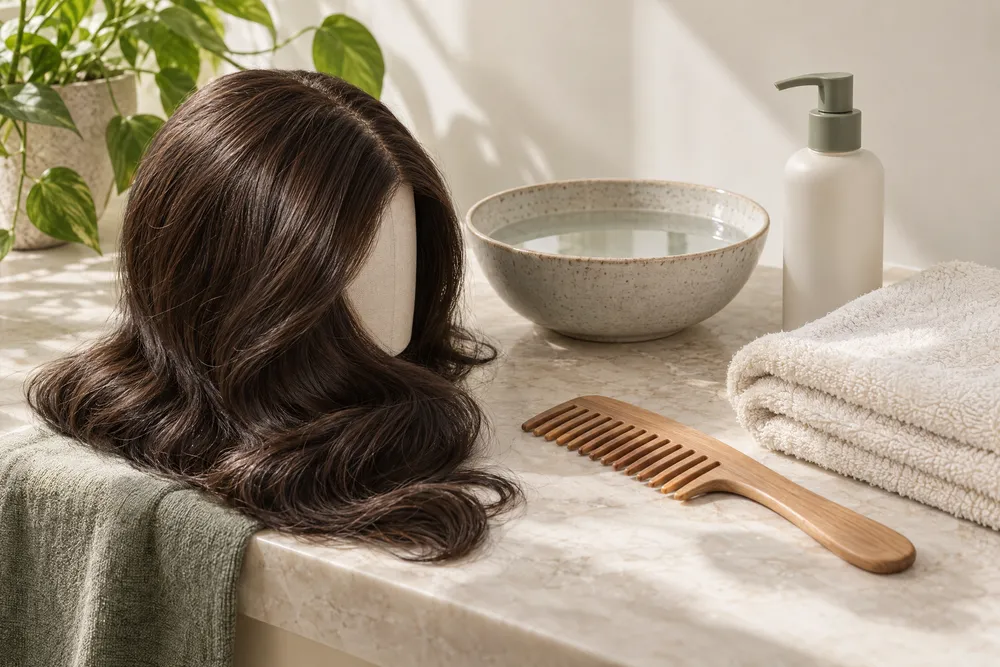
Washing is where a useful rule of thumb meets an important exception: follow the specific maker’s directions, because fibre and construction vary. Gentle handling and a plan for drying and storage help you avoid turning a simple clean into an unnecessary restyle.
Check the care instructions before washing
Before washing, identify the wig’s fibre and find its own care instructions. Check whether it calls for a particular shampoo, water method, detangling approach or drying position; do not transfer a routine from another wig simply because the styles look similar. If the label is missing or unclear, pause before soaking or applying a product and ask the seller or maker for guidance. Our step-by-step article on how to wash a wig covers the washing question in more depth, but the instructions supplied with your own piece take priority.
When the instructions permit washing, prepare a clean space and handle the wig calmly rather than scrubbing, twisting or pulling it. Work through tangles only as directed, using an appropriate brush or comb and supporting the hair near the base where practical. Avoid treating conditioner, oils, styling sprays or household products as automatically suitable: residue can change the feel or finish, and some products may not suit a particular fibre. A clean wig does not need extra steps for their own sake; use the simplest care routine allowed by the maker.
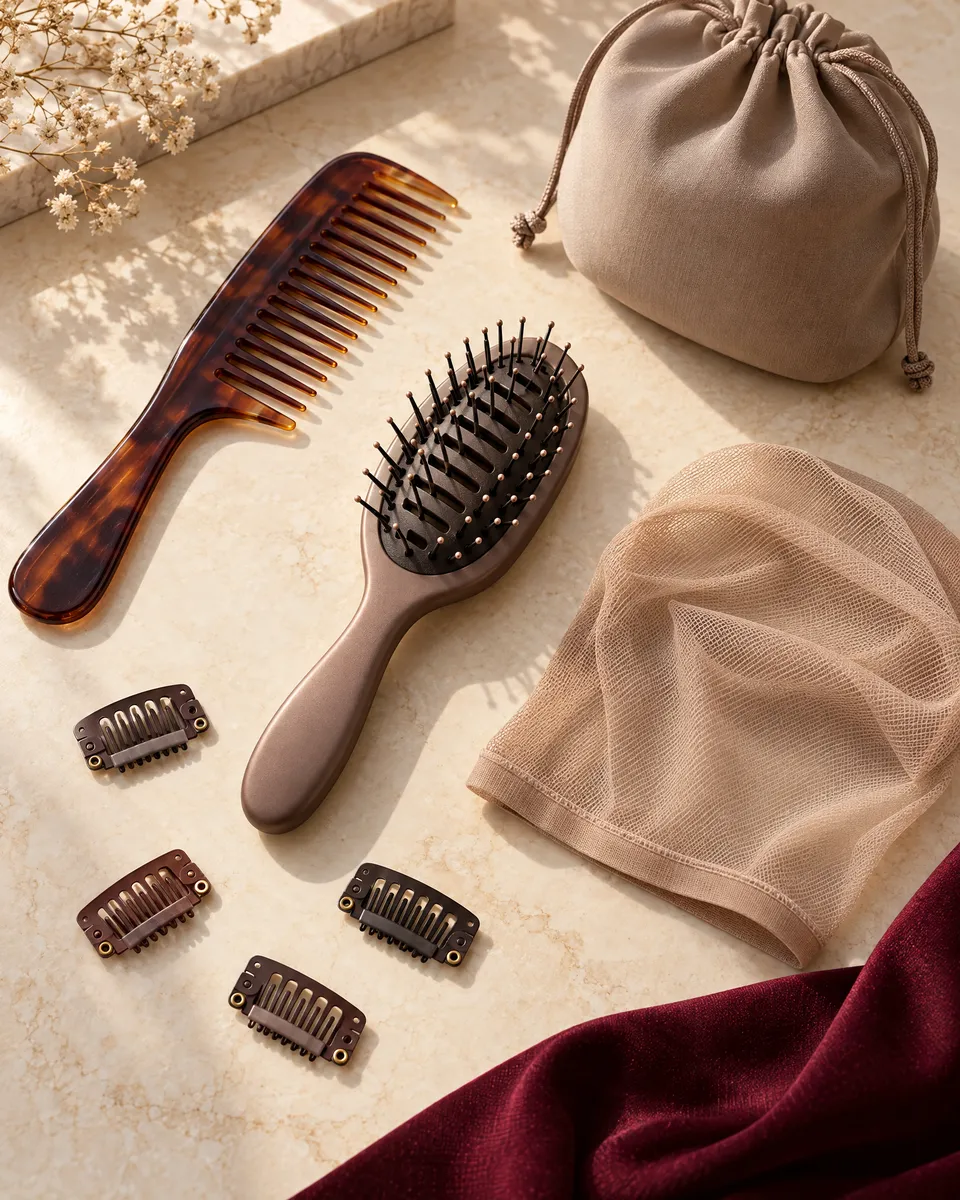
Drying matters as much as washing. Follow the stated method and let the wig reach the condition specified before wearing or storing it. Do not assume that a hair dryer, heated brush or direct heat source is safe, including for human hair. For synthetic fibre, heat can be especially consequential when tolerance has not been identified. When the wig is dry, store it in a way that protects its shape and keeps it away from avoidable tangling; our guide to how to store a wig explores storage choices.

Heat-friendly and standard synthetic fibres are not the same
The phrase ‘synthetic wig’ covers more than one fibre specification. A label that identifies a synthetic style as heat-friendly is materially different from an ordinary synthetic label, and neither should be interpreted more broadly than the directions allow.
Use heat only when the specific wig is labelled for it
Do not test heat tolerance by touching a tool to a hidden section or by relying on a retailer’s general description of synthetic wigs. Look for clear, product-specific wording that the fibre is heat-friendly and read the permitted method and limits on its care label. If the wig is standard synthetic, or you cannot establish which fibre it uses, keep heated tools away. Even a heat-friendly designation is not permission to use every tool or technique. Follow the stated instructions, and stop if they do not answer your question.
If you own a labelled heat-friendly style, treat styling as a controlled care step rather than an experiment. Confirm that the exact tool and method are allowed, work according to the maker’s instructions, and avoid applying heat to areas or components not covered by that guidance. Read our focused guide to heat friendly synthetic wig care for the distinction between labelled heat-friendly fibre and standard synthetic fibre. Human hair also needs care-specific judgement; the separate article on can you use heat on a human hair wig addresses that different question.
Hong Kong’s humid conditions can also affect how a style looks between washes. Avoid trying to correct frizz with unapproved high heat or heavy product; first consider gentle detangling and the wig’s own care directions. Our advice on wig frizz in humidity discusses humidity as a styling concern, not a reason to change the fibre’s permitted care. Wear and care habits can influence how long a wig remains presentable, but there is no single lifespan that applies to every piece; see how long does a wig last for factors to consider. For more topic-specific help, browse our wig care guides.



| Care decision | Human-hair wig | Synthetic wig |
|---|---|---|
| Before washing | Check the individual wig’s directions, construction and permitted products; do not assume salon hair routines apply. | Identify the fibre and follow the specific label; do not borrow instructions from a different synthetic style. |
| Drying | Use the drying method stated for that wig; do not assume heat is suitable because the fibre is human hair. | Follow the label and avoid heat unless the particular fibre is identified as heat-friendly and the method is permitted. |
| Restyling | Check before applying heat, colour or chemical processes, as the hair and base both matter. | Preserve the intended shape; use heated tools only when the exact wig’s instructions allow it. |
| When directions are unclear | Pause before applying a product or process and ask the maker or seller for guidance. | Do not infer heat tolerance or washing method from appearance; seek product-specific instructions first. |
Ask about care for a specific wig
Tell us the style you have in mind. We can discuss the options, quotation and arrangements before you decide.
Ask about care for a specific wigBefore you choose
What is the main difference in human hair vs synthetic wig care?
Care depends on the fibre, construction and the specific wig’s instructions. Human hair and synthetic fibres should not be treated as interchangeable: check the maker’s guidance before washing, drying or styling, and do not assume human hair can take any salon process.
Can I use heat on a synthetic wig?
Only use heat if the specific synthetic wig is identified as heat-friendly and its care instructions permit the method. Standard synthetic fibres may be damaged by heat, so do not infer heat tolerance from appearance or from another wig’s label.
Should I wash a human hair wig and a synthetic wig in the same way?
Do not assume they share the same washing routine. Follow the instructions for the particular wig and use only products and handling methods appropriate to its fibre and construction. If its directions are unavailable, seek guidance before washing.
How should I dry a wig after washing?
Use the drying method stated in that wig’s care instructions and let it dry as directed before storing or wearing it. Avoid applying heat unless the specific wig is confirmed as suitable for that method. For product selection, WhatsApp +852 5933 4697.
Further reading
- American Cancer Society — Wigs for Hair Loss: Choosing and Wearing a WigSupports the general point that material, fit and personal preferences are relevant when comparing wig choices; it is not an endorsement of OWNSTRAND or a substitute for care instructions for a specific wig.
Still weighing up your options?
Follow a related guide to make your next decision with clearer information.
Heat friendly synthetic wig care starts with the model’s label. Check heat limits before styling, and message OWNSTRAND to ask about a specific wig.
Browse practical wig care guides from OWNSTRAND Wigs, including washing, storage, detangling and everyday wear considerations for different fibres.
Learn how to wash a wig and how often to wash a wig, with fibre-aware steps and practical Hong Kong care tips. Ask OWNSTRAND about your wig.
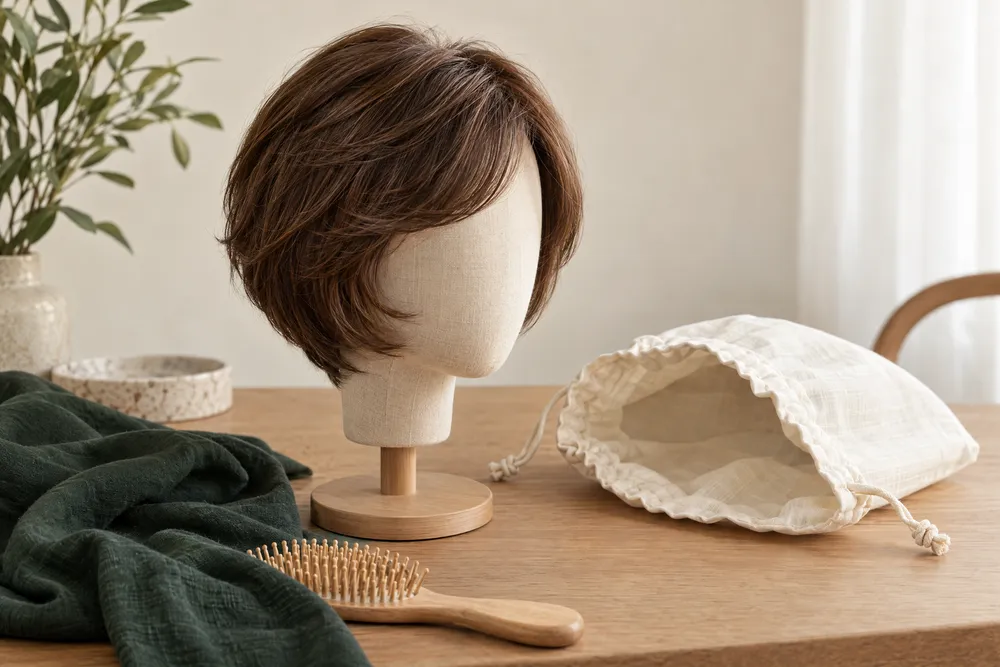
Learn how to store a wig between wears and when a wig stand for storage may help. Compare drying and travel options, then ask OWNSTRAND about suitability.