





Understanding hair topper base size
A base measurement describes the foundation of a topper, while coverage is about the area you want the piece to sit over. The two ideas are related, but they are not always a one-to-one match: the base shape, edge and attachment points all affect how a particular design is positioned. Start by treating dimensions as model-specific information, not a universal sizing chart.
Hair topper base size varies by brand and base
There is no single hair topper base size that suits every person or every design. A brand may describe a piece with a size label, dimensions, or both; another may use a different convention. Even where two models show similar length and width, their outlines and construction can differ. The American Cancer Society’s general wig guidance notes that sizing varies by manufacturer, which is a useful reason to check the exact item’s own sizing information rather than transferring a number from another range. That guidance is general, not a specification for any particular topper.
Base shape matters alongside its headline dimensions. A longer, narrower footprint may cover a different pattern of hair than a broader shape with a similar area. The front-to-back measurement can help you think about coverage along your parting or crown, while the side-to-side measurement gives a sense of how far the base reaches across the area. These are comparison aids, not guarantees of fit: confirm how the manufacturer measures the base, including where the edges fall and whether a stated figure is the base itself or another sizing reference.
Coverage depends on the area, not just the amount of visible hair. A widening part may need a narrower footprint than a low-volume crown. See hair topper for widening part for that distinction; compare hair topper vs wig if you are considering broader coverage. A topper is a partial-coverage option, not simply a smaller full wig. For construction terms, see monofilament hair topper and silk top hair topper; neither term specifies footprint. For other base terminology, consult men's hair system base types or the cosmetic alopecia wigs selection guide; these are not diagnosis or treatment advice.
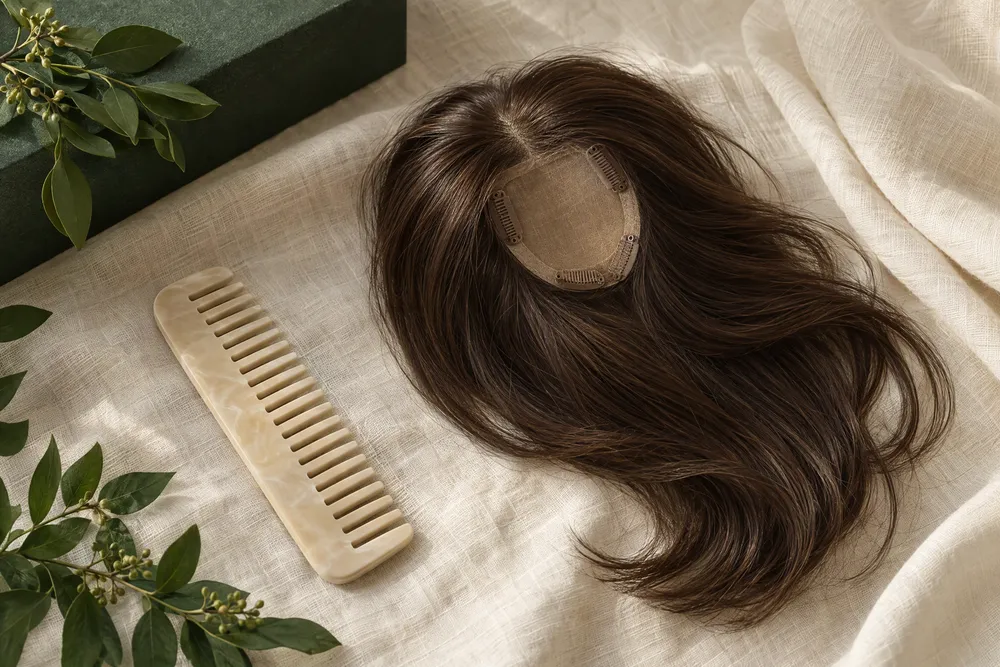
How to Measure for a Hair Topper: A Practical Starting Point
A simple, repeatable measurement gives you a useful starting point for comparing models. It does not replace the manufacturer’s sizing information or a fitting discussion, but it helps you describe the coverage you have in mind clearly. Keep the measurements and the way you took them together so that you are comparing like with like.
Measure the area you want the topper to cover
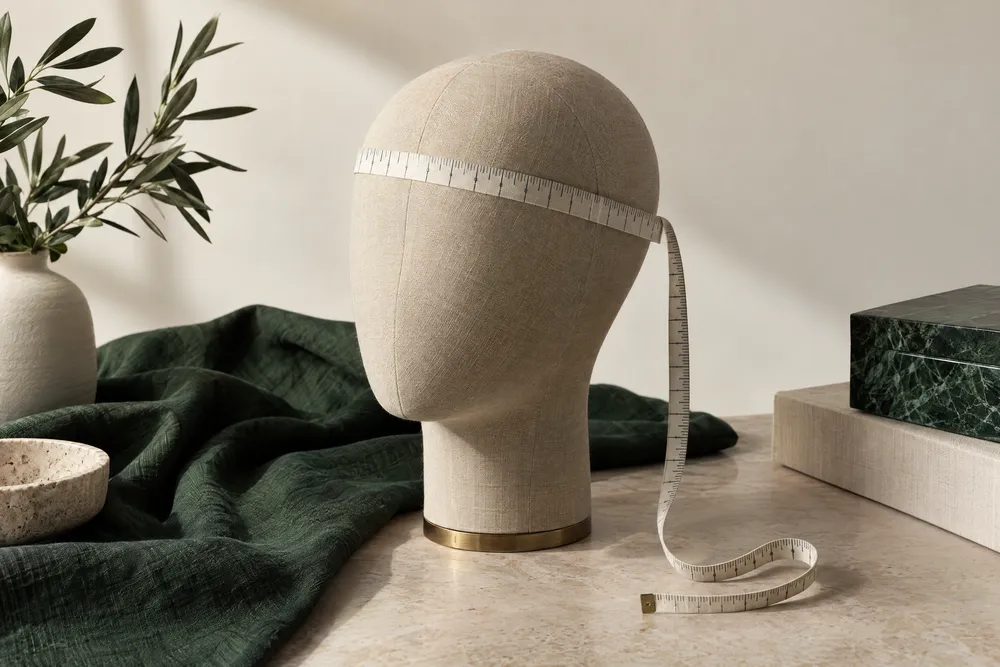
First, identify the area you want covered while looking at your usual parting and hairstyle. Think in terms of the footprint you would like the base to occupy, rather than measuring the whole head or guessing from the amount of hair you can see. If you are comfortable doing so, use a flexible tape or another consistent measuring method to note the front-to-back length and the widest side-to-side width of that area. Record the units and where you started and stopped; the purpose is a clear comparison, not a medical assessment.
Measure consistently: do not pull a tape tightly or change its path between readings, and do not treat a curved measurement as a straight-line base dimension. If someone helps, agree on the start and end points first. Record units and a short note about the method so you can compare the same kind of measurement with the model’s dimensions.
For a parting concern, make a note of the direction and width of the area you hope to cover. For crown coverage, record the footprint that feels relevant to your hairstyle and the amount of surrounding hair you plan to blend with. This does not mean a topper will blend automatically; placement, colour and styling are separate considerations. Our guide to how to blend a hair topper with natural hair discusses that neighbouring question, while this page focuses on the base footprint.

Compare coverage areas before choosing
Once you have a measurement, compare the exact base dimensions with the area you noted and consider the shape as well as the numbers. A larger footprint is not automatically a better choice: a piece still needs to work with your parting, surrounding hair and preferred placement. If a specification is unclear, ask what it measures before relying on it.
Check the specific model's hair topper base dimensions
Look for length and width stated for the exact model, and check whether they describe the base outline or a different point of reference. Confirm the unit, the orientation of the measurements and whether the base has a shape that narrows or widens at one end. If only a size label is shown, ask for the dimensions or an explanation of the label; do not assume a label corresponds to a standard measurement used by another brand.
Compare your notes with the model’s stated length, width and outline. Consider where its front and side edges would sit relative to your intended area, parting and style. Dimensions help narrow options but cannot establish fit alone; clarify construction and placement for that exact model rather than assuming comfort or suitability from a chart.
A compact comparison can keep the decision practical. Use the table as a checklist when looking at a listing, sample or specification; it does not imply that any particular size or model is currently available. If you are comparing costs as well as coverage, see hair topper prices for the separate price considerations. A quoted price, product reference or catalogue detail should still be checked for the specific option you are discussing.
If your measurement falls between two listed options, do not automatically round up. Ask how their outlines and placement differ, and whether the additional base area matches your intended coverage. For a made-to-order human-hair enquiry, OWNSTRAND can discuss the request, quotation and supply for a specific option. Our Kwun Tong salon is at Unit 2103, 50 Hoi Yuen Road, Kwun Tong, Hong Kong (利寶時中心); details must be confirmed for the model in question.



| What to check | What to compare | Useful question |
|---|---|---|
| Intended coverage | The area you want covered and its length and widest width | Where do I want the front and side edges to sit? |
| Measurement convention | Your units and method against the model’s stated dimensions | Do these figures describe the base itself, and in what orientation? |
| Base outline | Whether the footprint is broad, narrow, tapered or otherwise shaped | Could the outline cover my target area without extending where I do not want it? |
| Construction and placement | Base features and attachment arrangement for the exact model | What should I know about how this model is positioned and worn? |
| Unclear specification | Any missing dimension, label definition or model-specific detail | Can you clarify this exact model before I compare it with another? |
Ask about topper sizing on WhatsApp
Tell us the style you have in mind. We can discuss the options, quotation and arrangements before you decide.
Ask about topper sizing on WhatsAppBefore you choose
What size hair topper do I need?
It depends on the area you want to cover and the construction and sizing of the specific brand and model. Measure the intended area, note how you took the measurements, and compare length, width and outline with that model’s stated base dimensions. Do not rely on a size label alone or assume that a larger base will automatically be more suitable.
How do I measure for a hair topper?
Identify the footprint you would like covered, then record its front-to-back length and widest side-to-side width using a consistent method. Note the units and where you measured from and to. Compare those notes with the exact model’s sizing information, and ask what its listed dimensions refer to if the orientation or measurement convention is unclear.
Are hair topper base dimensions the same across brands?
Not necessarily. Brands and models can use different sizing labels, base shapes and ways of presenting dimensions. The American Cancer Society also notes that wig sizing varies by manufacturer. Treat that as general selection guidance and compare the stated measurements for the exact topper you are considering rather than transferring a number from another brand.
Does a larger base always provide the right coverage?
No. A larger footprint may extend beyond the area you want covered, and its shape or placement may not suit your parting or style. Compare the model’s length, width and outline with your measured area, then clarify construction and positioning details for that specific option before choosing.
Further reading
- Wigs for Hair Loss — American Cancer SocietySupports the general factual statement that wig sizing varies by manufacturer; cited only as general selection guidance, not as an OWNSTRAND product specification or endorsement.
Still weighing up your options?
Follow a related guide to make your next decision with clearer information.
Learn how to blend a hair topper with natural hair by checking placement, parting and density. Get styling tips and ask OWNSTRAND about options.

Compare hair topper prices in Hong Kong by style, fit and confirmed specifications. Ask OWNSTRAND Wigs on WhatsApp to check a quote and supply.
Explore what a monofilament hair topper base means, how it differs from other topper bases, and what to check before choosing. Ask OWNSTRAND about options.
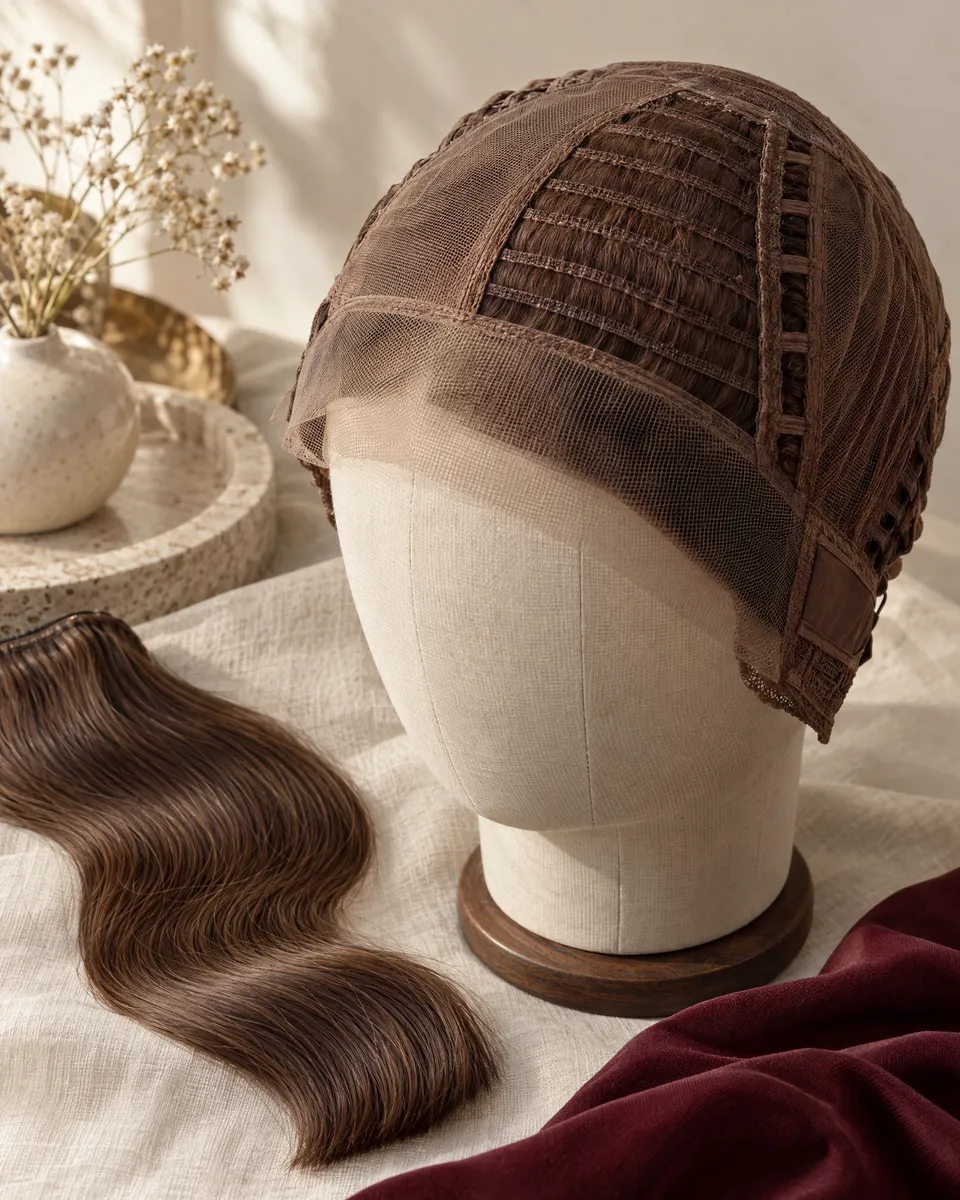
Explore what a silk top hair topper means, how product base terms are used, and what to verify before choosing. Ask OWNSTRAND about a specific style.