







Synthetic wigs: key points to compare
A useful comparison begins with the exact fibre description and the instructions supplied for that item, rather than assumptions about every synthetic style. Consider what the wig is for in your own routine: occasional wear, a familiar everyday shape, or a different look for particular occasions. The aim is to understand the practical trade-offs before choosing, not to rank all synthetic hair wigs as if they were identical.
Synthetic wigs and the questions to ask about fibre care
Look for a clear description of the fibre and for care instructions that belong to the specific style. Check how the maker says to wash, dry, brush and store it; if any of those steps are missing, ask for clarification rather than substituting a routine intended for another wig. The same applies to styling: do not assume that a synthetic fibre can be curled, straightened or reshaped with heat. If the instructions do not explicitly address a technique, treat it as unconfirmed.
Think about care in the context of your own habits. Do you prefer a style that you can put away between wears, or do you expect to restyle it regularly? Can you follow the stated washing and drying directions? These are more useful questions than relying on a general claim that synthetic wigs are effortless. If you are considering a smaller coverage option rather than a full wig, compare the fibre questions alongside fit and attachment details on a synthetic hair topper page. The construction and wearing purpose are different, so a topper should not be treated as simply a shorter wig.
If hair loss is part of the reason for looking, choose at your own pace and separate practical product questions from medical advice. The guide to synthetic wigs for cancer patients discusses hair options as a selection topic; it cannot determine whether a particular item is right for an individual or a treatment situation. For a personal health concern or scalp symptoms, speak with an appropriate healthcare professional rather than relying on a product description.
Details to compare before you choose a style
Compare the fibre wording, care directions, styling limits and the shape you want as four separate details. Check whether the length and overall outline suit the way you plan to wear the wig, and whether the stated maintenance is realistic for you. For colour, use the item's own description and any available viewing opportunity; an image should not be treated as a guarantee of an exact match on your screen or in different light. If a feature matters to your decision, ask about that feature specifically rather than asking only whether a style is suitable.
Fit also deserves its own check. Head sizes and cap details can vary between products, so do not assume one size or construction applies across a category. Ask what measurements or fit information are available for the exact option, and whether there is any adjustment guidance. If you are comparing a synthetic fibre with a mixed-material option, the human hair synthetic blend wigs guide can help frame what to ask about composition; a blend is not the same thing as a synthetic-only fibre, and no composition should be presumed without product-specific details. If the front edge is a deciding feature, the lace front wig guide can help you understand what questions to ask about the hairline without assuming a particular synthetic style has that construction.

Synthetic wig fibres and heat styling
Heat tolerance is not established by a broad category label. Some product descriptions may identify a heat-friendly fibre, while other synthetic wig listings may not make that claim. In either case, the named fibre and the manufacturer's care instructions for the individual style should guide your decision; do not transfer instructions from one wig to another.
Why fibre labels matter when considering heat
Before using a heated tool, check whether the specific item is expressly described as heat suitable and whether its care instructions explain permitted styling. If the information is silent, unclear or inconsistent, do not test a tool on the wig; ask for the exact fibre details and instructions first. A label such as “synthetic” by itself is not permission to apply heat, while a heat-friendly description still does not replace the item's own limits. There is no universal setting or technique that can safely be assumed for every fibre, so this guide does not prescribe a temperature.
For further detail, read the heat friendly synthetic wig care guidance before styling, and compare it with the care sheet for the item in question. You can also browse heat-friendly synthetic wigs as a distinct category, but a category page is not confirmation that a particular style is currently available or that every item has identical instructions. The comparison guide to regular synthetic vs heat-friendly synthetic wigs is useful when the distinction itself is the question.
This is also a point made in Cancer Research UK's general wig guidance: its page advises following the manufacturer's instructions when considering heated styling tools. That supports the practical check to follow item-specific directions; it is not an endorsement of OWNSTRAND or evidence that any particular wig is heat-safe. If instructions are unavailable, the conservative choice is to avoid heat until the exact product guidance is confirmed.

Choosing a synthetic wig for your routine
The best comparison is the one that matches how you expect to wear and care for the wig, not an abstract claim that one fibre is right for everyone. Decide which details matter most, note anything that is unclear, then compare exact options on those points. For local shopping context, the synthetic wigs Hong Kong guide can sit alongside this fibre-focused comparison.




| What to compare | What to look for | Question to ask if unclear |
|---|---|---|
| Fibre description | The stated material or fibre category for this exact item | What fibre is this style made from, and is that information specific to this item? |
| Care | Washing, drying, brushing and storage directions | Which instructions should I follow, and are any care steps not recommended? |
| Heat and restyling | An explicit heat suitability statement and item-specific limits | Does the maker permit heated styling on this exact wig, and what limits apply? |
| Fit and shape | Available size or cap details, silhouette, length and intended look | What fit information is confirmed for this option? |
| Colour and viewing | The description and any opportunity to assess the style in person | Can I review this option before deciding, and what can be confirmed about its shade? |
| Routine | Whether the style and its stated maintenance suit how often you expect to wear it | What upkeep should I expect according to the item instructions? |
Ask about synthetic wig options
Tell us the style you have in mind. We can discuss the options, quotation and arrangements before you decide.
Ask about synthetic wig optionsBefore you choose
Can synthetic wigs be heat styled?
Do not assume that a synthetic wig is heat friendly. Check the care and styling information for the specific item, and ask about its fibre details if they are unclear. If heat suitability or limits are not stated, avoid using a heated tool until the maker's instructions have been confirmed.
What should I compare when choosing synthetic wigs?
Compare the fibre description, care instructions, styling limitations, fit information and overall style against your routine. Product details can differ, so check the information for each specific option instead of assuming that all synthetic hair wigs share the same properties.
Are synthetic wigs and heat-friendly synthetic wigs the same category?
They should not be treated as interchangeable. Heat suitability depends on the particular fibre and item instructions; verify the item details rather than relying on the general category name. A heat-friendly label does not remove the need to follow that item's stated limits.
How can I ask about synthetic wig options?
Contact OWNSTRAND Wigs on WhatsApp at +852 5933 4697 to ask about styles, quotations or whether a particular option can be confirmed. An enquiry does not confirm availability or place an order.
Further reading
- Cancer Research UK — Wigs, hats and scarvesIts general wig guidance advises following manufacturer instructions when considering heated styling tools; cited here only to support checking item-specific heat directions, not as an endorsement or product-specific safety claim.
Still weighing up your options?
Follow a related guide to make your next decision with clearer information.
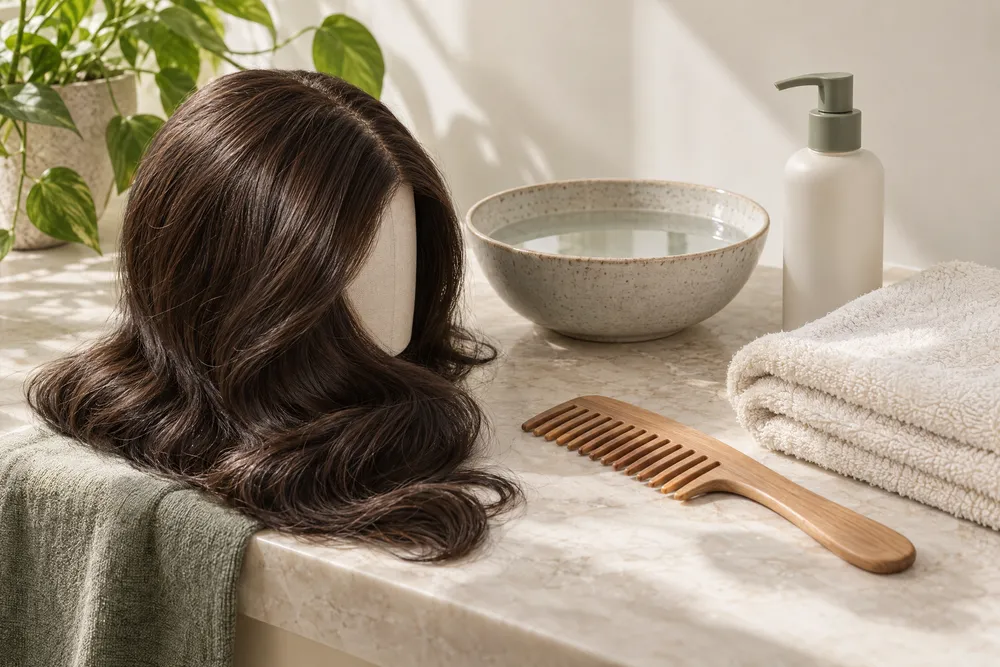
Heat friendly synthetic wig care starts with the model’s label. Check heat limits before styling, and message OWNSTRAND to ask about a specific wig.
Explore heat-friendly synthetic wigs and check each style’s maker guidance before using heat tools. Ask OWNSTRAND about listed styles and availability.
Explore synthetic wigs Hong Kong with a practical guide to comparing fibre, cap details and suitability. Ask OWNSTRAND about a style before visiting.
Compare regular synthetic vs heat-friendly synthetic wigs: learn how styling options differ and why product-specific heat limits matter. Ask us before choosing.